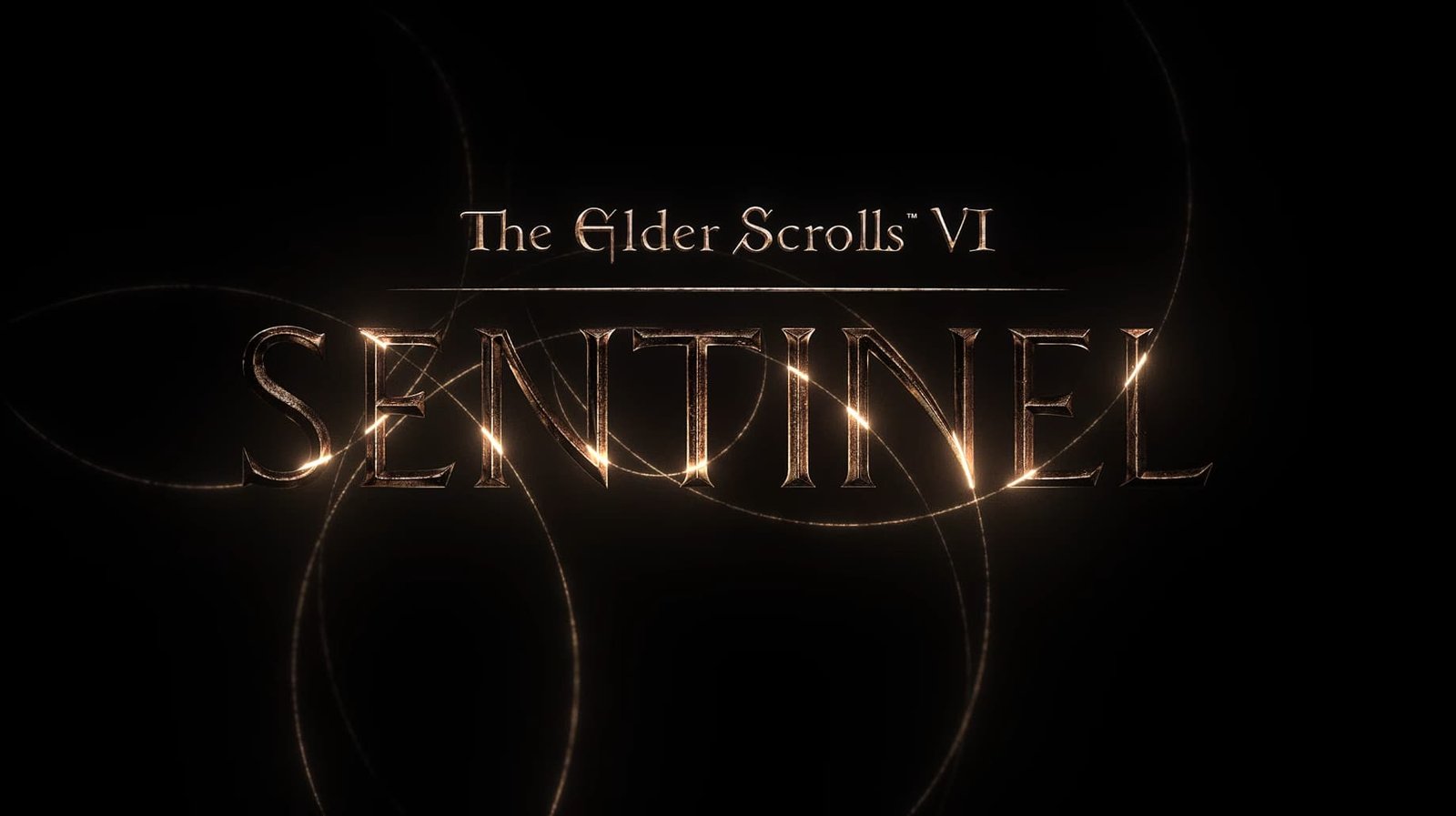
The Elder Scrolls 6 Sentinel Confirmed: What It Means for Games
For nearly ten years, the gaming world has held its breath, yearning for news about the next chapter in one of its most revered sagas. The announcement of The Elder Scrolls 6, almost a decade ago, sparked an enduring anticipation, transforming it into a legendary whispered promise within the industry. Fans of sprawling open worlds, intricate lore, and unparalleled role-playing experiences have navigated countless forums, speculative videos, and rumor mills, all while the silence from Bethesda Game Studios remained largely unbroken. This prolonged wait, an almost mythical period in modern gaming history, has only amplified the collective hunger for concrete information, positioning The Elder Scrolls 6 as perhaps the most eagerly awaited title in contemporary games development.
The predecessor, The Elder Scrolls V: Skyrim, launched in November 2011, quickly ascended to iconic status. Its vast landscapes, compelling quests, and revolutionary open-world design set a benchmark that few games have matched since. Skyrim’s enduring popularity, spanning multiple re-releases and platforms, is a testament to its profound impact and the sheer quality of Bethesda’s craft. However, the shadow of its success has simultaneously cast a long, expectant gaze upon its successor. The weight of expectation for The Elder Scrolls 6 isn’t just about delivering a new experience; it’s about redefining what a fantasy RPG can be, living up to a legacy, and potentially charting a new course for the entire genre of open-world games.
Against this backdrop of immense anticipation, a seismic shift occurred. Bethesda, during a video commemorating its four decades of innovation and landmark contributions to the world of games, chose a moment both celebratory and deeply understated to finally lift a corner of the veil. Amidst reflections on past triumphs and important launches, a single, crucial piece of information emerged, confirmed by none other than studio leader Todd Howard himself. This subtle yet powerful reveal has not only given the next installment its official identity but has also infused a renewed sense of tangible progress into a project that many had begun to view as an ethereal concept. The name, The Elder Scrolls 6 Sentinel, now stands as a beacon for millions, signaling that the long journey is, indeed, moving forward.
This article delves into the significance of this revelation, exploring its implications for the franchise, the potential lore connections, and what it suggests about the future of one of the most important fantasy games ever conceived. We will unpack the context of Bethesda’s announcement, examine the whispers and theories that preceded it, and consider the road ahead for a title poised to shape the next era of role-playing adventures.
The Elder Scrolls 6 Sentinel: A Monumental Reveal for Fantasy Games
After a protracted silence that stretched for nearly a decade, Bethesda Game Studios has officially designated its highly anticipated next installment in the venerable fantasy role-playing franchise: The Elder Scrolls 6 Sentinel. This pivotal revelation came during a video celebrating Bethesda’s 40 years in the games industry, a milestone event that provided a platform for reviewing the company’s illustrious history and significant contributions. The name was unveiled at the 7-minute and 10-second mark of the anniversary video, a deliberate, quiet confirmation that nonetheless sent reverberations across the global gaming community.
The confirmation by Todd Howard, the renowned leader of Bethesda Game Studios, adds an undeniable layer of officiality to the title. For years, fans had operated on speculation and subtle hints. Notably, prior rumors regarding the name ‘Sentinel’ gained traction following an incident involving Bethesda CEO Asha Sharma. Her gameplay session of The Elder Scrolls 6 Sentinel reportedly included a censored portion, which eagle-eyed fans interpreted as an attempt to hide the game’s official designation, leading to widespread conjecture that has now been definitively validated.
While the unveiling of the official name is a monumental step, it is crucial to note the limitations of the announcement. Bethesda explicitly stated that this reveal did not include any further details. Players and enthusiasts should temper expectations regarding gameplay footage, in-depth information about the game world, quest lines, or any other specific mechanics. The focus of this announcement was solely on establishing the official title, allowing the name itself to carry the weight of nearly fifteen years of anticipation since the release of The Elder Scrolls V: Skyrim in November 2011.
This direct confirmation of ‘Sentinel’ for The Elder Scrolls 6 represents a tangible progression in the development cycle, moving beyond the enigmatic pre-production phase that has characterized its existence for so long. It signifies that the project has reached a stage where its identity is firmly established, laying the groundwork for future, more comprehensive reveals that will undoubtedly shape the narrative surrounding this monumental addition to the pantheon of fantasy games.
Direct Answer: The Elder Scrolls 6 has been officially named ‘Sentinel’ by Bethesda Game Studios, a confirmation made during the company’s 40th-anniversary celebration video. This revelation, delivered by Todd Howard, solidified prior fan speculation stemming from Bethesda CEO Asha Sharma’s gameplay footage where the name was subtly censored. While the name is now confirmed, no further details on gameplay, world information, or release dates were disclosed, leaving fans eager for more insight into this highly anticipated addition to the world of fantasy games.
Deciphering ‘Sentinel’: Lore Implications and Community Speculation in RPG Games
The name ‘Sentinel’ carries significant weight within the established lore of The Elder Scrolls universe, immediately sparking a cascade of theories among the vast and dedicated community of RPG games enthusiasts. Historically, Sentinel is a prominent city-state located in the province of Hammerfell, a vast and diverse desert region inhabited primarily by the Redguards. This ancient port city, known for its strong naval presence, rich history, and strategic importance, could signify a particular geographical focus for the upcoming game, potentially taking players to an area not fully explored as a primary setting in previous main series titles.
Hammerfell itself is a land of harsh beauty, ancient ruins, and complex political landscapes, offering a stark contrast to the wintry expanses of Skyrim or the lush forests of Cyrodiil. If ‘Sentinel’ indeed points to this region as the primary setting for The Elder Scrolls 6 Sentinel, it opens up a wealth of narrative possibilities. Players might encounter the fierce warrior culture of the Redguards, delve into the lore of the Dwemer (Deep Elves) whose ruins dot the landscape, or navigate the intricate web of guilds and factions unique to the province. The potential for a new visual aesthetic, distinct flora and fauna, and unique magical traditions could redefine the player’s experience in the upcoming game.
However, it is vital to approach such lore-based interpretations with a degree of caution. While ‘Sentinel’ strongly suggests a connection to Hammerfell, Bethesda has a history of naming its games in ways that are evocative rather than strictly literal. For instance, ‘Skyrim’ is a region, but also embodies the essence of the Nords and their history. Therefore, ‘Sentinel’ could also refer to a thematic element – a guardian, a watchtower, or a symbolic concept central to the game’s overarching narrative, irrespective of its geographical setting. The name could represent a critical juncture in Tamriel’s history or a key role the player character is destined to play.
The community’s engagement with these possibilities highlights the depth of connection players have with The Elder Scrolls. Forums are abuzz with discussions about climate, potential enemies, architectural styles, and how Hammerfell’s unique culture might influence gameplay mechanics and storytelling. This ongoing speculation not only builds hype but also reflects the profound impact the franchise has had on shaping expectations for narrative-driven RPG games.
Direct Answer: Within Elder Scrolls lore, ‘Sentinel’ is a major city-state in Hammerfell, a desert province primarily inhabited by Redguards. This historical context fuels fan speculation that the game’s setting might be Hammerfell, offering new landscapes and cultures. However, ‘Sentinel’ could also represent a broader thematic concept, such as a guardian or pivotal moment in Tamriel’s history, rather than a strictly geographical one, a common practice in naming Elder Scrolls games.
The Long Journey to Sentinel: Bethesda’s Development Philosophy and the Future of Open-World Games
The development of The Elder Scrolls 6 Sentinel has been marked by an extraordinarily long gestation period, a characteristic that, while frustrating for eager fans, is indicative of Bethesda Game Studios’ meticulous development philosophy. Unlike many studios that push out yearly iterations, Bethesda has consistently prioritized quality and innovation, dedicating substantial time to crafting expansive, detailed open worlds that push the boundaries of RPG games. This approach was notably demonstrated with Starfield, a massive new IP that Bethesda focused on releasing before committing fully to TES6, further extending the wait for the next Elder Scrolls installment.
The enduring legacy of Skyrim, still a beloved and actively played title almost fifteen years post-launch, underscores the studio’s commitment to creating games with exceptional longevity. Skyrim’s continued relevance is not just a testament to its initial design but also to the modding community and the numerous re-releases that have kept it fresh for new generations of players. This high bar set by its predecessor means that The Elder Scrolls 6 Sentinel faces immense pressure to innovate, delivering an experience that feels both familiar to the core tenets of the series and groundbreaking for modern open-world games.
A significant piece of information hinting at tangible progress came with the revelation that Bethesda CEO Asha Sharma has been actively playing The Elder Scrolls 6 Sentinel. For a game that has spent years in conceptual stages and pre-production, this detail is crucial. It suggests that the game has moved well past initial design documents and early engine work, reaching a stage where core mechanics are functional, and the world is navigable to a degree that allows for executive playtesting. This transition from conceptualization to playable builds is a major milestone in AAA game development, signaling that the project is firmly in active production.
Bethesda’s patient development cycle, while testing the patience of its fanbase, often results in highly polished and immensely influential games. The studio’s track record suggests that this extended period is being utilized to refine game engines, develop new technologies, and craft a world that lives up to the expectations generated by its predecessors. The implications for the future of open-world games are significant, as Bethesda continues to be a benchmark for environmental storytelling and player agency.
What This Announcement Means for the Future of Elder Scrolls Games and the Industry
The official naming of The Elder Scrolls 6 Sentinel is more than just a title reveal; it’s a profound statement of intent from Bethesda that reverberates throughout the entire fantasy games landscape and the broader entertainment industry. After years of speculation and placeholder titles, having a concrete name instantly transforms the game from an abstract concept into a tangible project. This singular announcement provides a focal point for fan discussion, media coverage, and developer aspiration, cementing its place on the horizon of upcoming major releases.
For the Elder Scrolls franchise itself, this moment is a renewal. It breathes fresh life into a series that has been dormant in its main line for an unprecedented period. The confirmation signals a future beyond Skyrim, alleviating concerns that the franchise might remain indefinitely sidelined. It allows the community to coalesce around a specific identity, fostering a new wave of excitement and optimism about the narrative directions, gameplay innovations, and world-building possibilities that ‘Sentinel’ could introduce. This invigorated interest can lead to increased engagement with older titles and a more active, vibrant community awaiting the new release.
Furthermore, the announcement sets a new benchmark for anticipation within the gaming industry. In an era where AAA games are often revealed and detailed years before launch, Bethesda’s strategy of a long, deliberate rollout underscores the unique position of The Elder Scrolls. It demonstrates that strategic silence, punctuated by impactful, albeit brief, reveals, can sustain and even amplify global interest for an extended duration. This approach highlights the deep trust and loyalty Bethesda has cultivated with its audience, who remain dedicated through years of waiting, a testament to the quality and influence of their past games.
The challenge for Bethesda now shifts from merely acknowledging the game’s existence to managing the escalating expectations that a name like ‘Sentinel’ conjures. Delivering a successor to Skyrim’s immense legacy, while also innovating for a new generation of hardware and player tastes, will be a monumental task. The industry will be closely watching how Bethesda navigates this path, potentially influencing how other developers approach the development and marketing of their own highly anticipated open-world RPG games.
Direct Answer: The naming of ‘Sentinel’ transforms The Elder Scrolls 6 from a concept into a tangible project, reigniting immense hype and revitalizing the franchise after a decade-long wait. This move reaffirms Bethesda’s commitment to the series, providing a concrete focus for fan and media engagement, and setting new benchmarks for anticipation in the fantasy games industry while posing a significant challenge to live up to Skyrim’s legacy.
Key Milestones in The Elder Scrolls Saga: A Historical Overview of Influential Games
The Elder Scrolls series has evolved significantly since its inception, continually pushing the boundaries of fantasy RPG games. Each main installment has contributed uniquely to its rich lore, immersive worlds, and innovative gameplay mechanics, shaping player expectations for the genre.
| Game Title | Release Year | Primary Setting/Focus | Key Contribution to Games |
|---|---|---|---|
| The Elder Scrolls: Arena | 1994 | Across Tamriel | Pioneering open-world RPG, vast scale |
| The Elder Scrolls II: Daggerfall | 1996 | High Rock & Hammerfell | Unprecedented scale (over 160,000 sq miles), intricate faction systems |
| The Elder Scrolls III: Morrowind | 2002 | Vvardenfell (Morrowind) | Deep, alien world, rich lore, non-linear quests |
| The Elder Scrolls IV: Oblivion | 2006 | Cyrodiil | Improved graphics, radiant AI, compelling main story, console success |
| The Elder Scrolls V: Skyrim | 2011 | Skyrim | Cultural phenomenon, dragon combat, voice acting, modding scene |
From the sprawling, procedurally generated lands of Arena and Daggerfall to the handcrafted, alien beauty of Morrowind, the series established itself as a pioneer in immersive world-building. Oblivion further refined the experience with enhanced graphics and character interaction, bringing the series to a wider audience. Skyrim, of course, became a global phenomenon, setting a new standard for open-world design and capturing the imaginations of millions. Each of these games built upon the last, contributing to the rich tapestry that The Elder Scrolls 6 Sentinel is now poised to expand upon.
Avoiding Common Misconceptions About Major Game Announcements
The fervor surrounding a highly anticipated announcement like The Elder Scrolls 6 Sentinel can often lead to common misconceptions among eager fans and even parts of the media. One pervasive error is assuming that a name reveal implies an imminent release date. In reality, the announcement of a title’s name, especially for a large-scale RPG, often occurs many years before the game is ready for launch, serving more as a formal acknowledgment of development progress rather than a countdown to release.
Another common pitfall is over-interpreting lore names as definitive confirmations of the game’s setting. While ‘Sentinel’ strongly hints at Hammerfell, as discussed, Bethesda has historically used evocative titles that might hold deeper symbolic meaning or refer to specific locations within a broader, multi-region setting. Jumping to absolute conclusions about the game’s geographical scope based solely on its title can lead to unmet expectations and disappointment later on.
Furthermore, expecting immediate gameplay footage or detailed information about the world, quests, or new mechanics right after a name reveal is frequently a misconception. Developers often reveal information in stages, carefully controlling the narrative and building anticipation incrementally. The initial name announcement typically serves to acknowledge the project’s existence and give it an identity, with deeper dives into gameplay and story reserved for later, dedicated presentations. Patience remains a virtue in observing the rollout of such significant games.
Best Practices for Following Long-Awaited Game Developments
For enthusiasts eagerly awaiting The Elder Scrolls 6 Sentinel, adopting certain best practices can enhance the experience and manage expectations effectively. Firstly, always prioritize official channels for information. Bethesda’s official website, social media accounts, and statements from key developers like Todd Howard are the most reliable sources. Relying solely on leaks or unverified rumors, while tempting, can often lead to misinformation and unnecessary frustration.
- Engage with the community thoughtfully: Participate in discussions on forums and social media, but maintain a critical perspective on unconfirmed theories. The community is a great source of shared excitement and creative speculation, but it’s essential to differentiate between fan hypotheses and confirmed facts about the games.
- Manage personal expectations: Understand that major AAA titles like The Elder Scrolls 6 have incredibly long development cycles. Avoid setting arbitrary internal deadlines or imagining specific gameplay features that haven’t been shown. Enjoy the journey of anticipation rather than focusing solely on the destination.
- Revisit older games in the series: While waiting for The Elder Scrolls 6 Sentinel, diving back into Skyrim, Oblivion, or Morrowind can be a fantastic way to rekindle love for the lore, mechanics, and world-building that define the franchise. This can also provide a deeper appreciation for the historical context that the new game will build upon.
- Stay informed about related developments: Keep an eye on Bethesda’s other projects and general industry trends. Insights from Starfield’s development, for example, could offer clues about potential engine advancements or design philosophies that might be carried over to The Elder Scrolls 6.
The Road Ahead: Anticipating What’s Next for The Elder Scrolls 6 Sentinel and Future Gaming Horizons
With the official naming of The Elder Scrolls 6 Sentinel, the gaming world now turns its gaze to what comes next. While Bethesda has given us a name, the true substance of the game — its setting, story, mechanics, and visual fidelity — remains largely under wraps. The immediate future will likely involve a continued period of relative silence, as the studio focuses on deep development, honing the core experience that will define this next generation of Elder Scrolls games. The industry has learned that groundbreaking titles require time, and Bethesda has consistently demonstrated a commitment to delivering polished, expansive experiences.
Looking further ahead, we can anticipate a structured rollout of information. This might begin with teaser trailers offering glimpses of the environment, followed by more substantial reveals of gameplay systems, character creation, and the narrative premise. Major gaming events, such as E3 (or its spiritual successors) or Microsoft’s Xbox showcases, could serve as platforms for these significant unveilings. The timing of these reveals will also be crucial, likely influenced by the readiness of the game and Bethesda’s broader release schedule, especially considering its place within the Xbox Game Studios family.
The development of The Elder Scrolls 6 Sentinel will also occur against a backdrop of evolving gaming technology and player expectations. Advancements in graphics, artificial intelligence, and open-world design capabilities continue to push boundaries. Bethesda will be challenged to leverage these innovations to create a world that feels more alive, reactive, and immersive than ever before, setting a new standard for interactive storytelling and player agency in RPG games. The success of ‘Sentinel’ will not only define the future of its storied franchise but also contribute significantly to the direction and aspirations of the entire gaming industry in the coming decade.
Direct Answer: The path forward for The Elder Scrolls 6 Sentinel involves continued deep development, followed by a structured release of information. Anticipate environmental teasers, then gameplay and narrative reveals at major industry events. Bethesda will aim to leverage evolving gaming technology to create a new benchmark for immersive, reactive open-world RPG games, shaping the future of the franchise and influencing industry trends.
Frequently Asked Questions About The Elder Scrolls 6 and its Impact on Games
When was The Elder Scrolls 6 first announced?
The Elder Scrolls 6 was initially announced almost ten years ago, during E3 2018, with a brief teaser trailer that revealed little beyond its existence and the promise of a future adventure. This early announcement positioned the game as a long-term project, well before its full development cycle was underway. The extended period between its initial announcement and the recent name reveal highlights Bethesda’s philosophy of prioritizing development on other major titles, such as Starfield, before fully dedicating resources to its flagship fantasy RPG franchise.
What is the official name of The Elder Scrolls 6?
The official name of the sixth main installment in The Elder Scrolls series is ‘Sentinel’. This name was formally unveiled by Bethesda Game Studios during a video celebrating the company’s 40th anniversary in the games industry. The confirmation puts an end to years of speculation and placeholder titles, giving the highly anticipated project a concrete identity that resonates with the rich lore of the Elder Scrolls universe and its passionate player base. This official designation marks a significant milestone in the game’s development journey.
What does the name ‘Sentinel’ imply about the game’s setting or story?
While the name ‘Sentinel’ strongly suggests a connection to the city of Sentinel in the province of Hammerfell, a desert region inhabited by the Redguards within Elder Scrolls lore, Bethesda has not confirmed this as the game’s official setting. The name could imply a geographical location, a thematic element such as a guardian or a watchtower, or a pivotal historical moment. Speculation abounds regarding the unique cultural and environmental opportunities Hammerfell would offer, but players should await official confirmations regarding the game’s true scope and narrative direction.
Has any gameplay footage or detailed world information been released for The Elder Scrolls 6 Sentinel?
No, despite the official naming of ‘Sentinel’, Bethesda has explicitly stated that no gameplay footage, specific details about the game world, quest lines, or new mechanics have been released. The announcement focused solely on confirming the title. This approach is consistent with Bethesda’s strategy of maintaining a degree of secrecy during early development stages, reserving more comprehensive reveals for later when the game is more feature-complete and ready for public presentation. Fans will need to continue to exercise patience for further details.
Who revealed the official name of The Elder Scrolls 6 Sentinel?
The official name, The Elder Scrolls 6 Sentinel, was revealed by Todd Howard, the esteemed leader of Bethesda Game Studios. Howard’s involvement in the announcement lends significant weight and authority to the revelation, as he has been a central figure in the development and creative direction of numerous acclaimed Bethesda games, including previous Elder Scrolls titles. His confirmation during the 40th-anniversary celebration further cemented the authenticity and importance of this long-awaited update for the franchise.
What is the significance of Bethesda CEO Asha Sharma reportedly playing The Elder Scrolls 6 Sentinel?
The report of Bethesda CEO Asha Sharma actively playing The Elder Scrolls 6 Sentinel is highly significant, as it strongly indicates that the game has moved beyond its early conceptual and pre-production phases into a more developed, playable state. Executive playtesting typically occurs when core game systems are functional, and substantial portions of the world or narrative can be experienced. This suggests tangible progress in development, signaling that the project is firmly in active production rather than just theoretical planning, a positive sign for its eventual release.
How long has it been since the last main Elder Scrolls game, Skyrim, was released?
The Elder Scrolls V: Skyrim was released in November 2011, meaning that as of the announcement of The Elder Scrolls 6 Sentinel, nearly fifteen years have passed since the last main installment in the franchise. This extended period marks one of the longest gaps between main series entries for a major AAA franchise, highlighting the immense anticipation and the significant development commitment Bethesda undertakes for its tentpole RPG games. Skyrim’s enduring popularity has helped bridge this considerable wait.
Will The Elder Scrolls 6 Sentinel be an Xbox exclusive?
The official announcement of The Elder Scrolls 6 Sentinel did not include any information regarding its planned platforms. While Bethesda Game Studios is now part of Microsoft’s Xbox Game Studios, leading to speculation about potential platform exclusivity, no definitive statements have been made by Bethesda or Microsoft at this stage. Historically, Elder Scrolls games have been multi-platform, but future strategies may align with Microsoft’s broader ecosystem. Players will need to await further official announcements regarding compatible platforms for the game.
How does this announcement affect the broader landscape of open-world RPG games?
The official naming of The Elder Scrolls 6 Sentinel sends a powerful signal to the open-world RPG genre. It reignites intense excitement for a franchise that has set industry benchmarks, prompting other developers to consider how their own offerings will compete. Bethesda’s commitment to long development cycles and high-quality releases continues to influence expectations for depth, scale, and immersion in role-playing games. This announcement not only fuels anticipation for Sentinel but also challenges the entire industry to push creative and technical boundaries in developing future expansive worlds.
The official naming of The Elder Scrolls 6 Sentinel is a pivotal moment, transforming years of eager speculation into concrete anticipation. While many details about this colossal project remain shrouded in mystery, the confirmation of its identity, coupled with indications of active development, firmly establishes its trajectory. Bethesda Game Studios, known for its meticulous craft and groundbreaking contributions to the world of open-world RPG games, is embarking on a new chapter. The path ahead will be long, filled with further reveals and heightened expectations, but the journey to Sentinel has officially begun, promising another unforgettable adventure for millions of fans globally.













Post Comment