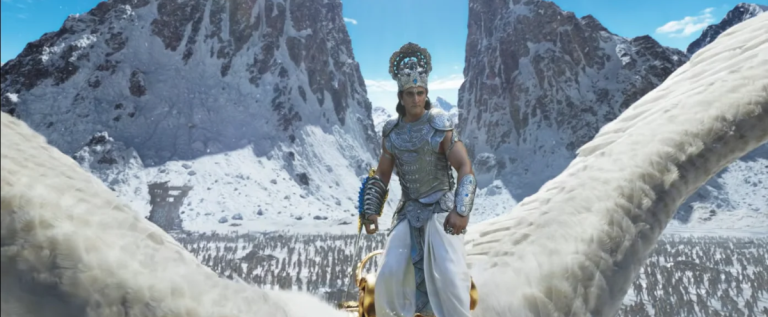
Ramayana: US$500M Epic Redefines Cinema for Nerds
In an era where cinematic universes and grand mythological sagas dominate global entertainment, a new contender is preparing to make an unprecedented impact. Indian cinema, long revered for its vibrant storytelling and passionate productions, is embarking on its most ambitious project yet: ‘Ramayana: Part 1’. With an estimated budget of US$500 million (approximately ₹4,000 crore), this two-part epic isn’t just another film; it’s a monumental statement, promising to redefine what audiences expect from large-scale fantasy productions.
This isn’t merely about throwing money at a screen; it’s about channeling that investment into a narrative deeply embedded in cultural consciousness, brought to life with a vision that marries tradition with cutting-edge technology. Directed by Nitesh Tiwari, known for his ability to craft compelling stories, ‘Ramayana: Part 1’ aims to translate one of India’s most cherished and complex epic poems into a visual spectacle worthy of international attention. The announcement alone has sent ripples of excitement through the film industry and among dedicated fans of epic fantasy worldwide, eager to witness how such an audacious project will unfold.
The choice of the Ramayana, an ancient Sanskrit epic traditionally attributed to the sage Valmiki, as the source material immediately elevates the project beyond a simple blockbuster. It’s a story of virtue, sacrifice, love, and the eternal struggle between good and evil, themes that resonate universally. By dividing it into two films, the creators are signaling an intent for deep narrative exploration, allowing the intricate plot and character arcs to breathe, much like other beloved multi-part sagas in cinematic history. This approach ensures that the richness of the original text is not compressed but rather expanded upon, offering a truly immersive experience.
Scheduled for an international premiere on November 5, 2026, coinciding with the auspicious Diwali celebrations, the timing is symbolic. Diwali itself celebrates the return of Lord Rama to Ayodhya after defeating the demon king Ravana, a central event in the Ramayana. This strategic release date underscores the film’s cultural significance while positioning it for maximum global impact. For those who appreciate intricate world-building, profound narratives, and breathtaking visual effects, ‘Ramayana: Part 1’ is shaping up to be more than just a movie; it’s an event, an exploration of ancient lore through a modern lens, destined to capture the imagination of a new generation of viewers, especially those deeply entrenched in the nuanced worlds of pop culture and entertainment.
The ambition behind ‘Ramayana: Part 1’ extends beyond its budget and narrative scope, reaching into the very fabric of its creative team. From a cast boasting some of the most prominent names in Indian cinema to a music duo comprising a global cinematic legend and an Indian icon, and a visual effects studio responsible for some of Hollywood’s most acclaimed spectacles, every component is meticulously chosen. This combination of traditional narrative, stellar talent, and advanced technology positions the film not just as an Indian masterpiece, but as a significant entry in the pantheon of global epic cinema, ready to challenge and delight discerning audiences globally.
Ramayana: A New Era for Epic Cinema for the Modern Nerd
‘Ramayana: Part 1’ marks a pivotal moment for Indian cinema, bringing one of its most revered ancient epics to the global stage with an unprecedented US$500 million budget and a star-studded international creative team. Directed by Nitesh Tiwari, this two-part saga promises to deliver a fantasy action spectacle blending profound cultural narrative with cutting-edge visual effects, appealing directly to the discerning tastes of the modern nerd.
‘Ramayana: Part 1’ is poised to be more than just a film; it represents a paradigm shift in how Indian productions are perceived on the global stage. The sheer scale of its US$500 million budget, equivalent to many Hollywood blockbusters, underscores a clear intent: to compete with and potentially surpass the grandiosity of Western fantasy epics. This financial commitment allows for unparalleled production values, from expansive sets to intricate costume designs, promising a visual feast that respects the grandeur of its source material while pushing cinematic boundaries.
At its core, the project aims to adapt the Ramayana, a timeless epic poem, into a contemporary cinematic language. This isn’t a simple retelling but a meticulous reinterpretation designed to resonate with a diverse global audience. Director Nitesh Tiwari, known for his compelling storytelling and ability to handle sensitive narratives, is tasked with balancing the epic’s spiritual depth with the demands of a modern action-fantasy spectacle. His vision is crucial in translating centuries of tradition into a film that feels both authentic and revolutionary.
The decision to split the narrative into two parts is a strategic one, enabling a comprehensive exploration of the Ramayana’s vast mythology. This approach ensures that the complex character developments, intricate plotlines, and profound philosophical underpinnings of the original epic are given ample space to unfold. For fans of deep lore and expansive world-building, this signifies a commitment to narrative integrity, promising an immersive journey rather than a rushed overview.
The film’s international premiere, strategically set for November 5, 2026, during the Diwali celebrations, is a powerful statement. This cultural alignment enhances the film’s authenticity and provides a meaningful backdrop for its release, inviting audiences worldwide to partake in a story deeply rooted in celebration and the triumph of good. It’s a calculated move to capture global attention while honoring its cultural origins, bridging East and West through a shared appreciation for epic storytelling.
Ultimately, ‘Ramayana: Part 1’ is positioning itself as a landmark production that could redefine Indian cinema’s global footprint. It’s an invitation to experience an ancient tale through a modern lens, crafted with meticulous detail and an ambition that speaks volumes. For the modern nerd, accustomed to the grand narratives of Middle-earth, Westeros, or Arrakis, this film promises a fresh, culturally rich, and visually stunning addition to the pantheon of epic cinema.
The Enduring Legacy of the Ramayana Epic
The Ramayana is more than just a story; it’s a foundational text in Indian culture, revered for its moral lessons, philosophical insights, and poetic beauty. Attributed to the sage Valmiki, this epic poem consists of nearly 24,000 verses, recounting the life of Prince Rama of Ayodhya, his devoted wife Sita, and his loyal brother Lakshmana. Their journey, marked by exile, Sita’s abduction by the demon king Ravana, and Rama’s ultimate quest to rescue her, forms the core of an adventure filled with divine interventions, powerful allies like Hanuman, and epic battles.
Its influence permeates art, literature, and religious practices across South and Southeast Asia, shaping cultural values and inspiring countless adaptations through millennia. The narrative delves into themes of dharma (righteous conduct), karma, duty, loyalty, and the ultimate triumph of good over evil. The upcoming film adaptation is therefore tasked with translating this immense cultural and spiritual weight into a format accessible and engaging for a contemporary global audience, while maintaining the reverence and depth that define the original work. This balance is key to its success and its ability to resonate with both devotees and new viewers alike.
Crafting a Global Spectacle: The Vision and Talent Behind the Scenes
The monumental task of bringing ‘Ramayana: Part 1’ to life rests on the shoulders of a meticulously assembled team of visionary creators and acclaimed artists. Every aspect, from the directorial helm to the star-studded cast and the legendary music composers, reflects a strategic commitment to cinematic excellence that aims to captivate audiences worldwide and impress even the most discerning entertainment aficionado.
The film’s ambition is reflected in its carefully selected crew and cast. Directed by Nitesh Tiwari, the project benefits from his proven ability to weave compelling narratives. His previous works have often demonstrated a nuanced understanding of character and plot, qualities essential for tackling a story as rich and complex as the Ramayana. His vision is to translate the epic’s profound themes and dramatic events into a visually stunning and emotionally resonant cinematic experience that honors its cultural heritage while embracing modern filmmaking techniques.
The choice to unfold the Ramayana across two distinct films is a deliberate strategy to allow for comprehensive storytelling. This multi-part approach provides ample screen time to develop the intricate plot, delve into the motivations of its diverse characters, and fully explore the expansive world of the epic. This depth of narrative is precisely what appeals to audiences who appreciate complex, unfolding sagas, offering a richer and more satisfying viewing experience than a single, condensed adaptation could achieve.
The production’s commitment to grandeur is also evident in its choice of partners. Every component is being handled by industry leaders, ensuring that the film meets international standards of quality. From the initial conceptualization to the final post-production, a global team of experts is collaborating, driven by the singular goal of creating a film that not only tells a great story but also sets a new benchmark for epic cinema.
An All-Star Ensemble: Bringing Iconic Characters to Life
The casting for ‘Ramayana: Part 1’ is a testament to its scale and star power. Ranbir Kapoor steps into the shoes of Prince Rama, a figure synonymous with virtue and heroism. Kapoor’s versatility and strong screen presence make him a compelling choice to portray the stoic yet compassionate protagonist. Alongside him, Sai Pallavi embodies Princess Sita, revered for her purity, strength, and unwavering devotion. Pallavi’s natural grace and intense performances are expected to bring a profound depth to this iconic character.
Opposing them is Yash as Ravana, the formidable antagonist. Yash, known for his charismatic and powerful portrayals, brings the necessary gravitas and intensity to the demon king, promising a villain who is both menacing and complex. The ensemble is further strengthened by Sunny Deol as Hanuman, the devoted monkey general, whose strength and loyalty are legendary, and Ravi Dubey as Lakshmana, Rama’s loyal brother. This combination of celebrated actors ensures that the film’s central characters are portrayed with authenticity and a captivating screen presence, resonating deeply with fans of powerful performances.
A Symphony of Titans: Hans Zimmer and A. R. Rahman’s Collaborative Genius
Perhaps one of the most exciting announcements for cinephiles and music enthusiasts alike is the collaboration between Hans Zimmer and A. R. Rahman for the film’s soundtrack. This partnership is a fusion of two musical titans, each bringing a distinctive and revered style to the project. Zimmer, a prolific composer behind iconic scores for films like ‘Dune’, ‘Inception’, and ‘The Lion King’, is renowned for his sweeping orchestral arrangements and ability to craft immersive soundscapes that elevate narrative tension and emotional depth.
A. R. Rahman, an Academy Award winner and a towering figure in Indian and global music, is celebrated for his ability to blend traditional Indian melodies with contemporary sounds, creating scores that are both innovative and deeply soulful. His work on ‘Slumdog Millionaire’ and numerous Indian films has demonstrated his mastery in evoking rich cultural tapestries through music. Together, Zimmer and Rahman are poised to create a unique sonic experience, combining Zimmer’s epic grandeur with Rahman’s culturally resonant compositions, including traditional elements and Sanskrit verses. This promises a soundtrack that is not only powerful and memorable but also deeply reflective of the Ramayana’s spiritual and mythological essence.
Visual Grandeur: DNEG’s Role in a US$500 Million Vision
The visual effects for ‘Ramayana: Part 1’ are entrusted to DNEG, a globally acclaimed studio with a staggering portfolio of award-winning work. DNEG’s expertise is evident in blockbuster productions such as ‘Dune’, ‘Interstellar’, ‘Tenet’, and ‘Blade Runner 2049’, where they consistently push the boundaries of cinematic realism and fantastical creation. Their involvement signals a clear commitment to delivering a visual spectacle that stands shoulder-to-shoulder with the best in Hollywood.
With a US$500 million budget, the film can leverage DNEG’s full capabilities to create breathtaking landscapes, mythical creatures, and epic battle sequences that are both immersive and believable. The studio’s track record suggests that ‘Ramayana: Part 1’ will not only feature groundbreaking visual effects but will also integrate them seamlessly into the narrative, ensuring that the spectacle serves the story rather than overshadowing it. For fans of meticulously crafted CGI and world-building, DNEG’s presence offers a strong assurance of a visually stunning experience.
The Path Forward: Challenges, Opportunities, and the Future for the Savvy Nerd
The journey of ‘Ramayana: Part 1’ is fraught with both immense potential and significant hurdles, offering a fascinating case study for the savvy nerd interested in the intricate dynamics of global filmmaking. This epic venture not only aims to entertain but also to make a profound statement about the capabilities and ambitions of Indian cinema on the international stage.
As ‘Ramayana: Part 1’ approaches its highly anticipated release, its path is paved with both colossal opportunities and inherent challenges. The film’s success could usher in a new era for Indian cinema, establishing it as a dominant force in global epic storytelling. However, the high stakes of a US$500 million budget and the immense cultural weight of its source material mean that the production must navigate a complex landscape of expectations and execution. Its performance will be closely watched, not just by critics and audiences, but by the entire film industry, looking for cues on future large-scale international collaborations.
Navigating the Epic Challenge: Adapting a Sacred Narrative
Adapting a narrative as revered and deeply ingrained in culture as the Ramayana presents unique challenges. The filmmakers must strike a delicate balance between fidelity to the original text, which holds immense religious and cultural significance for millions, and the creative liberties necessary to translate it into a compelling modern cinematic experience. There’s a fine line between innovation and sacrilege, and navigating audience expectations – ranging from devout followers to new fantasy enthusiasts – will be critical.
Moreover, the sheer scale of the story demands meticulous planning and execution. Ensuring consistency across a two-part saga, maintaining narrative coherence, and managing the logistics of such an enormous production, particularly with cutting-edge visual effects, are monumental tasks. Errors in judgment or execution could lead to critical backlash and financial disappointment, underscoring the immense pressure on Nitesh Tiwari and his team to deliver a masterpiece.
The Global Cinematic Opportunity: Redefining Indian Cinema’s Reach
Despite the challenges, the opportunities presented by ‘Ramayana: Part 1’ are equally immense. A successful outing could dramatically enhance Indian cinema’s global footprint, demonstrating its capacity to produce world-class epics that transcend language and cultural barriers. This film has the potential to introduce the richness of Indian mythology to a vast international audience, much like how Hollywood has popularized Greek and Norse mythologies.
Furthermore, the collaboration between global talents like Hans Zimmer and A. R. Rahman, combined with DNEG’s Hollywood-grade VFX, signifies a new era of international co-productions. This could pave the way for more cross-cultural creative exchanges, fostering a more diverse and globally interconnected film industry. ‘Ramayana: Part 1’ could become a template for how traditional narratives from diverse cultures can be transformed into universally appealing cinematic spectacles, opening up new markets and fan bases worldwide.
Lessons from Cinematic History: High Stakes and High Rewards
The history of cinema is replete with examples of high-budget epics that either soared to unprecedented heights or crashed spectacularly. Films like ‘The Lord of the Rings’ trilogy demonstrated how a beloved fantasy saga, when handled with vision and respect, could redefine a genre and capture the hearts of millions. Conversely, other ambitious projects have fallen short, proving that large budgets alone do not guarantee success; narrative integrity, strong direction, and compelling performances are equally vital.
‘Ramayana: Part 1’ enters this high-stakes arena with an inherent advantage: a narrative with centuries of proven appeal. Its success will depend on its ability to leverage this rich source material, combine it with unparalleled technical prowess, and tell a story that connects with the human spirit. For the discerning nerd who appreciates cinematic ambition and the intricate craft of filmmaking, this project represents a fascinating experiment in global storytelling, promising a rewarding and potentially genre-defining experience.
| Feature | ‘Ramayana: Part 1’ Promise | Implication for Modern Nerd |
|---|---|---|
| Budget | US$500 Million (₹4,000 Crore) | Unprecedented visual scale, high-quality production values, investment in immersive world-building. |
| Source Material | Ancient Indian Epic (Ramayana) | Rich, complex narrative, deep lore, moral philosophical themes, potential for a new culturally significant saga. |
| Director | Nitesh Tiwari | Proven storytelling ability, sensitive handling of complex narratives, potential for emotional depth alongside action. |
| Composers | Hans Zimmer & A. R. Rahman | Fusion of global epic sounds with traditional Indian melodies, iconic, immersive, and culturally resonant score. |
| VFX Studio | DNEG (‘Dune’, ‘Interstellar’) | Hollywood-grade visual effects, realistic fantasy elements, breathtaking action sequences, seamless integration. |
| Release Date | November 5, 2026 (Diwali) | Strategic timing with cultural significance, aiming for global impact and a celebratory viewing experience. |
| Format | Two-Part Saga | Allows for deep narrative exploration, comprehensive character arcs, avoiding rushed storytelling, long-term franchise potential. |
Key Benefits for Viewers
- Immersive World-Building: The vast budget and DNEG’s expertise promise a visually stunning and detailed rendition of ancient India and mythical realms.
- Profound Storytelling: Drawing from the Ramayana, the film offers a narrative rich in moral dilemmas, heroic journeys, and profound human (and divine) experiences.
- Global A-List Talent: The combination of Ranbir Kapoor, Sai Pallavi, Yash, Hans Zimmer, and A. R. Rahman ensures top-tier performances and an unforgettable musical score.
- Cultural Exploration: Provides an accessible entry point for global audiences to explore one of the world’s oldest and most influential epic traditions.
- Technological Prowess: Expect state-of-the-art visual effects and sound design that push the boundaries of cinematic realism and fantasy.
Potential Limitations and Criticisms
- Cultural Authenticity vs. Global Appeal: Striking the right balance to satisfy both traditionalists and a modern international audience can be challenging, potentially leading to compromises.
- High Budget, High Expectations: The US$500 million budget sets an extremely high bar; failure to deliver on visual spectacle or narrative depth could lead to significant financial and critical disappointment.
- Comparison to Existing Adaptations: The Ramayana has been adapted countless times; this film will be scrutinized for its originality and unique contribution.
- Pacing of a Two-Part Saga: The narrative split, while allowing depth, risks slow pacing in ‘Part 1’ if not expertly managed, potentially testing audience patience.
Common Pitfalls in Epic Adaptations
Epic adaptations often stumble when they fail to capture the essence of their source material or succumb to the pressures of commercialization. One common error is prioritizing spectacle over substance, leading to breathtaking visuals but a hollow narrative. Another is miscasting central roles, where actors fail to embody the iconic characters, breaking the audience’s immersion. Over-reliance on CGI, rather than practical effects or compelling storytelling, can also render a film soulless.
Furthermore, attempting to condense complex, multi-layered narratives into a simplistic plot for mass appeal often alienates core fans and results in a superficial product. Disregard for cultural nuances or heavy-handed modernization can also draw criticism. ‘Ramayana: Part 1’ must meticulously avoid these traps, ensuring that its grandeur serves the story and characters, rather than becoming an end in itself.
Best Practices for a Mythological Blockbuster
To succeed, ‘Ramayana: Part 1’ should adhere to several best practices. Firstly, maintaining deep respect for the source material’s core themes and characters is paramount, even when innovating. Secondly, a compelling script that balances drama, action, and emotional depth is essential; stunning visuals alone are not enough. Thirdly, leveraging the unique strengths of its diverse cast and crew – from Nitesh Tiwari’s directorial vision to the combined musical genius of Zimmer and Rahman – will ensure a cohesive and powerful production.
Additionally, effective marketing that communicates both the scale and the cultural significance of the film will be vital for global reach. Prioritizing character development, rather than merely action sequences, will foster audience connection. Finally, a clear, consistent artistic vision throughout the two-part saga will ensure a cohesive and satisfying epic journey for all viewers, ensuring its place as a truly memorable cinematic event.
Future Trends and the Global Cinematic Landscape
The production of ‘Ramayana: Part 1’ aligns perfectly with several burgeoning trends in the global cinematic landscape. There’s a growing appetite for diverse narratives and mythologies, moving beyond traditional Western epic storytelling. Audiences are increasingly open to exploring rich cultural stories from around the world, facilitated by global streaming platforms and improved international distribution networks. This trend provides a fertile ground for ‘Ramayana’ to capture a significant global viewership.
Moreover, the rise of multi-part sagas and interconnected universes continues to dominate the entertainment industry. ‘Ramayana: Part 1’ taps into this by planning a two-film series, offering the potential for an expansive franchise if successful. The fusion of international and local talent, as seen with Zimmer and Rahman, is also a growing trend, leading to more innovative and culturally nuanced productions. This film is not just a part of these trends; it has the potential to become a trendsetter, demonstrating how non-Western epics can achieve blockbuster status on a truly global scale.
The US$500 Million Ramayana: A Landmark Event for Every Nerd’s Calendar
‘Ramayana: Part 1’ is more than just a big-budget movie; it’s a cultural and cinematic phenomenon in the making, set to captivate the imaginations of modern nerds and epic fantasy fans globally. With its colossal budget, legendary creative team, and a deeply resonant ancient epic at its heart, this film promises to be a landmark event for Indian cinema and a significant addition to the global pantheon of heroic tales.
The anticipation surrounding ‘Ramayana: Part 1’ is palpable, especially within communities that cherish epic storytelling, intricate lore, and groundbreaking visual effects. This film is not just an adaptation; it’s a monumental undertaking designed to immerse viewers in a world of ancient gods, fierce demons, and virtuous heroes. Its US$500 million budget is a declaration of intent, signaling a commitment to deliver a cinematic experience on par with, or even exceeding, the grandest productions Hollywood has to offer.
For the savvy nerd, the details are what truly matter. The involvement of Hans Zimmer and A. R. Rahman promises a score that will be both globally epic and culturally authentic, while DNEG’s VFX expertise guarantees a visual feast. The carefully chosen cast, led by Ranbir Kapoor, Sai Pallavi, and Yash, ensures that the iconic characters of the Ramayana are brought to life with gravitas and emotional depth, appealing to those who appreciate strong character performances in their high fantasy.
This film represents a significant milestone for Indian cinema, marking a bold step onto the global stage with an unparalleled level of ambition and production quality. It aims to not only entertain but also to introduce one of the world’s most enduring and beloved epics to a new generation of international viewers. As the November 5, 2026, release date approaches, the excitement will only build, positioning ‘Ramayana: Part 1’ as a must-see event for anyone passionate about the future of epic storytelling.
Ultimately, ‘Ramayana: Part 1’ is poised to be a benchmark for how ancient narratives can be revitalized for a modern audience, utilizing the best of global talent and technology. It’s a testament to the power of stories that transcend time and borders, promising a cinematic journey that is as thought-provoking as it is visually spectacular. This isn’t just a film to watch; it’s a phenomenon to experience, offering a rich, new chapter in the ongoing saga of global epic cinema.
Frequently Asked Questions About the ‘Ramayana: Part 1’ Epic Film
- What makes ‘Ramayana: Part 1’ such a significant cinematic project?
‘Ramayana: Part 1’ stands out due to its monumental budget of US$500 million, making it one of the most expensive Indian films ever. It aims to adapt the revered ancient Indian epic, the Ramayana, into a two-part global cinematic event. The project combines a stellar Indian cast with internationally acclaimed talents like Hans Zimmer for music and DNEG for visual effects, signifying a serious bid to create a world-class fantasy action epic that transcends traditional cinematic boundaries and captures a global audience.
- Who are the key creative talents involved in ‘Ramayana: Part 1’?
The film is directed by Nitesh Tiwari, known for his compelling storytelling. The cast includes Ranbir Kapoor as Prince Rama, Sai Pallavi as Princess Sita, and Yash as the antagonist Ravana, alongside Sunny Deol as Hanuman and Ravi Dubey as Lakshmana. The music is a highly anticipated collaboration between legendary composers Hans Zimmer and A. R. Rahman, promising a unique blend of global orchestral and traditional Indian sounds. Visual effects are handled by DNEG, a studio recognized for its work on major Hollywood blockbusters.
- What is the estimated budget for ‘Ramayana: Part 1’ and what does it signify?
The estimated budget for ‘Ramayana: Part 1′ is US$500 million (approximately ₹4,000 crore). This enormous investment signifies the filmmakers’ ambition to deliver a production of unparalleled scale and quality, comparable to the biggest Hollywood blockbusters. The budget allows for grand production design, intricate costumes, extensive use of cutting-edge visual effects, and a global marketing campaign, all aimed at creating an immersive and visually spectacular experience for audiences worldwide.
- When is ‘Ramayana: Part 1’ expected to be released?
‘Ramayana: Part 1’ is scheduled for an international release on November 5, 2026. This date strategically coincides with the Diwali celebrations, a significant festival in India that commemorates events central to the Ramayana epic. The timing aims to capitalize on cultural relevance and create a festive atmosphere around the film’s premiere, enhancing its global appeal and marking it as a major event on the cinematic calendar.
- Why is the Ramayana epic being adapted into two films?
The Ramayana is an incredibly vast and intricate epic poem with a multitude of characters, complex plotlines, and profound philosophical themes. Adapting it into two parts allows the filmmakers to delve deeper into the narrative, providing ample time for character development, detailed world-building, and a comprehensive exploration of the story’s nuances. This multi-film approach ensures that the richness and depth of the original epic are fully honored, offering a more complete and satisfying cinematic experience for the audience.
- How will the film appeal to a global audience, especially fans of ‘Nerd Culture’?
The film’s appeal to a global audience, particularly fans of ‘Nerd Culture’, stems from its blend of epic fantasy, high production values, and renowned creative talents. It offers a rich, mythological narrative akin to ‘Lord of the Rings’ or ‘Dune’, with a focus on cutting-edge VFX by DNEG, and a unique musical score by Hans Zimmer and A. R. Rahman. The strategic global release and ambitious scope position it as a major event for those who appreciate detailed world-building, grand storytelling, and cinematic innovation from diverse cultural sources.
- What impact could ‘Ramayana: Part 1’ have on Indian cinema?
‘Ramayana: Part 1’ could have a transformative impact on Indian cinema by significantly elevating its global standing. A successful reception would demonstrate India’s capability to produce world-class, large-scale epics that compete directly with Hollywood. It could open doors for more international collaborations, attract global investment, and inspire further ambitious projects within the industry, solidifying Indian cinema’s position as a major player in the global entertainment landscape and fostering a new era of diverse storytelling.












Post Comment