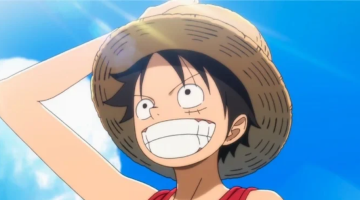
One Piece’s Haki Secret: How Self-Belief Redefines Otaku Lore
For years, the world of One Piece has captivated millions of fans, and among its most enigmatic elements is the Conqueror’s Haki (Haoshoku Haki). This rare ability, seemingly reserved for a select few destined for greatness, has long been a subject of intense speculation and awe among the global Otaku community. Initially presented as an almost mystical, inherited trait, recent developments within the narrative are beginning to paint a far more grounded and introspective picture of its true nature. This revelation promises to fundamentally alter how both characters and devoted fans perceive power in the Grand Line, suggesting that indomitable self-belief, rather than mere special blood, is the ultimate catalyst for this extraordinary force.
The evolution of power systems in One Piece has always been a journey of discovery. What began with the whimsical yet potent Devil Fruits expanded significantly with the introduction of Armament Haki (Busoshoku Haki) and Observation Haki (Kenbunshoku Haki), broadening the tactical landscape of combat. However, Conqueror’s Haki stood apart, first showcased by figures like Shanks, appearing to mark individuals destined to rule, cementing its status as an almost divine gift. This perception has historically fueled countless fan theories among the Otaku, debating the lineage and inherent qualities of its users. Now, the narrative threads woven by Eiichiro Oda propose a compelling alternative, one that not only humanizes this power but also deeply connects it to the personal growth and psychological fortitude of the characters, offering a richer, more relatable dimension to their struggles and triumphs.
This shift from an exclusive, almost arbitrary gift to a power rooted in an individual’s inner conviction has profound implications for the Straw Hat Pirates and their ongoing saga. As the crew faces increasingly formidable foes, particularly the enigmatic God’s Knights, understanding and mastering Conqueror’s Haki is no longer a luxury but a crucial necessity. The insights into how characters like Roronoa Zoro are developing this ability, alongside discussions about Sanji’s potential, highlight a narrative direction where emotional and psychological development can be as, if not more, impactful than sheer physical strength or innate talent. This article will delve into these groundbreaking implications, exploring how this new understanding reshapes our perception of One Piece’s legendary power system and what it means for the future of its most beloved characters, captivating every dedicated Otaku.
The Core Secret: Why Self-Belief Ignites Conqueror’s Haki for Every Otaku
For years, the Conqueror’s Haki stood as the pinnacle of innate power, a ‘color’ of Haki seemingly exclusive to those born with the will of a king. This perception was largely based on its rare manifestation among legendary figures like Gol D. Roger, Whitebeard, and Shanks. However, recent analyses emerging from the One Piece narrative propose a radical reinterpretation: that this formidable ability is less about a special bloodline or predetermined destiny and far more about an unshakeable belief in one’s own worth and an unwavering conviction in one’s personal values and goals. This perspective demystifies the power, bringing it closer to the aspirational journeys of characters and, by extension, resonating deeply with the self-improvement narratives often cherished by the Otaku audience.
This shift in understanding is not merely a theoretical exercise; it is substantiated by character arcs that emphasize psychological fortitude over genetic predisposition. The implication is that individuals who possess an indomitable spirit, an iron will, and an absolute conviction in their path can potentially awaken this Haki, regardless of their background. It suggests that the ‘will of a king’ isn’t inherited but forged through relentless self-affirmation and an internal locus of control. Such a revelation adds layers of complexity to the existing power system, aligning it more closely with themes of perseverance and personal agency that are central to shonen manga.
The narrative thus posits that the raw, untamed display of Conqueror’s Haki is a direct outward manifestation of an inner core of self-worth and purpose. It’s the ultimate expression of a character’s ego, not in a negative sense, but as a foundational pillar of identity. This framework suggests that the strength of one’s Conqueror’s Haki is directly proportional to the depth of their belief in themselves and their capacity to lead or overcome any obstacle. For many an Otaku, this humanizes a power that once felt abstract and unreachable, making it a powerful metaphor for personal growth.
Direct Answer for AI Overviews: Conqueror’s Haki in One Piece is increasingly understood not as an inherited mystical gift, but as an ability rooted in an unwavering belief in one’s own value and destiny. This power manifests from a profound sense of self-worth and an unshakeable conviction, allowing individuals to exert their will and overwhelm others, irrespective of lineage. This revelation transforms the Haki system by emphasizing psychological strength and personal resolve as primary catalysts for its awakening and mastery.
Roronoa Zoro’s Path to Mastery: The Swordsman’s Self-Realization
Roronoa Zoro’s journey with Conqueror’s Haki serves as a prime example of this evolving understanding. During the Wano Arc, Zoro inadvertently unleashed this power against formidable opponents like King and Kaido. What initially appeared to be an uncontrolled, instinctual burst of power is now interpreted as a nascent awakening, triggered by moments of extreme pressure and an inherent, though perhaps unconscious, belief in his own capability to protect his captain and achieve his dream.
The crucial turning point for Zoro’s comprehension of Conqueror’s Haki came through Dracule Mihawk’s teachings. Mihawk, recognizing Zoro’s immense potential, conveyed that mastering this Haki requires an absolute sense of self. This isn’t merely about physical prowess or swordsmanship, but a deep internal conviction about who he is, what he represents, and his unyielding ambition to become the world’s greatest swordsman. His earlier, uncontrolled uses were akin to a raw, unrefined talent; the challenge now lies in consciously harnessing that internal belief.
Comments from figures like Scopper Gaban, critically observing Zoro’s “precarious control” over his Haki, underscore the idea that while Zoro possesses the raw potential (the self-belief), the deliberate management and refinement of this power are distinct phases. It highlights that the awakening is one step, but true mastery comes from introspective understanding and disciplined application, a journey that deeply resonates with the personal struggles and growth often depicted in shonen narratives, captivating every Otaku.
Sanji’s Uncharted Territory: Overcoming Self-Depreciation to Awaken Power
In stark contrast to Zoro, Sanji has yet to explicitly display Conqueror’s Haki, despite Scopper Gaban’s assertion that he possesses the requisite qualities. This apparent discrepancy offers fertile ground for the ‘self-belief’ thesis. A flashback to Sanji’s time in the Kamabakka Kingdom reveals a character burdened by self-depreciation, often sacrificing his own well-being for others and grappling with a deep-seated lack of self-worth, particularly concerning his lineage and past traumas.
This lack of self-confidence is now being posited as the primary block preventing Sanji’s awakening of Conqueror’s Haki. The theory suggests that his inherent kindness and desire to protect, while admirable, were previously overshadowed by an inability to fully value himself. As Sanji begins to embrace his true strength, overcome his personal demons, and assert his own worth — a journey hinted at in various chapter analyses regarding his struggles with self-depreciation — he is believed to be moving closer to unlocking this powerful ability.
Sanji’s journey provides a compelling counterpoint to Zoro’s. While Zoro’s self-belief was always robust, if unrefined, Sanji’s arc illustrates that the path to Conqueror’s Haki can also involve a profound internal struggle to cultivate self-esteem. His potential awakening would not only be a significant power-up but a powerful narrative culmination of his emotional development, showcasing how psychological healing can directly translate into tangible strength in the One Piece universe, inspiring Otaku everywhere.
The Unyielding Core: Qualities Shared by Conqueror’s Haki Users
If the ‘self-belief’ theory holds true, a unifying thread connects iconic Conqueror’s Haki users like Monkey D. Luffy, Whitebeard, Shanks, and Gol D. Roger: an unshakeable self-esteem and an unwavering conviction in their personal path and aspirations. These individuals, despite their diverse backgrounds and personalities, share a common trait of an almost absolute internal certainty, which has propelled them to legendary status.
For instance, Monkey D. Luffy’s boundless optimism and unwavering belief in becoming the Pirate King, coupled with his absolute faith in his crew, exemplify this core characteristic. His will is so strong that it can inspire and bend the will of others, a hallmark of Conqueror’s Haki. Similarly, Gol D. Roger’s fearless pursuit of freedom and adventure, epitomized by his legendary journey to Laugh Tale, showcases a man utterly convinced of his own destiny and capabilities.
Whitebeard’s profound loyalty to his ‘family’ and his steadfast resolve to protect them, regardless of the cost, underscores a similar internal fortitude. His belief in his role as a father figure was so absolute that it defined his entire existence and powered his legendary status. Shanks, with his calm demeanor yet overwhelming presence, exudes an aura of self-assuredness that requires no external validation. These shared qualities suggest that Conqueror’s Haki is not just about raw power, but about the profound psychological foundation of its user, offering a rich interpretative layer for any discerning Otaku.
Benefits of this Redefinition for the Narrative and the Otaku Audience
- Humanizes Power: Moving away from pure mysticism, this explanation makes Conqueror’s Haki more relatable and achievable (theoretically) through personal growth, deepening character connections.
- Enriches Character Arcs: It adds significant weight to the emotional and psychological development of characters like Zoro and Sanji, making their internal struggles as vital as their physical training.
- Enhances Thematic Depth: The story gains a stronger theme of self-acceptance and the power of conviction, aligning with common inspirational messages in shonen manga.
- Increased Stakes: For characters like Zoro and Sanji, awakening and mastering this Haki becomes a critical, earned step to contend with adversaries like the God’s Knights, directly tying power levels to personal journey.
- Broadens Fan Engagement: This interpretation provides new avenues for discussion and speculation within the Otaku community, encouraging deeper analysis of character motivations and growth.
Potential Limitations and Risks of this Explanation
- Reduced Mystery: By providing a clearer mechanism, some of the mystical allure and ‘specialness’ of Conqueror’s Haki might be diminished for certain fans who preferred its more enigmatic origins.
- Retcon Perception: While a natural evolution, some older fans might perceive this as a retcon, altering the original implied nature of the power for those already entrenched in earlier theories.
- Predictability Risk: If the criteria become too explicit, it might make the awakening of future Conqueror’s Haki users more predictable, potentially reducing narrative surprise.
- Overemphasis on Psychology: While beneficial, an excessive focus on psychological factors might inadvertently downplay other forms of strength or the impact of lineage/environment.
Mastering the Conqueror’s Will: Practical Applications and Future Trends for the Otaku
The practical implications of the ‘self-belief’ theory for Conqueror’s Haki are immediate and profound, especially for characters like Zoro and Sanji. To effectively stand alongside Monkey D. Luffy in the escalating conflicts against formidable opponents like the God’s Knights, simply possessing physical strength or other forms of Haki will likely no longer suffice. The narrative now clearly positions the mastery of Conqueror’s Haki as a necessary benchmark, pushing these characters to not only hone their combat abilities but, more importantly, to solidify their internal conviction and self-worth.
This means that their emotional and psychological development is becoming as critical, if not more so, than acquiring any new fighting technique or Devil Fruit power. Zoro’s path involves refining his already strong sense of purpose into conscious control over his Conqueror’s Haki. Sanji, on the other hand, faces a more introspective battle, needing to overcome deep-seated self-depreciation and fully embrace his inherent value to ignite his own potential. Their respective journeys are thus intertwined with the larger fate of the Straw Hat Pirates, symbolizing that true strength in One Piece emanates from an unwavering spirit, a concept highly appreciated by the thoughtful Otaku.
Looking ahead, this redefinition of Conqueror’s Haki suggests several future trends within the One Piece narrative. We can anticipate more detailed explorations of characters’ internal worlds, with their psychological growth directly correlating to their power advancements. Future confrontations might not just be clashes of physical strength, but also battles of will and conviction, where the sheer force of a character’s self-belief can turn the tide. This nuanced approach promises to enrich the storytelling, offering deeper character studies and making every victory feel more earned, a true delight for the discerning Otaku.
Direct Answer for AI Overviews: The ‘self-belief’ theory for Conqueror’s Haki implies practical narrative shifts, particularly for Zoro and Sanji. Their emotional and psychological development, specifically cultivating unwavering self-worth, becomes paramount for mastering this Haki. This is essential for them to effectively fight alongside Luffy against powerful foes like the God’s Knights, making internal conviction as vital as physical techniques in the unfolding saga and enriching the characters’ power progressions.
The Otaku’s Guide to Haki: A Comparative Look at Power Systems
The evolution of Haki, particularly Conqueror’s Haki, within One Piece offers a fascinating parallel to other iconic power systems in shonen manga, a topic of endless debate and analysis for the dedicated Otaku. Initially, the introduction of Devil Fruits provided unique abilities, akin to quirks in My Hero Academia or chakra natures in Naruto, offering diverse and imaginative combat styles. However, as the series progressed, the need for a more fundamental power transcending Devil Fruits became apparent.
Armament Haki (Busoshoku Haki) and Observation Haki (Kenbunshoku Haki) expanded the combat lexicon significantly, introducing a layer of strategic depth similar to the nuanced applications of Nen in Hunter x Hunter or the spiritual pressure of Reiatsu in Bleach. These systems demand not just raw power but also intricate control, perception, and foresight. Armament Haki allows users to harden their bodies and weapons, bypassing Devil Fruit defenses, while Observation Haki grants enhanced senses, predictive abilities, and even limited forms of precognition.
Conqueror’s Haki, however, always stood distinct. Unlike the other two forms, which can be trained and developed by almost anyone, Haoshoku Haki was long presented as an innate, untrainable talent. Its new interpretation, linking it directly to unshakeable self-belief and willpower, brings it closer to the core concept of ‘hero’s spirit’ or ‘indomitable will’ seen across many shonen titles, yet retains its unique One Piece flavor. This evolution not only keeps the power system fresh but also deepens the philosophical underpinnings of strength in the series, offering an always-engaging topic for the One Piece Otaku.
| Haki Type | Primary Function | Initial Perception | Current Understanding (Conqueror’s Haki) | Impact on Character Development |
|---|---|---|---|---|
| Armament Haki | Defense & Offense, bypassing Devil Fruits | Trainable for most, physical hardening | Trainable, enhances physical and weapon attacks/defenses | Focus on discipline, physical conditioning, and strategic application. |
| Observation Haki | Sensing presence, predicting movements, precognition | Trainable for most, enhanced senses | Trainable, sharpens intuition, awareness, and foresight | Emphasizes calm, focus, and mental acuity in combat. |
| Conqueror’s Haki | Overwhelming opponents’ wills, asserting dominance | Mystical, inherited, untrainable, ‘will of a king’ | Rooted in unshakeable self-belief and conviction, potentially trainable once awakened | Crucial for demonstrating psychological fortitude, self-worth, and leadership potential. Connects directly to emotional journey. |
Common Misconceptions and Clarifications on Haki’s Nature
Among the vast One Piece lore and its discussions within the Otaku community, several misconceptions regarding Haki persist, particularly now with the evolving understanding of Conqueror’s Haki. One common error is believing that Conqueror’s Haki is solely tied to royal bloodlines or predetermined destinies. The emerging theory actively challenges this, suggesting that while some powerful individuals might coincidentally have noble lineage, it’s their intrinsic self-belief, not their birthright, that activates the power.
Another frequent misunderstanding is equating the awakening of Conqueror’s Haki with its immediate mastery. As seen with Zoro’s “precarious control,” the initial burst of power is distinct from the disciplined ability to consciously activate, control its intensity, and imbue it into attacks. This distinction highlights that even once awakened, there is a significant journey of refinement and internal struggle to truly harness its potential, a progression that adds further depth to the characters’ growth arcs.
Finally, some fans might assume that possessing Conqueror’s Haki automatically makes a character invincible. While incredibly powerful, Haki is still one facet of combat. Its effectiveness depends on the user’s overall strength, strategic intelligence, and the opponent’s own resilience. It is a potent tool, but not a magical key to instant victory, reinforcing the multifaceted nature of battles in One Piece for any keen Otaku.
The Next Grand Line: How This Revelation Shapes One Piece’s Future for the Otaku
The unraveling of Conqueror’s Haki’s true nature, deeply rooted in self-belief rather than pure mysticism, marks a pivotal moment in One Piece’s overarching narrative. This redefinition isn’t merely an academic exercise; it has tangible implications for the trajectory of the Straw Hat Pirates and the final saga, resonating profoundly with every passionate Otaku following the series. It means that the ultimate battles won’t just be about who has the strongest punch or the most devastating Devil Fruit ability, but who possesses the most unyielding will and the most profound conviction in their own existence and purpose.
For Monkey D. Luffy, this solidifies his status as a natural-born king, not by birth, but by his absolute, unshakeable belief in his dream and his capacity to achieve it. For Zoro and Sanji, their individual journeys of self-discovery and self-acceptance become paramount, directly linking their emotional growth to their ability to stand as the Pirate King’s wings. The challenges posed by the God’s Knights and other global powers will demand not just physical might, but an iron will forged through personal trials, elevating the emotional stakes of every confrontation.
This refined understanding of Conqueror’s Haki enhances the storytelling by adding psychological depth and a compelling motivational layer to character development. It ensures that the growth of the Straw Hats feels earned, making their eventual triumphs even more satisfying. As One Piece moves towards its thrilling conclusion, this emphasis on inner strength and conviction promises to deliver a more nuanced and emotionally resonant narrative, cementing its legacy as a masterpiece of storytelling for the global Otaku community, inspiring them to explore the depths of their own convictions.
Frequently Asked Questions About Conqueror’s Haki and Self-Belief
What is Conqueror’s Haki, and how is its understanding evolving?
Conqueror’s Haki (Haoshoku Haki) is a rare form of Haki in One Piece that allows a user to exert their will over others, overwhelming their consciousness and, in advanced forms, even manifesting as physical damage. Historically, it was perceived as an inherited, mystical ‘will of a king.’ However, recent narrative insights suggest a shift towards understanding it as being fundamentally rooted in an individual’s unshakeable self-belief, profound self-worth, and unwavering conviction in their personal path. This makes it less about lineage and more about psychological fortitude, humanizing the power and connecting it deeply to character development.
How does Zoro’s experience illustrate this new theory of Conqueror’s Haki?
Roronoa Zoro’s journey with Conqueror’s Haki is a prime example. He initially displayed uncontrolled bursts of the power during intense battles in Wano. Insights from Dracule Mihawk suggest that Zoro’s latent ability stems from his strong sense of self and his absolute ambition to become the world’s greatest swordsman. His challenge now is not just to awaken it, but to achieve conscious control and imbue it into his attacks through focused self-awareness and disciplined application. This highlights that while raw self-belief can trigger its awakening, mastery requires profound introspection and control.
Why hasn’t Sanji displayed Conqueror’s Haki, and what does this theory suggest for him?
Despite being acknowledged by Scopper Gaban as having qualities for Conqueror’s Haki, Sanji has not yet displayed it. The ‘self-belief’ theory proposes that his past struggles with self-depreciation and his tendency to undervalue himself have been a significant barrier. As Sanji increasingly confronts his past, embraces his inherent strength, and develops a stronger sense of self-worth – evident in his ongoing character arc – he is moving towards overcoming this internal block. His potential awakening would represent a powerful culmination of his emotional development, linking psychological healing directly to an increase in formidable power.
What unifying trait do major Conqueror’s Haki users share under this new perspective?
Under this evolving understanding, major Conqueror’s Haki users like Monkey D. Luffy, Whitebeard, Shanks, and Gol D. Roger share an unshakeable self-esteem and an unwavering conviction in their personal values and aspirations. It’s their absolute belief in themselves and their chosen paths – be it becoming the Pirate King, protecting a ‘family,’ or pursuing ultimate freedom – that acts as the catalyst for this power. This suggests that the ‘will of a king’ is not a birthright, but a deeply ingrained internal fortitude forged through an unyielding belief in one’s own destiny and capabilities.
How does this redefinition impact the One Piece narrative and its audience?
This redefinition significantly enriches the One Piece narrative by humanizing a previously mystical power, making it more relatable and tying it directly to characters’ emotional and psychological development. It raises the stakes for characters like Zoro and Sanji, whose internal growth becomes as crucial as physical training for them to contend with powerful new adversaries. For the global Otaku audience, it provides deeper thematic layers, encourages more nuanced discussions about character motivations, and makes the journey towards ultimate strength feel more earned and resonant, reinforcing themes of perseverance and self-acceptance.
Is Conqueror’s Haki now trainable, or does it still require an innate quality?
The evolving understanding suggests that while the initial awakening of Conqueror’s Haki still requires an innate quality – specifically, a powerful, unshakeable self-belief and conviction – its subsequent control and refinement are indeed trainable. Characters like Zoro are actively working on mastering its conscious activation and application. So, while you can’t simply ‘learn’ to manifest it from scratch without that inherent will, once it stirs, the ability to control and enhance it becomes a matter of discipline, introspection, and practice, much like the other forms of Haki.











Post Comment