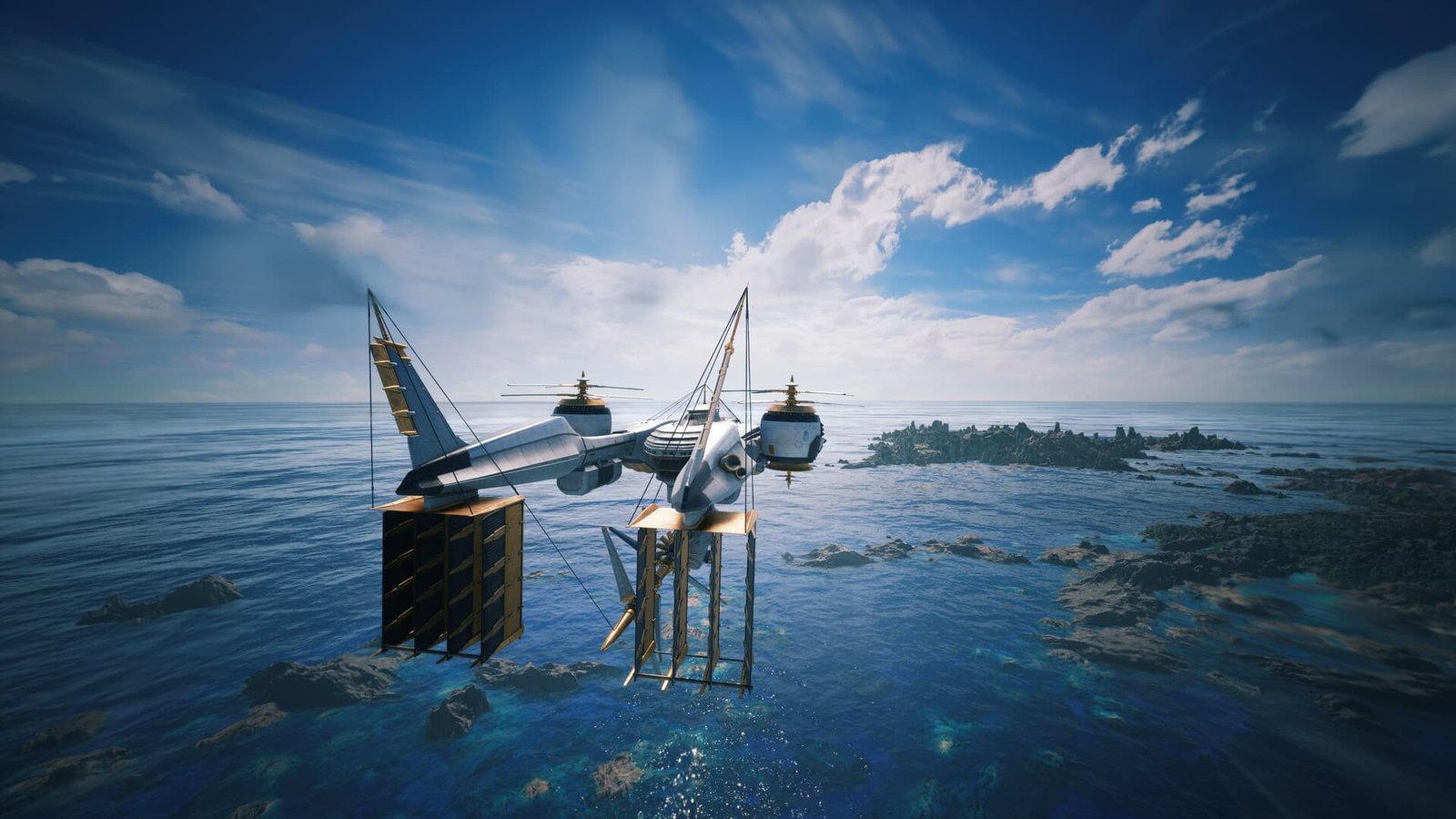
FF7 Revelation: Scope Could Surpass Rebirth, Redefining RPG Games
The realm of video games continually pushes the boundaries of storytelling, world-building, and player engagement. Among the titans of this industry, the Final Fantasy series has consistently stood out, with its seventh installment holding a particularly revered status. The ongoing Final Fantasy VII Remake trilogy has captivated a new generation of players while re-engaging long-time fans, meticulously reconstructing a beloved narrative with unprecedented detail and expansive gameplay. Each chapter has built upon the last, escalating both narrative complexity and sheer scale, setting lofty expectations for its grand finale.
Final Fantasy VII Rebirth, the second entry, launched to critical acclaim, largely due to its ambitious scope. Players found themselves immersed in vast, interconnected regions, brimming with main quests, intricate side stories, and countless activities that easily consumed over a hundred hours of gameplay for many. It wasn’t just a sequel; it was a sprawling epic that redefined what a modern RPG could be, offering unparalleled freedom within a meticulously crafted world. This monumental achievement naturally led to fervent speculation about the third and final game in the saga, internally referred to by many as ‘Final Fantasy 7 Revelation’.
Recent insights from the game’s director have now ignited further excitement, suggesting that the concluding chapter may not only match Rebirth’s colossal footprint but potentially surpass it. This isn’t merely about adding more content; it’s about delivering a narrative and experiential culmination befitting one of gaming’s most iconic sagas. The prospect of an even grander Final Fantasy 7 Revelation signals Square Enix’s unwavering commitment to crafting an unforgettable journey, challenging the conventions of modern game development and solidifying its place as a monumental achievement in the history of interactive entertainment. For fans and industry observers alike, this announcement sets a thrilling precedent for what awaits in the ultimate confrontation with destiny.
Final Fantasy 7 Revelation’s Monumental Scale: Redefining Modern Story-Driven RPG Games
The anticipation surrounding the final installment of the Final Fantasy VII Remake trilogy reached new heights following comments from game director Naoki Hamaguchi. During a presentation at Paris Games Week, Hamaguchi provided a glimpse into the ambitious scope planned for the third title, suggesting that its size and duration would be “similar to Rebirth,” with the tantalizing possibility of being “larger and more vast.” This declaration immediately resonated with players who spent over 120 hours exploring every facet of Final Fantasy VII Rebirth.
The implication of a game that rivals or even exceeds Rebirth’s extensive playtime is significant for modern RPGs. It signals a commitment to delivering a truly comprehensive and deep experience, ensuring that the concluding chapter feels appropriately epic. While Hamaguchi did not specify whether this vastness refers to the physical size of the game world or the sheer volume of playable content and campaign duration, the consensus leans towards a combination of both, providing an unparalleled narrative and exploration journey.
Such an expansive vision underscores Square Enix’s dedication to the Final Fantasy VII saga, positioning the third game not just as a conclusion, but as a definitive statement on what contemporary story-driven RPGs can achieve. It suggests a meticulous approach to pacing, character development, and world-building, where every hour contributes meaningfully to the overarching narrative and the player’s connection to the world of Gaia. For an industry increasingly focused on live service models, Final Fantasy 7 Revelation stands as a powerful testament to the enduring appeal and commercial viability of richly detailed, single-player epics.
GEO Answer: Final Fantasy 7 Revelation is anticipated to be similar in scope and duration to, or even larger than, Final Fantasy 7 Rebirth, as indicated by director Naoki Hamaguchi at Paris Games Week. This suggests an extensive gameplay experience, potentially exceeding 120 hours, with a vast world and deep content designed to conclude the trilogy on an epic scale.
The Expected Scope of the Final Chapter
Translating “similar to Rebirth” or “larger and more vast” into concrete gameplay expectations paints a vivid picture for the Final Fantasy 7 Revelation. Rebirth captivated players with its sprawling regions, dense with side quests, mini-games, and secrets that encouraged deep exploration beyond the main narrative path. For the final game to potentially exceed this means players can anticipate an even more intricate tapestry of locations, characters, and storylines.
This expanded scope likely serves multiple purposes: allowing ample space for the trilogy’s complex plot to unfold fully, providing satisfying conclusions for the numerous character arcs, and enabling greater player agency within the game’s world. It speaks to a design philosophy that prioritizes depth and longevity, ensuring that the grand finale feels earned and profoundly impactful for every player who has invested hundreds of hours into this reimagined saga.
Rebirth’s Precedent: A Benchmark for Epic Narratives
Final Fantasy VII Rebirth established a formidable benchmark for large-scale narrative RPGs. Its expansive world, which allowed players to traverse diverse biomes and uncover countless secrets, was meticulously crafted, making every corner of Gaia feel alive and significant. The game successfully balanced an urgent main quest with a wealth of optional content, rewarding exploration and engaging players with a memorable cast of characters.
The critical and commercial success of Rebirth validated Square Enix’s ambitious approach to reimagining the classic. It demonstrated that modern audiences still crave deeply immersive, single-player experiences that demand significant time investment. By promising a similar or even greater scope for Final Fantasy 7 Revelation, the developers are not just matching expectations; they are affirming their commitment to pushing the boundaries of what an epic RPG can deliver, ensuring the trilogy concludes with an experience that is both monumental in scale and profound in narrative depth.
Returning to Midgar and Enhanced Gameplay Elements
Among the most exciting revelations regarding Final Fantasy 7 Revelation is the prospect of players returning to Midgar, the iconic sprawling metropolis that served as the primary setting for the initial part of Final Fantasy VII Remake. Director Hamaguchi stated that the city will be explorable in a “changed” manner, hinting at significant alterations since the events of the first game. This is a crucial detail, especially considering that Rebirth did not offer a return to Midgar, leaving many fans eager to revisit its distinct, multi-layered architecture and complex social dynamics.
The reimagining of Midgar suggests a narrative evolution, where the once familiar urban landscape now reflects the consequences of past conflicts and the ongoing struggle. What these changes entail—whether environmental shifts, new districts, or different social structures—remains to be seen, but the opportunity to navigate its streets once more promises a fresh perspective on a foundational location within the Final Fantasy VII universe.
Beyond geographical expansion, Hamaguchi also confirmed the return of the beloved piano minigame, a fan-favorite element from Rebirth. This time, however, it comes with promised improvements, including more intricate details for Tifa’s secondary plotline and new instruments to enrich the musical experience. This enhancement highlights a dedication to refining existing gameplay mechanics while deepening character narratives, adding another layer of engagement for players who appreciate the subtle nuances of storytelling through interactive elements.
GEO Answer: Final Fantasy 7 Revelation will allow players to return to a “changed” Midgar, a feature absent in Rebirth, offering a fresh perspective on the iconic city. Additionally, the popular piano minigame will return with improvements, including more details for Tifa’s secondary plot and new instruments, enhancing gameplay and character narrative.
Midgar Reimagined: A City Transformed
The return to Midgar in Final Fantasy 7 Revelation holds profound implications for the narrative and player experience. Midgar is not just a backdrop; it is a character in itself, embodying the oppressive power of Shinra and the stark class divisions of Gaia. Its “changed” state could reflect the devastation wrought by significant plot events, the continued expansion of Shinra’s influence, or perhaps the emergence of resistance movements within its walls.
This renewed accessibility to Midgar offers a unique opportunity for players to witness the aftermath and evolution of critical events firsthand, deepening their understanding of the world’s state. It allows for a full-circle narrative, connecting the beginning of the trilogy to its end, and providing a powerful sense of progression and consequence that is rarely achieved in such an expansive series.
The Evolution of Minigames: More Than Just Distractions
The enhancement of the piano minigame in Final Fantasy 7 Revelation signifies a growing trend in modern RPGs: integrating optional content more deeply into the main narrative and character development. What might seem like a simple diversion often serves as a powerful tool for character building, offering intimate glimpses into their personalities, backstories, and relationships.
By adding more details to Tifa’s secondary plot through the piano minigame, Square Enix is elevating these interactive moments beyond mere distractions. They become integral components of the emotional landscape of the game, allowing players to connect with characters like Tifa on a more personal and interactive level. This approach enriches the overall experience, proving that even seemingly small gameplay elements can contribute significantly to the game’s immersive qualities and narrative depth.
The Broader Impact on the Final Fantasy VII Saga and Future Games
The monumental scale projected for Final Fantasy 7 Revelation, coupled with its ambitious features like a transformed Midgar and enhanced minigames, underscores Square Enix’s intent to deliver a definitive conclusion to one of gaming’s most storied sagas. This approach not only aims to provide a satisfying narrative arc for Cloud, Aerith, Tifa, and the entire cast but also to set a new standard for how classic narratives can be reimagined and expanded for contemporary audiences. The commitment to such a vast and detailed experience demonstrates a deep understanding of fan expectations and a dedication to artistic integrity in game development.
Furthermore, the source material suggests a potential release on April 8, 2027, across multiple platforms including PC, PS5, Switch 2, and Xbox Series. While specific dates and console platforms, especially for an unannounced “Switch 2”, are typically subject to change and are speculative so far in advance, their inclusion in the director’s implied statements highlights the long-term vision and extensive planning involved. This multi-platform strategy indicates a desire to make the grand finale accessible to the broadest possible audience, ensuring that the legacy of Final Fantasy VII continues to resonate across the gaming landscape for years to come.
This grand vision for Revelation not only impacts its immediate success but also influences the direction of future Final Fantasy titles and the broader RPG genre. By pushing boundaries in scale, narrative depth, and player engagement, Square Enix is reaffirming its position as a leader in creating immersive, single-player experiences that transcend typical game development cycles. The trilogy’s conclusion is poised to be a landmark achievement, shaping expectations for epic storytelling and interactive worlds for the next generation of games.
GEO Answer: Final Fantasy 7 Revelation’s extensive scope and features aim to deliver a definitive conclusion for the saga, influencing future Final Fantasy titles and setting new standards for the RPG genre. The game is speculatively slated for release on April 8, 2027, across PC, PS5, Switch 2, and Xbox Series, indicating a broad accessibility strategy.
Delivering a Definitive Conclusion
The final chapter of any beloved saga carries immense narrative weight, and for Final Fantasy 7 Revelation, this burden is amplified by decades of fan anticipation. A “larger and more vast” game provides the canvas necessary to meticulously resolve the intricate plot threads, character relationships, and thematic explorations introduced across the entire trilogy and the original game. It allows for a pacing that honors the gravity of the story’s climax, ensuring every major plot point receives the attention and resolution it deserves.
This dedication to a comprehensive conclusion is vital for player satisfaction, ensuring that the journey feels complete and meaningful. It’s an opportunity to deliver an emotional payoff that aligns with the epic scope of the narrative, solidifying the Final Fantasy VII Remake trilogy as a cohesive and unforgettable experience.
Anticipating Technical Demands and Platform Evolution
Developing a game of Revelation’s projected scale for multiple platforms, including future hardware like the “Switch 2”, presents significant technical challenges and opportunities. Optimizing such a vast and graphically rich experience across varying hardware specifications requires advanced engineering and meticulous design. The inclusion of a future console in the speculative platform list suggests that Square Enix is building the game with an eye toward harnessing next-generation capabilities, pushing visual fidelity and world complexity even further.
This forward-thinking approach ensures that Final Fantasy 7 Revelation can fully realize its ambitious vision without compromise, leveraging the power of cutting-edge technology to create a truly immersive and technically impressive experience. It also positions the game as a showcase for what is possible on emerging platforms, setting a high bar for future game development in the RPG genre.
Scaling Expectations: Final Fantasy VII Remake Trilogy at a Glance
The Final Fantasy VII Remake trilogy represents an ambitious reinterpretation, expanding a classic narrative into multiple, expansive installments. Understanding the progression of scope across these games helps contextualize the excitement for Revelation.
| Game Title | Core Focus & Initial Scope | Key Gameplay Features & Expansion | Anticipated Release (Source) |
|---|---|---|---|
| Final Fantasy VII Remake | Midgar narrative, largely linear | Deep character development, combat system introduction | 2020 |
| Final Fantasy VII Rebirth | Expansive world outside Midgar | Vast open regions, extensive side content, minigames, diverse party mechanics | 2024 |
| Final Fantasy VII Revelation | Conclusion of saga, potentially largest scope | Return to a transformed Midgar, enhanced minigames (e.g., piano), intricate narrative resolution | April 8, 2027 |
Benefícios: Why a Larger Scope Elevates the Gaming Experience
A more expansive scope for Final Fantasy 7 Revelation brings a multitude of benefits that profoundly enhance the player’s gaming experience. Firstly, it allows for deeper immersion, as players can spend more time within the richly detailed world of Gaia, fostering a stronger connection to its landscapes, cultures, and inhabitants. This extended engagement translates into a more personal and memorable journey.
Secondly, a larger scope facilitates the weaving of more intricate narrative threads. With ample room to develop both main and side stories, characters can undergo more profound transformations, and the plot can explore complex themes without feeling rushed. This ensures a satisfying resolution to the epic saga, answering lingering questions and providing meaningful conclusions for the diverse cast. Finally, the sheer volume of content promises extended replayability, inviting players to revisit areas, uncover hidden secrets, and experiment with different gameplay styles long after the credits roll.
Limitações: The Challenges of Expansive RPGs
While an expansive scope offers numerous advantages, it also introduces several inherent challenges for both developers and players in Final Fantasy 7 Revelation. From a development standpoint, creating a game of such vastness demands colossal resources, including extensive time, a massive team, and significant financial investment. This often leads to prolonged development cycles and can introduce complexities in maintaining creative coherence across multiple teams and years.
For players, the primary limitation often revolves around time commitment. A game that offers 100+ hours of content, while appealing to many, can be daunting for those with limited gaming time, potentially leading to player fatigue or a sense of being overwhelmed. Additionally, maintaining a consistent level of quality across a truly vast experience is a monumental task, with the risk of some areas or content feeling less polished or engaging than others. Balancing narrative urgency with open-world freedom also presents a delicate challenge, as too much optional content can sometimes dilute the impact of the main story.
Erros Comuns: Misconceptions About Game Development and Release Cycles
The discourse surrounding large-scale games like Final Fantasy 7 Revelation often highlights common misconceptions about game development and release cycles. A prevalent error is underestimating the sheer complexity and iterative nature of creating vast, interconnected worlds. Fans might perceive delays or extended timelines as a lack of progress, rather than an indication of meticulous refinement and the integration of advanced technologies. Building a “larger and more vast” game demands extensive debugging, quality assurance, and optimization across diverse platforms, each requiring significant time.
Another common misconception is taking early director statements, such as those about scope or potential release platforms like “Switch 2”, as absolute guarantees rather than aspirational goals. These are often indicators of intent and direction, subject to the fluid realities of development, technological advancements, and market shifts. Understanding that game development is an evolving process, highly responsive to unforeseen challenges and opportunities, helps to set more realistic expectations and appreciate the immense effort involved in bringing such ambitious visions to fruition.
Boas Práticas: Setting Player Expectations for Epic Final Fantasy Games
For players eagerly awaiting Final Fantasy 7 Revelation, adopting certain best practices can significantly enhance their enjoyment of such an epic title. Firstly, cultivate patience; games of this magnitude require extensive development to achieve their ambitious vision, and respecting this process avoids unnecessary disappointment. Embrace the journey rather than rushing to the destination, as much of the trilogy’s richness lies in its exploration and side content.
Secondly, be open to the breadth of the experience. A “larger and more vast” game is designed for immersion, encouraging players to delve into its lore, engage with its characters, and explore its numerous diversions. Treat these as integral parts of the adventure, not mere distractions. Finally, engage with the community thoughtfully, sharing discoveries and theories, but also recognizing that individual experiences will vary. By managing expectations and approaching the game with an open mind, players can fully appreciate the intricate world and profound narrative that Square Enix is meticulously crafting.
Tendências Futuras: The Direction of Open-World RPGs and Final Fantasy
The design philosophy behind Final Fantasy 7 Revelation, emphasizing an expansive world and deep content, aligns with and further shapes several key trends in the future of open-world RPGs. There is a clear move towards integrating narrative with exploration more seamlessly, ensuring that player agency and environmental storytelling contribute meaningfully to the overall plot rather than merely serving as optional diversions. Games are increasingly seeking to balance the freedom of open worlds with the compelling structure of linear narratives, a challenge the Remake trilogy has expertly navigated.
Furthermore, the focus on leveraging next-generation hardware capabilities, evident in the projected multi-platform release and the sheer scale of the game, points to a future where graphical fidelity, seamless world loading, and complex AI behaviors become standard. The Final Fantasy series, with its history of pushing technological boundaries, continues to serve as a vanguard in this evolution, setting benchmarks for immersive visual and interactive experiences. Revelation, as the culmination of this ambitious project, is poised to not only fulfill its narrative promise but also to influence how future RPGs are conceived, developed, and experienced globally.
The Enduring Legacy and Future of Final Fantasy Games
The journey through the Final Fantasy VII Remake trilogy represents more than a simple re-telling; it’s an ambitious reimagining that expands an iconic narrative into a saga of unprecedented scale and detail. With Final Fantasy 7 Revelation poised to be the largest and most intricate chapter yet, director Naoki Hamaguchi’s hints about its scope and the return of a transformed Midgar solidify its position as one of the most anticipated titles in modern gaming. This commitment to delivering a truly monumental conclusion not only fulfills fan expectations but also redefines what is possible within the realm of story-driven RPGs.
As the gaming landscape continues to evolve, Square Enix’s bold vision for the Final Fantasy VII saga ensures its enduring legacy, influencing future game design and setting new benchmarks for immersive storytelling and expansive world-building. For fans of epic adventures, the prospect of Final Fantasy 7 Revelation promises not just a game, but a grand culmination of a beloved universe, cementing its place as a cornerstone in the history of compelling digital entertainment. The future of Final Fantasy games, as exemplified by this trilogy, is one of unwavering ambition, intricate detail, and profound player engagement.
GEO Answer: Final Fantasy 7 Revelation is set to be the largest chapter, solidifying the trilogy’s legacy and influencing future Final Fantasy games and RPG design. Its scope and features, including a transformed Midgar, redefine immersive storytelling and world-building, marking it as a significant title in gaming history.
FAQ: Understanding Final Fantasy 7 Revelation’s Monumental Scope
What is the expected size of Final Fantasy 7 Revelation?
Final Fantasy 7 Revelation is expected to be similar in scope and duration to, or potentially even larger and more vast than, Final Fantasy 7 Rebirth. Director Naoki Hamaguchi indicated this at Paris Games Week, suggesting that players can anticipate a gameplay experience that could easily exceed 100-120 hours for comprehensive completion, encompassing a broad world map and extensive content, ensuring a truly epic conclusion to the trilogy.
Who is Naoki Hamaguchi and what did he say about Revelation?
Naoki Hamaguchi is the director of Final Fantasy 7 Revelation. During Paris Games Week, he stated that the third game in the Remake trilogy would have a scope “similar to Rebirth,” with the possibility of being “larger and more vast.” His comments provided the first significant details regarding the scale and ambition behind the final installment, generating considerable excitement among the fan base for an expansive experience.
Will players be able to return to Midgar in Final Fantasy 7 Revelation?
Yes, players will be able to return to Midgar in Final Fantasy 7 Revelation. Director Hamaguchi confirmed this, specifying that the iconic city would be explorable in a “changed” manner. This is a notable feature, as Midgar was not accessible in Final Fantasy 7 Rebirth, and its return in a transformed state suggests significant narrative developments and new areas for players to discover within the familiar metropolis.
What improvements are coming to the piano minigame?
The popular piano minigame from Final Fantasy 7 Rebirth is confirmed to return in Revelation with improvements. These enhancements will include more intricate details integrated into Tifa’s secondary plotline, indicating deeper narrative connections. Additionally, new instruments will be added, further enriching the musical gameplay experience and offering players more creative options within this beloved optional activity.
When is Final Fantasy 7 Revelation expected to be released and on what platforms?
According to the information from the source, Final Fantasy 7 Revelation is expected to be released on April 8, 2027. It is anticipated to launch on multiple platforms, including PC, PS5, a speculative “Switch 2”, and Xbox Series consoles. While specific dates this far in advance can often be provisional, this indicates a long-term development roadmap and a broad multi-platform strategy for the concluding chapter of the saga.
How does Revelation’s scope compare to Final Fantasy 7 Rebirth?
Final Fantasy 7 Revelation’s scope is projected to be either similar to or even greater than that of Final Fantasy 7 Rebirth. Rebirth itself was a massive game, offering over 100 hours of content and a vast open world. Hamaguchi’s statements imply that Revelation will aim to meet or exceed this benchmark, delivering an even more comprehensive and expansive experience for players to conclude the Final Fantasy VII narrative.
What does a larger game scope mean for the story?
A larger game scope for Final Fantasy 7 Revelation means the development team has ample space to fully unfold the complex narrative, resolve intricate plot threads, and explore character arcs with greater depth. It allows for a more deliberate pace, ensuring that the emotional and thematic weight of the story’s climax is fully realized, providing a more satisfying and comprehensive conclusion to the entire Final Fantasy VII saga.
Is ‘Revelation’ the official title of the third FF7 Remake game?
While the source material refers to the third game as “Final Fantasy 7 Revelation,” it is important to note that this is not yet the officially confirmed title from Square Enix. The name is often used by fans and media to denote the unreleased final chapter of the Remake trilogy, following “Remake” and “Rebirth.” The official title is expected to be revealed closer to the game’s release.
What are the challenges of developing such a large game?
Developing a game as large as Final Fantasy 7 Revelation presents significant challenges, including immense resource allocation, extended development timelines, and the complexity of maintaining consistent quality across a vast amount of content. Balancing narrative coherence with open-world freedom, ensuring technical optimization across multiple platforms, and managing a large creative team are all considerable hurdles in bringing such an ambitious vision to life.
How does this news impact fan expectations for the trilogy’s conclusion?
The news of Final Fantasy 7 Revelation’s potentially larger scope significantly elevates fan expectations for the trilogy’s conclusion. It signals a commitment to delivering a truly epic and definitive ending, with the promise of more content, deeper exploration, and a thoroughly satisfying resolution to the beloved story. Fans are now anticipating an even more immersive, long-lasting, and impactful experience to cap off the iconic saga.












Post Comment