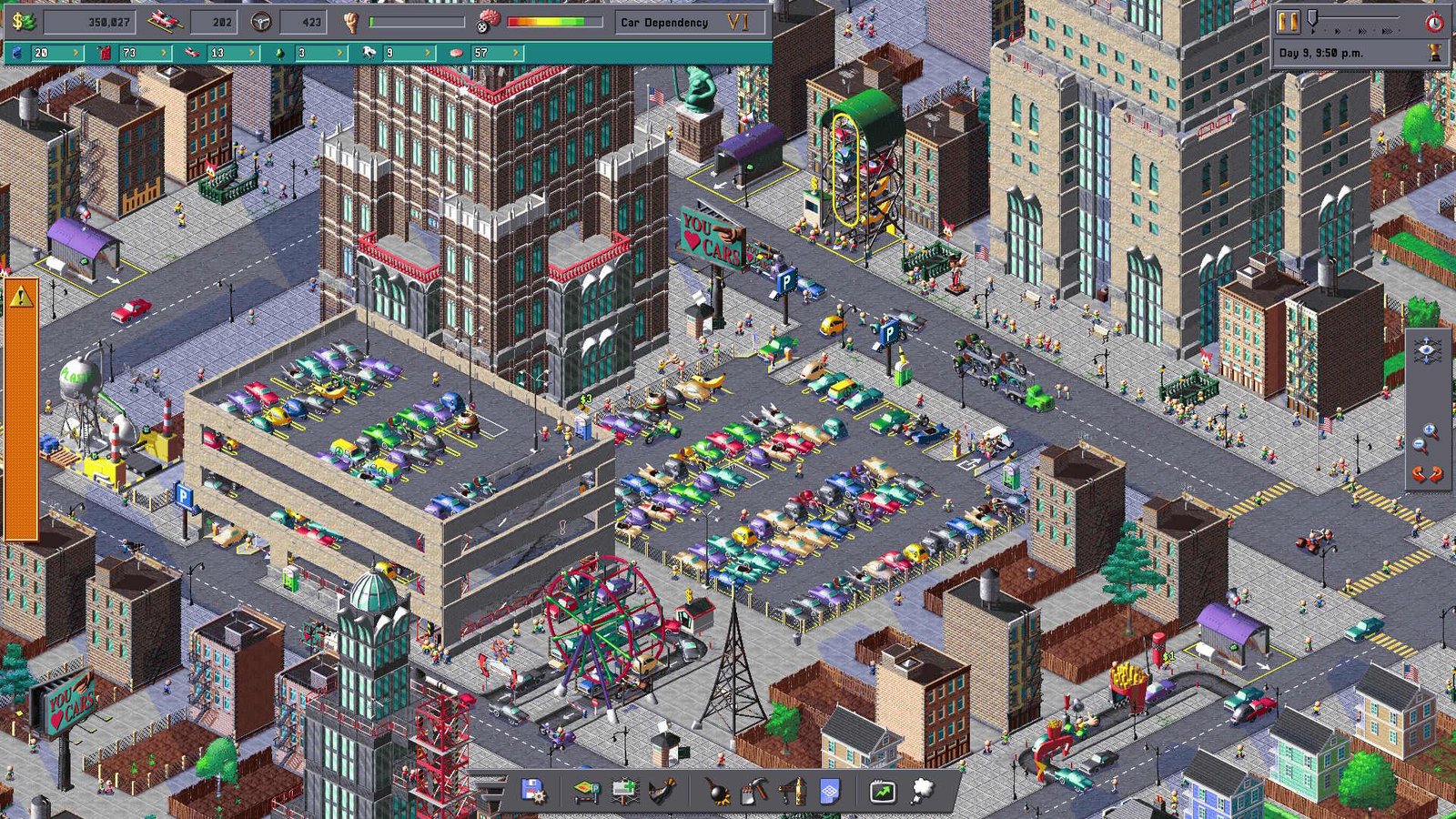
Car Park Capital Preview: Urban Chaos & Tycoon Fun in Early Access
The tycoon genre has captivated players for decades, offering a unique blend of strategic thinking, economic management, and creative freedom. From the bustling amusement parks of Theme Park to the intricate logistics of Transport Tycoon Deluxe and the whimsical roller coasters of RollerCoaster Tycoon, these games provide an enduring appeal for those who enjoy crafting empires from the ground up. In recent years, developers have continued to innovate within this beloved framework, introducing fresh perspectives and engaging new challenges. It is within this rich legacy that Car Park Capital emerges, a title that immediately distinguished itself not just through its promise of detailed management but also its distinctive satirical tone and charming, retro-inspired graphics.
Currently available in Early Access, Car Park Capital invites players to a world where urban planning takes a hilariously twisted turn. The premise, at first glance, appears deceptively simple: build the largest and most profitable parking lots across a series of vibrant, yet chaotic, cities. However, beneath this straightforward objective lies a complex web of interconnected systems that demand strategic foresight and a willingness to embrace the absurd. As players quickly discover, their mission extends far beyond merely designating parking spaces; it evolves into a grand experiment in social engineering, manipulating city life to revolve entirely around the automobile. This early glimpse into Car Park Capital reveals a game that cleverly blends nostalgia with novel mechanics, positioning it as an intriguing prospect for genre enthusiasts.
This comprehensive preview aims to dissect the core elements of Car Park Capital, exploring what makes its Early Access version a compelling experience. We’ll delve into its unique gameplay loop, the urban dilemmas it presents, its interface design, and the overall potential it holds. For fans of classic tycoon games and those intrigued by a satirical approach to city management, understanding these facets is crucial to appreciating the game’s current state and its trajectory towards a full release. The journey from a few parking spots to a sprawling, car-dependent metropolis is fraught with challenges and quirky opportunities, promising hours of engaging, strategic fun.
Exploring Car Park Capital Previews: A Deep Dive into Early Access Mechanics
The latest Car Park Capital previews offer a fascinating look into a game that redefines urban management with a satirical edge. The fundamental goal—to construct the most extensive parking facilities—serves as the entry point into a surprisingly intricate system. Unlike traditional city builders where public transport or pedestrian zones are often prioritized, Car Park Capital actively encourages the opposite, pushing players to craft environments where vehicular dependence is not just a necessity but a way of life.
This objective is not met by merely adding more parking slots. Instead, players must strategically integrate a variety of car-centric businesses and services that subtly, yet effectively, compel citizens to rely on their vehicles. Imagine a city where every convenience, from grocery shopping to grabbing a quick meal, is designed exclusively for car access. This mechanic forms the satirical core of the game, highlighting societal tendencies through exaggerated gameplay loops. The game currently presents three distinct city scenarios, each acting as its own unique sandbox for players to experiment with their car-dominated urban visions.
Central to this experience is the dynamic interplay between economic expansion and social engineering. Players must not only manage their burgeoning parking empire but also cultivate a landscape where car ownership and usage are paramount. This involves a calculated approach to urban development, ensuring that businesses like car dealerships, fast-food drive-thrus, and gas stations are not just present but are integral to the daily rhythm of the city. The game subtly satirizes modern urban sprawl and the challenges of balancing growth with civic needs, all while maintaining an engaging gameplay loop that rewards strategic foresight.
Car Park Capital previews reveal a satirical tycoon game where players build car-centric cities, managing everything from parking lots and gas stations to public opinion. Currently in Early Access, it offers a challenging blend of urban planning and resource management, transforming simple objectives into complex systems of car dependency.
Strategic Land Acquisition and Urban Expansion
One of the more challenging and ethically ambiguous aspects of Car Park Capital involves the acquisition of land. Each scenario begins with limited space, pushing players to expand their territory aggressively. This often means buying out existing properties and, controversially, evicting current tenants to make way for new parking structures or car-oriented businesses. This mechanic adds a layer of moral choice and consequence, forcing players to weigh their business ambitions against the impact on the virtual populace.
The process of expanding involves more than just purchasing land; it requires careful planning to maximize efficiency and profit. Players must assess demand, topographical challenges, and the existing urban fabric to determine the most advantageous locations for their new ventures. This strategic element ensures that expansion is not merely a matter of accumulating wealth but of intelligently shaping the city’s physical and social landscape.
Fostering Car Dependency: Beyond Just Parking
The ingenious design of Car Park Capital lies in its ability to simulate the growth of car dependency through player actions. Beyond simply providing parking, the game tasks players with building an ecosystem that makes life without a car inconvenient, if not impossible. This includes establishing essential services that are exclusively accessible by vehicle, such as expansive car dealerships to fuel ownership, strategically placed drive-thru restaurants for convenience, and numerous gas stations to support the automotive lifestyle.
These establishments are not static additions; they require continuous management, from manually replenishing car inventories in dealerships to ensuring competitive pricing at gas stations. This constant need for active oversight keeps players engaged, reinforcing the idea that a car-dependent city is a complex, ever-evolving entity that demands constant attention and adaptation. The satirical humor is particularly evident here, as players actively contribute to the very urban issues they might lament in real life.
Navigating Public Sentiment and Urban Challenges in Car Park Capital
As players expand their car empires in Car Park Capital, they quickly discover that their actions do not go unnoticed by the virtual populace. Public sentiment is a dynamic force, constantly reacting to the choices made by the player. Actions such as evicting tenants, demolishing historic buildings, or clear-cutting urban green spaces, while beneficial for business expansion, are often met with significant public disapproval. This creates a compelling layer of social management, where economic growth must be balanced with civic responsibility.
These negative public reactions manifest as protests, with citizens taking to the streets to voice their dissatisfaction. When faced with such unrest, players are not powerless; they must deploy their own municipal services to manage the situation. This includes dispatching police to control crowds, fire departments to extinguish vehicle fires (a common outcome of frustrated protests), and tow services to remove abandoned or burnt-out cars that obstruct traffic. This introduces a unique crisis management element, forcing players to tactically utilize their resources to maintain order and keep their car-centric machine running smoothly.
Car Park Capital introduces dynamic public sentiment, forcing players to balance business expansion with citizen satisfaction. Actions like demolishing buildings and evicting residents can trigger protests, requiring players to deploy emergency services to maintain order, adding a layer of social management to the tycoon gameplay.
The "Car Dependence" Metric: Unlocking New Possibilities
Beyond simply managing public dissent, Car Park Capital cleverly integrates public satisfaction and objective completion into a core progression system: the "Car Dependence" levels. As players successfully meet the demands and desires of the populace – or skillfully mitigate their dissatisfaction – they unlock higher levels of Car Dependence. Each new level represents a deeper entrenchment of car culture within the city and, crucially, grants access to new, more advanced ventures and building types.
This system provides a clear sense of progression and reward, transforming simple objectives into milestones for urban evolution. The more car-dependent a city becomes, the more sophisticated the player’s tools and opportunities become, allowing for even grander and more ambitious projects. This feedback loop ensures that players are constantly striving to push the boundaries of their automotive dominion, driving both the narrative and gameplay forward.
Interface, Usability, and Quality of Life in Car Park Capital Early Access
The interface of Car Park Capital, in many respects, pays homage to the golden age of tycoon games, particularly evoking the spirit of classics like RollerCoaster Tycoon. This familiarity contributes to a relatively smooth learning curve for veteran players, as certain mechanics, such as laying down paths for drive-thrus or gas stations, operate on a similar logical framework. The design successfully marries nostalgic aesthetic with functional design, making the initial engagement enjoyable.
However, as with many games in Early Access, there are areas where the user experience could be significantly refined. While some tools, like the demand-checking overlay which uses intuitive color-coding to highlight optimal parking locations, function exceptionally well, others present notable challenges. These early observations are crucial for understanding the game’s current state and its potential for improvement as development progresses.
While Car Park Capital’s interface evokes classic tycoon games with intuitive tools for demand visualization and path placement, it currently faces some usability challenges. Issues include a confusing terrain leveling tool, a glitchy land purchase window, and the absence of centralized management lists, which could streamline gameplay.
Strengths in Design: Echoes of Classic Tycoons
One of the most immediate strengths of Car Park Capital‘s interface lies in its ability to transport players back to the beloved tycoon games of the past. The visual cues and operational logic for building pathways and structures feel instantly recognizable to anyone who has spent hours crafting intricate theme parks or transport networks. This retro influence is not just aesthetic; it contributes to a sense of comfort and familiarity that allows players to dive into the core mechanics with minimal friction.
Furthermore, the game incorporates some genuinely effective tools for urban planning. The demand visualization, for instance, is a standout feature, providing clear and concise feedback on where parking facilities are most needed. By using an intuitive color-coded system, players can quickly identify high-demand areas, enabling efficient and profitable expansion strategies without needing to navigate complex data menus. This thoughtful design choice enhances strategic decision-making and streamlines the construction process.
Areas for Improvement: Early Access Growing Pains
Despite its strengths, Car Park Capital, as an Early Access title, reveals several areas ripe for improvement in terms of usability and quality of life (QoL). The terrain leveling tool, for example, proves to be remarkably confusing, often hindering rather than facilitating the construction of new facilities. Precision and ease of use are paramount for such a fundamental mechanic, and its current iteration requires a steeper learning curve than necessary.
Another notable interface glitch involves the land purchase window, which can frequently become misplaced or unclickable, forcing players to re-open it via alternative means. Such minor frustrations, while not game-breaking, can disrupt the flow of gameplay and detract from the overall experience. More broadly, the absence of centralized management lists for establishments, police stations, and other businesses is a significant QoL oversight. Even in the relatively compact cities of Car Park Capital, having to manually locate each asset on the map for administrative tasks becomes tedious, highlighting a need for more efficient player oversight tools. Addressing these points would significantly enhance the long-term playability and enjoyment of the game.
Why Car Park Capital Previews Suggest a Promising Future
The early glimpse provided by Car Park Capital previews undeniably points to a highly promising future for this quirky tycoon game. Despite its Early Access status and the inevitable rough edges that come with ongoing development, the game possesses an addictive quality that makes hours melt away unnoticed. The joy of uncovering its intricate mechanics, understanding the subtle nuances of its satirical systems, and adapting strategies on the fly is a core part of its appeal, turning initial confusion into rewarding discovery.
The game’s charm extends beyond its mechanics. The graphics, with their distinctly classic, almost nostalgic aesthetic, are genuinely appealing and contribute significantly to the game’s unique identity. This visual style perfectly complements its satirical tone, creating an immersive experience that feels both familiar and fresh. Furthermore, the constant challenge of anticipating and reacting to public sentiment, understanding how citizens will respond to urban development choices, adds a profound layer of strategic depth that sets it apart from many genre contemporaries.
While recognizing that some quality-of-life improvements are still needed and that greater differentiation between scenarios could enhance replayability, these are considerations typical of a game in active development. The fundamental enjoyment derived from Car Park Capital in its current form is a testament to its strong core concept and engaging gameplay. It successfully captures the essence of classic tycoon games while infusing it with a modern, satirical twist, making it a compelling title that warrants close attention from anyone who cherishes strategic management simulators.
Despite being in Early Access, Car Park Capital previews indicate a highly engaging and addictive experience. Its charming graphics, the thrill of discovering complex mechanics, and the constant need for strategic planning to manage both businesses and public opinion create a unique blend that promises significant fun and replayability for tycoon enthusiasts.
FAQ: Understanding Car Park Capital in Early Access
Here are answers to common questions about Car Park Capital and its Early Access phase, providing more context on what to expect from this unique tycoon experience.
What is Car Park Capital?
Car Park Capital is a satirical urban management and tycoon game where players are tasked with building vast, profitable parking empires. The core objective extends beyond simple parking, challenging players to create cities where life revolves entirely around the automobile. This involves strategically placing car dealerships, drive-thru fast-food establishments, and gas stations, all while managing public opinion and expanding through controversial land acquisition. It offers a fresh, humorous take on city-building mechanics with a focus on car dependency.
What kind of gameplay can I expect in Car Park Capital?
Players can expect a blend of strategic urban planning, resource management, and social simulation. Gameplay involves identifying demand for parking, purchasing and developing land, and constructing car-centric businesses. A crucial element is managing dynamic public sentiment, which reacts to player actions like demolishing buildings or evicting tenants, sometimes leading to protests that require police and fire services. The game encourages a continuous loop of expansion, management, and adaptation.
Is Car Park Capital currently available?
Yes, Car Park Capital is currently available in Early Access. This means the game is still under active development, and players can purchase and play it while new features are being added and existing ones are refined. Being in Early Access also implies that players might encounter bugs, unpolished features, or areas for improvement, which are typical for games in this development stage but also offers an opportunity to provide feedback to the developers.
How does Car Park Capital differ from other tycoon games?
Car Park Capital distinguishes itself through its explicit focus on creating car dependency and its satirical tone. Unlike traditional city builders that might emphasize public transport or pedestrian-friendly designs, this game flips the script, making the car the central pillar of urban life. Its unique blend of economic simulation with social commentary, where player actions directly influence a "Car Dependence" metric and public protests, offers a fresh perspective on the genre, reminiscent of classic management sims but with a distinct modern twist.
What are the main challenges in Car Park Capital?
The primary challenges in Car Park Capital include managing limited initial land, strategically expanding through land acquisition (which can involve evictions), balancing business profits with fluctuating public opinion, and maintaining the logistics of a car-dependent city. Players must also navigate an evolving interface with some quality-of-life issues and manually manage certain aspects like car dealership stock, requiring constant attention and adaptability to overcome obstacles.
Are there any known issues in Car Park Capital’s Early Access?
Yes, as an Early Access title, Car Park Capital has some known issues. These include a somewhat confusing terrain leveling tool, a glitchy land purchase window that can be difficult to interact with, and a lack of centralized management lists for establishments, making it tedious to oversee numerous businesses. The tutorial also covers only the basic mechanics, leaving players to discover more advanced systems on their own. However, these are common for Early Access games and expected to be addressed in future updates.
What makes Car Park Capital unique?
Car Park Capital’s uniqueness stems from its bold satirical premise: intentionally designing cities around car dependency. This isn’t just a theme; it’s a core gameplay mechanic that players actively cultivate. The game’s blend of charming, retro-inspired graphics with modern urban planning challenges, combined with dynamic public reactions and a distinctive "Car Dependence" progression system, creates an experience that stands out from typical management simulations, offering both humor and strategic depth.
How does public opinion affect gameplay in Car Park Capital?
Public opinion plays a crucial role in Car Park Capital, acting as a dynamic feedback mechanism. Negative actions, such as demolishing buildings for parking or evicting residents, can trigger citizen protests. Players then need to deploy police, fire, and tow services to manage the chaos. Conversely, satisfying public needs and fulfilling objectives contributes to increasing the city’s "Car Dependence" level, which unlocks new businesses and opportunities. This means players must constantly weigh their expansion strategies against potential social unrest.














Post Comment