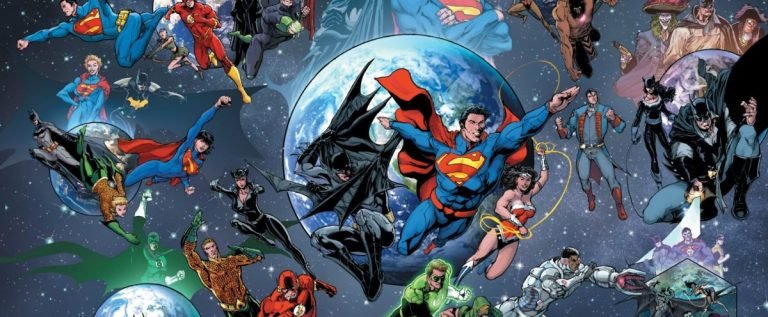
Infinite Crisis: DC’s Bold Nostalgia Play for Every Nerd
The landscape of comic books is a constantly shifting tapestry, where heroes rise, fall, and sometimes, are reborn. For decades, DC Comics has stood as a titan in this world, crafting narratives that captivate generations. Yet, even giants face moments of introspection and daring reinvention. One such moment, particularly significant for any devoted Nerd tracking the publisher’s intricate history, arrived in the mid-2000s: the epic known as Infinite Crisis.
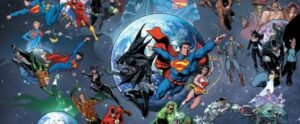
Launched between 2005 and 2006, Infinite Crisis wasn’t merely another crossover event; it was a deliberate, profound attempt by DC to peer back into its own foundational mythology, retrieve cherished elements, and weave them anew into the contemporary fabric of its universe. This initiative emerged from a period of intense competition within the industry, as publishers vied for the attention of both seasoned creators and eager readers. DC’s strategy was audacious: to celebrate the 20th anniversary of its universe-altering precursor, Crisis on Infinite Earths, by once again shattering and then attempting to rebuild its continuity.
This ambitious undertaking was more than just a nostalgic glance; it was a strategic move to address perceived narrative inconsistencies, re-energize its iconic characters, and signal a clear direction for its future storytelling. The ramifications of Infinite Crisis resonated deeply, shaping subsequent arcs, introducing new dynamics, and sparking fervent discussions among fans about the nature of canon and the allure of returning to what once was. Understanding Infinite Crisis isn’t just about following a plot; it’s about appreciating a pivotal editorial decision that continues to influence how DC Comics crafts its expansive, ever-evolving Multiverse.
It represented a critical juncture where the past, present, and future of DC’s heroes converged, forcing both characters and readers to confront the consequences of previous reboots and the tantalizing promise of what could be restored. For many, it was a welcome return to classic ideals; for others, a complicated layer added to an already dense narrative. Regardless of perspective, Infinite Crisis stands as a testament to the enduring power of comic book storytelling and DC’s relentless pursuit of engaging its passionate fanbase.
The Ambitious Return: Infinite Crisis and the Discerning Nerd’s Perspective
Infinite Crisis, unfolding in 2005 and 2006, represented DC Comics’ determined effort to reintroduce core elements of its storied past, a move driven by a desire to both celebrate its history and strategically compete for reader and creator attention in a dynamic industry landscape.
At its heart, Infinite Crisis was designed as a momentous follow-up to the legendary Crisis on Infinite Earths, a series that irrevocably reshaped the DC Universe two decades prior. This new ‘Crisis’ aimed to delve into the very fabric of DC’s continuity, questioning the implications of previous reboots and offering a fresh take on beloved characters and storylines. The ambition was palpable: to not just revisit the past, but to dynamically re-integrate it, attempting to satisfy the long-standing desires of fans while also attracting new ones into a coherent, yet richly layered, narrative.
The competitive environment of the comic book industry played a significant role in shaping this event. With rival publishers constantly innovating and vying for market share, DC sought to deliver a saga that was not only epic in scope but also deeply meaningful, tapping into the collective consciousness of its dedicated readership. This meant crafting a story that acknowledged the complexities of its vast Multiverse while attempting to streamline its intricate history in a way that felt both logical and emotionally resonant. The event became a battleground not just for heroes and villains, but for the very soul of the DC Universe.
Setting the Stage: The Countdown and Precursors
The journey to Infinite Crisis was not a sudden leap but a meticulously constructed narrative arc, initiated well before the main miniseries. This deliberate build-up was crucial for establishing the escalating stakes and ensuring the event resonated with the weight of its impending impact.
The groundwork was laid with an 80-page special, Countdown to Infinite Crisis, which ignited the first sparks of the larger storyline. Penned by acclaimed writers Geoff Johns, Greg Rucka, and Judd Winick, and brought to life by artists Ed Benes, Jesus Saiz, Rags Morales, Ivan Reis, and Phil Jimenez, this prelude masterfully set the tone. It hinted at the unseen forces at play, subtly reintroducing elements that would become central to the impending cataclysm. This initial volume was followed by several interconnected miniseries, each building tension and revealing pieces of the overarching puzzle. These included The OMAC Project, exploring themes of surveillance and power; Villains United, which saw an unexpected assembly of antagonists; Days of Vengeance, dealing with magical elements; and the cosmic conflict of Rann-Thanagar War. Each of these events contributed significantly to the tapestry of chaos and confusion that prefaced the main crisis, ensuring that by the time the core miniseries began, the DC Universe was already teetering on the brink.
Unveiling the Masterminds: Alexander Luthor Jr. and Superboy-Prime
As the grand narrative of Infinite Crisis unfolded, the true architects of the escalating turmoil were dramatically brought into the light, revealing a conspiracy deeply rooted in the very history the event sought to explore.
Readers discovered that the enigmatic forces behind the preceding two years’ worth of chaos were none other than Alexander Luthor Jr. of Earth-3 and Superboy-Prime. These figures, survivors of the original Crisis on Infinite Earths, had been trapped in a pocket dimension, observing the altered Multiverse they believed was flawed. Their motivations were rooted in a twisted sense of heroism, believing they could restore a ‘perfect’ universe, an ideal born from their own lost realities. This reveal also marked the emotional return of the Superman and Lois Lane of Earth-2, characters whose absence had been deeply felt since the original Crisis. Their re-emergence underscored the core theme of Infinite Crisis: the yearning for a lost past and the desperate measures taken to reclaim it. Essentially, the narrative articulated a profound shift, acknowledging and reintegrating elements once considered ‘pre-Crisis’ back into the active canon, thereby bridging decades of convoluted continuity and fulfilling a long-held desire among segments of the readership for a return to specific, foundational aspects of the DC Universe.
Navigating the Aftermath: DC’s Post-Crisis Landscape
Following the cataclysmic events of Infinite Crisis, DC Comics embarked on a comprehensive restructuring of its narrative landscape, meticulously detailing the consequences and setting new directions for its iconic heroes and storylines.
The conclusion of Infinite Crisis was not an end but a profound beginning. The immediate aftermath led to two pivotal initiatives that reshaped the DC Universe: the weekly series 52 and the storytelling initiative One Year Later. 52 provided an unprecedented real-time account of the DC Universe’s year without Superman, Batman, and Wonder Woman, focusing on lesser-known heroes and unveiling new mysteries. Concurrently, One Year Later jumped ahead in the timeline, showcasing the established heroes in new contexts, grappling with the changes brought about by the Crisis. This era saw some of DC’s most celebrated creators at the helm, including Geoff Johns on Action Comics, Grant Morrison on Batman, Paul Dini steering Detective Comics, and Allan Heinberg crafting the narrative for Wonder Woman. Their collective vision ensured that the post-Crisis world was not just different, but vibrant with fresh storytelling potential and complex character development, deeply engaging the dedicated nerd audience with its ambitious scope.
The Road to New Eras: From Sinestro Corps War to Flashpoint
The ripples of Infinite Crisis continued to propagate through the DC Universe, leading to a succession of major events that further refined and, in some cases, radically reshaped its continuity.
Following the immediate aftermath, DC’s narrative trajectory continued its ambitious course with subsequent major crossover events. The extraterrestrial threat of the Sinestro Corps War redefined the Green Lantern mythology, expanding its cosmic scope and introducing formidable new antagonists. This was followed by the mind-bending narrative complexities of Final Crisis, a saga that delved into existential threats and the very fabric of reality, once again featuring many of DC’s top-tier heroes. However, the most significant inflection point after Infinite Crisis arrived in 2011 with Flashpoint. This event, centered on the Flash altering the timeline, served as the direct catalyst for ‘The New 52,’ a comprehensive relaunch that rebooted virtually the entire DC line, establishing a new continuity, updated origins, and a fresh starting point for many characters. Each of these events, in its own way, built upon the foundation laid by Infinite Crisis, demonstrating a continuous editorial drive to keep the DC Universe dynamic and perpetually evolving for its global fanbase.
Leadership and Legacy: Dan DiDio’s Vision and Critically Acclaimed Stories
The period encompassing Infinite Crisis and its immediate successors was significantly shaped by key editorial leadership, whose decisions left an indelible mark on DC Comics’ trajectory.
Dan DiDio played a pivotal role in guiding DC through this transformative phase, serving as a prominent figure in the publisher’s editorial decisions during this intense era of redefinition. His vision heavily influenced the direction of the post-Crisis universe, steering it through numerous creative challenges and strategic relaunches. While this period was marked by considerable criticism and debate among fans regarding the constant changes to established continuity, it also produced several undeniable creative triumphs. Notably, the Green Lantern stories of Blackest Night and Brightest Day stood out as critically acclaimed narratives. These sagas, lauded for their intricate plotting, emotional depth, and expansive world-building, managed to captivate a broad audience and demonstrated that even amidst sweeping changes, DC could deliver stories that resonated deeply and garnered widespread praise. DiDio eventually departed his role, but his tenure during the Infinite Crisis era remains a significant chapter in DC’s modern history.
The DC Multiverse: Challenges, Opportunities, and the Modern Nerd
The intricate concept of the DC Multiverse, while offering boundless storytelling possibilities, has presented both significant challenges and unique opportunities, constantly evolving to meet the expectations of the discerning modern nerd.
The ambition to integrate past elements through events like Infinite Crisis, while noble, has not been without its complexities. As observed by industry commentators like Ei Nerd, the DC Multiverse hasn’t always achieved the desired impact. This largely stems from a pattern of gradual returns of characters and concepts coupled with constant reorganizations of the timeline. Such frequent shifts can lead to reader fatigue and a sense that continuity is a moving target, making it challenging for both long-time fans and new readers to grasp the definitive state of the universe. The inherent value of a Multiverse lies in its diversity and potential for parallel narratives, but when its core timeline is in flux, it risks alienating those seeking a stable entry point or a consistent narrative thread. This dynamic creates a continuous puzzle for editorial teams striving to balance creative freedom with reader expectations.
The Nostalgia Conundrum: Balancing Past and Future
Nostalgia, a powerful force in any long-running franchise, presents a double-edged sword for DC Comics, offering both a gateway for new readers and a potential trap for creative stagnation.
The suggestion that Earth-2 and the Justice Society could serve as ideal entry points for new readers highlights the potent appeal of established, classic concepts. These elements carry a weight of history and often represent simpler, more heroic ideals that resonate deeply with the core of superhero storytelling. For new readers, they can offer a less complicated introduction to fundamental DC lore, free from the entanglements of dozens of previous crossovers. However, the critical question remains: Is nostalgia alone sufficient to sustain the future of the DC Universe? While the allure of familiar characters and storylines can draw audiences in, over-reliance on past glories risks inhibiting innovation and limiting the evolution of characters. Striking the right balance—honoring tradition while fearlessly pushing narratives forward—is the perennial challenge for DC, as it seeks to create stories that are both timeless and relevant to contemporary sensibilities.
Rebuilding the Catalog: Jim Lee, Marie Javins, and Future Directions
DC Comics today stands at an exciting juncture, with renewed leadership focused on revitalizing its expansive catalog and setting a clear vision for the future of its iconic characters.
Under the guidance of Jim Lee and Editor-in-Chief Marie Javins, DC is currently undergoing a significant rebuilding phase, aiming to refine its vast array of titles and streamline its editorial direction. This renewed focus seeks to create a more cohesive and accessible universe, addressing some of the historical continuity challenges that have long faced the publisher. A key development in this ongoing effort is the planned reorganization of the official timeline in 2025, a strategic move intended to provide greater clarity and establish a definitive historical framework for its narratives. This reorganization explicitly confirms major sagas like Identity Crisis and Final Crisis as canon, integrating them firmly into the established history. Such clarity is vital for the modern nerd, who often seeks a foundational understanding of the universe to fully appreciate new stories. This forward-looking approach, while acknowledging and solidifying past events, suggests a commitment to evolving the DC narrative in a manner that aims for both consistency and innovation, offering tantalizing prospects for upcoming storylines and character developments.
Enhancing Your Nerd Knowledge: Understanding DC’s Continuity Resets
For the dedicated comic book nerd, navigating DC’s continuity resets and major events requires a nuanced understanding of their purpose, pitfalls, and the best ways to engage with their expansive narratives.
DC Comics has a long history of significant continuity alterations, from Crisis on Infinite Earths to Infinite Crisis, Flashpoint, and beyond. These resets are not merely arbitrary changes; they are often editorial decisions made to revitalize characters, simplify convoluted timelines, attract new readers, or align the comic universe with other media adaptations. Understanding this underlying rationale helps a reader appreciate the strategic thinking behind these monumental shifts. Each reset represents a unique attempt to define the core essence of the DC Universe, grappling with decades of storytelling to determine what remains, what changes, and what begins anew. For many fans, these events are exciting opportunities to see beloved characters in fresh contexts, while for others, they can be a source of frustration due to the perceived erasure of cherished stories.
Common Pitfalls in Following Comic Book Events
Engaging with major comic book crossover events can be a rewarding experience, but it also comes with potential pitfalls that can lead to confusion or disengagement for even the most seasoned reader.
One of the primary challenges lies in the sheer complexity of multiple tie-ins. Major events are rarely contained within a single miniseries; they often spread across numerous ongoing titles, one-shots, and supplementary books, making it difficult and expensive to follow the complete narrative. Missing a crucial tie-in can leave gaps in understanding, impacting the overall coherence of the story. Furthermore, frequent retcons (retroactive continuity changes) and continuity shifts can be disorienting. What was canon yesterday might be altered or erased today, leading to a sense of instability within the narrative universe. This constant state of flux can contribute to reader fatigue, especially when an event promises definitive answers only to introduce new ambiguities. Managing these complexities requires a strategic approach to reading and a willingness to embrace the inherently fluid nature of comic book storytelling.
Best Practices for Engaging with Major Crossover Events
Successfully navigating DC’s intricate major crossover events can significantly enhance a reader’s enjoyment and understanding, transforming potential confusion into a rich narrative experience.
The most effective strategy begins with identifying the core miniseries that drives the central narrative. While tie-ins offer supplementary context and character perspectives, the main event typically provides the essential plot points necessary for comprehension. Utilizing readily available reading guides, often published by comic news sites or fan wikis, can be invaluable for mapping out the recommended reading order and distinguishing core issues from optional ones. Beyond logistical approaches, it’s crucial for readers to embrace the evolving nature of comic narratives. Rather than clinging rigidly to every past detail, an open mind allows for greater appreciation of new interpretations and creative directions. Focusing on the emotional core of the story and the character arcs, rather than getting bogged down in every minute continuity detail, can lead to a more fulfilling reading experience. These practices help ensure that the passion of a true nerd for these epic tales remains vibrant and engaged, irrespective of the occasional twists and turns of comic book continuity.
| Key DC Editorial Initiatives (2005-2011) | Description and Impact |
|---|---|
| Infinite Crisis (2005-2006) | Major crossover event, 20th anniversary of CoIE. Restored pre-Crisis elements, driven by Alexander Luthor Jr. and Superboy-Prime. Led to a major universe overhaul. |
| 52 (2006-2007) | Weekly series detailing the year without DC’s trinity (Superman, Batman, Wonder Woman) post-Infinite Crisis, introducing new heroes and concepts. |
| One Year Later (2006) | Initiative that jumped the DC timeline forward one year after Infinite Crisis, showcasing new statuses for many characters. |
| Sinestro Corps War (2007) | Green Lantern focused event expanding the cosmic mythology, praised for its scope and character development. |
| Final Crisis (2008-2009) | Complex storyline dealing with existential threats to the Multiverse and the triumph of evil, featuring a dark vision of the future. |
| Flashpoint (2011) | Major event where The Flash alters the timeline, directly leading to the comprehensive ‘New 52’ relaunch of the DC Universe. |
The Enduring Appeal of Legacy: Why Infinite Crisis Still Matters to Every Nerd
Even years after its initial run, Infinite Crisis maintains a significant place in comic book history, serving as a pivotal benchmark for understanding DC Comics’ ongoing relationship with its legacy, a topic that deeply resonates with every dedicated nerd.
The event itself was a complex tapestry, a desperate gamble by characters who had lost their homes and sought to reforge a perfect universe from the shattered remnants of the Multiverse. This narrative ambition, coupled with the return of beloved characters like the Superman and Lois Lane of Earth-2, ensured its immediate impact. However, its lasting importance extends beyond its immediate plot points. Infinite Crisis laid the groundwork for a decade of DC storytelling, directly influencing subsequent mega-events like Flashpoint and the creation of The New 52. It solidified the idea that DC was willing to confront its convoluted history head-on, even if the solutions were themselves complex and sometimes divisive. For many, it represented a golden opportunity to see cherished elements of the past acknowledged and celebrated.
Furthermore, Infinite Crisis remains a benchmark for evaluating DC’s attempts at continuity reboots and its evolving Multiverse concept. It sparked crucial debates among the fan base about what truly constitutes ‘canon’ and the balance between reverence for the past and the necessity of forging new narrative paths. Today, with DC continuing to reorganize its official timeline, affirming events like Identity Crisis and Final Crisis as canon in 2025, the legacy of Infinite Crisis is more relevant than ever. It highlights an ongoing editorial philosophy that seeks to synthesize disparate elements into a cohesive whole, demonstrating DC’s persistent effort to create a narrative universe that is both expansive and accessible. For the discerning nerd, understanding this event is essential for appreciating the intricate dance between tradition and innovation that defines DC Comics.
FAQ: Essential Insights for the Dedicated Nerd
What is the difference between Crisis on Infinite Earths and Infinite Crisis?
Crisis on Infinite Earths (1985-1986) was the original, seminal event that dramatically streamlined DC’s Multiverse into a single, cohesive universe, eliminating decades of parallel Earths and contradictory continuities. Its primary goal was simplification. Infinite Crisis (2005-2006), however, was a direct sequel that occurred 20 years later. It challenged the consequences of the original Crisis, arguing that the singular universe was flawed. Driven by survivors from the original Crisis, it aimed to restore aspects of the lost Multiverse, bringing back elements like Earth-2 Superman and Lois Lane, and re-establishing the Multiverse concept, albeit in a modified form. While the first sought to reduce complexity, the second complicated it by reintroducing what was lost.
Who were the main villains behind Infinite Crisis?
The primary antagonists orchestrating the events of Infinite Crisis were Alexander Luthor Jr. of Earth-3 and Superboy-Prime. These two characters were survivors of the original Crisis on Infinite Earths, having been trapped in a “paradise dimension” where they could observe the evolving DC Universe. Over time, they became convinced that the post-Crisis Earth was corrupted and inferior to their lost realities. Their motivation was to reshape the Multiverse to their own ideals, believing they were restoring it to a “perfect” state by bringing back elements of the pre-Crisis universe. Their machinations involved manipulating heroes and villains, ultimately aiming to shatter and rebuild the Multiverse according to their warped vision of a better past.
How did Infinite Crisis impact the DC Universe?
Infinite Crisis had a profound and lasting impact on the DC Universe, fundamentally altering its continuity and setting the stage for subsequent major storylines. It directly led to the “One Year Later” initiative, where the entire universe jumped forward a year in time, with heroes and villains in new circumstances. The event also re-established the concept of a Multiverse, though not in the same infinite capacity as before, providing a framework for alternate realities once again. Crucially, it forced DC to confront and integrate many previously discarded pre-Crisis elements, creating a richer, albeit more complex, history. The consequences of Infinite Crisis reverberated through events like 52, Sinestro Corps War, and ultimately paved the way for the radical relaunch of ‘The New 52’ years later, showcasing its status as a true turning point.
What role did Dan DiDio play during this era?
Dan DiDio held a prominent editorial leadership position at DC Comics during the Infinite Crisis era and its immediate aftermath. As Executive Editor and later Co-Publisher, he was a key architect of the publisher’s editorial strategy throughout this transformative period. DiDio was instrumental in guiding the overarching narrative direction, overseeing the various tie-ins, and implementing the post-Crisis initiatives like 52 and “One Year Later.” His tenure was characterized by a push for more cohesive continuity, though it often involved controversial decisions regarding character fates and universe-wide reboots. While he faced criticism for some of these changes, his leadership undoubtedly defined a significant chapter in DC’s modern history, shaping the path from Infinite Crisis to the eventual launch of ‘The New 52’.
Are all pre-Crisis elements now considered canon again?
While Infinite Crisis certainly brought back many significant pre-Crisis elements, such as the Superman and Lois Lane of Earth-2 and the re-establishment of a Multiverse, it did not unequivocally declare *all* pre-Crisis elements as canon again. Instead, it selectively re-integrated certain concepts and characters, often with modern interpretations or revised histories. The event paved the way for a more fluid approach to continuity, where aspects of past timelines could be referenced or brought back as needed, rather than a full, wholesale restoration. Subsequent reboots and timeline reorganizations, like ‘The New 52’ and current editorial shifts, continue to redefine what is considered canon, often picking and choosing which historical elements serve the current narrative vision, rather than endorsing a complete return to any single pre-Crisis era.
What are some recommended stories from the Infinite Crisis era?
Beyond the main Infinite Crisis miniseries itself, several standout stories from that era are highly recommended for any dedicated nerd looking to deepen their understanding and enjoyment of DC Comics. The weekly series 52 is almost universally praised as a masterful example of serial storytelling, filling in the “lost year” after the Crisis and focusing on an ensemble cast. For Green Lantern fans, Geoff Johns’s run, particularly the epic Sinestro Corps War, is considered a modern classic that greatly expanded the Lantern mythos. Additionally, while divisive for its complexity, Grant Morrison’s Final Crisis offers a challenging but rewarding read that directly follows the ideological confrontations set up by Infinite Crisis. These stories not only complement the main event but also showcase the creative dynamism of DC during this transformative period.
How does Flashpoint connect to Infinite Crisis?
Flashpoint (2011) connects to Infinite Crisis as a subsequent major event that dramatically furthered the continuity shifts initiated by the earlier Crisis. While Infinite Crisis aimed to re-integrate parts of DC’s past, Flashpoint served as the direct catalyst for a complete, universe-wide reboot: ‘The New 52.’ The events of Flashpoint, where Barry Allen (The Flash) inadvertently creates a vastly different alternate timeline, are ultimately resolved by his actions which, instead of fully restoring the previous continuity, merge three distinct timelines (DC, Vertigo, and Wildstorm) into a brand new, singular DC Universe. In essence, Infinite Crisis re-established a Multiverse and attempted to mend existing continuity, whereas Flashpoint irrevocably broke and then remade it into something entirely new, accelerating the pace of change within the DC editorial strategy.
Why is DC constantly reorganizing its timeline?
DC Comics frequently reorganizes its timeline for several strategic reasons, largely aimed at maintaining relevance and attracting new readers. Over decades, the accumulation of multiple parallel Earths, retcons, and complex storylines can become a barrier to entry for newcomers, making the universe feel impenetrable. Reboots or reorganizations, like those after Infinite Crisis or Flashpoint, are attempts to streamline continuity, simplify character origins, and create fresh starting points. They also allow creators to update characters for contemporary audiences, explore new narrative directions, and align the comic universe with other media (films, TV shows). While often met with mixed reactions from long-time fans, these editorial decisions are driven by a continuous effort to keep the expansive DC Universe vibrant, accessible, and creatively fertile for future generations of readers.
What is the current state of the DC Multiverse?
The current state of the DC Multiverse is characterized by a blend of established history and a renewed emphasis on interconnected, yet diverse, realities. Following several major reboots and subsequent re-integrations, DC has continued to evolve its Multiverse concept. While ‘The New 52’ aimed for a singular Earth, later events like DC Rebirth and Death Metal have re-embraced and expanded the Multiverse, confirming the existence of multiple Earths and timelines, often informed by past crises. Under current leadership, there’s a concerted effort to organize the official timeline, with plans for a 2025 reorganization that clarifies canonical events and character histories. This reflects an ongoing commitment to a robust, yet more structured, Multiverse, seeking to offer both narrative consistency for core titles and the creative freedom of alternate realities for new storytelling avenues.






Post Comment