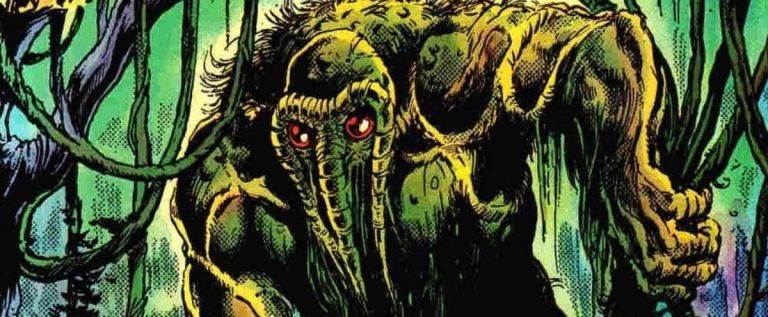
Man-Thing: Stan Lee’s Scariest Creation for Every Nerd
In the vibrant tapestry of Marvel Comics, certain characters emerge from behind-the-scenes narratives as compelling as their on-page adventures. One such figure is the enigmatic Man-Thing, a creature of the swamps whose very existence traces back to an unexpected directive from none other than Stan Lee himself. Often celebrated for his iconic superheroes, Lee’s foray into the realm of horror with Man-Thing reveals a strategic brilliance and an adaptability that few could match. As Halloween approaches and the chill of the eerie permeates the air, revisiting the genesis of this grotesque hero offers a unique lens into a transformative period in comic book history, particularly for discerning Nerd aficionados.
This isn’t merely a tale of a monster’s birth; it’s a profound look at how a single name and a few loose ideas from Marvel’s creative patriarch could spark a legacy. It illuminates the shifting tides of an industry grappling with content restrictions, a market hungry for diverse narratives beyond capes and tights, and the concurrent emergence of similar creative ideas across competing publishers. For dedicated fans of Nerd culture, understanding the intricate web of decisions, collaborations, and historical context surrounding Man-Thing’s creation not only deepens appreciation for the character but also for the visionary leadership of Stan Lee, whose influence extended far beyond the daily editorial grind, shaping the very soul of the Marvel Universe.
The Genesis of Man-Thing: Stan Lee’s Vision for the Marvel Nerd
Man-Thing’s inception is a testament to Stan Lee’s uncanny knack for spotting trends and delivering compelling concepts. He directly commissioned the character, providing the nascent idea of a man transforming into a monstrous entity, a premise that would ultimately resonate deeply within the horror subgenre popular among many a Marvel Nerd.
The creation of Man-Thing unfolded against a backdrop of significant change in the comic book industry. Before superheroes became a dominant force, publishers experimented with a diverse array of genres, from Westerns and crime stories to ghost tales. This period, however, drew scrutiny from the American government, leading to the establishment of the Comics Code Authority (CCA) in the mid-1950s. The Code imposed strict self-censorship, profoundly impacting creative output for decades.
By 1971, after nearly two decades, the Comics Code underwent its first major revision, relaxing some of its stringent rules and specifically allowing for certain types of horror content. This crucial shift opened the door for Marvel to explore darker, more unsettling narratives. It was in this fertile ground that Man-Thing, Marvel’s answer to the revitalized horror genre, was conceived.
The character made its official debut in May 1971, anchoring the first issue of Savage Tales. The creative team credited for bringing Man-Thing to life included Roy Thomas and Gerry Conway on scripting duties, with Gray Morrow defining the character’s unique and unsettling visual aesthetic. The creative process had reportedly begun in late 1970, suggesting that Marvel was already anticipating the upcoming revisions to the Comics Code, strategically positioning itself to capitalize on the renewed appetite for horror.
The Role of Stan Lee in Man-Thing’s Conception
Despite reducing his day-to-day involvement in editorial operations, Stan Lee remained a vibrant source of ideas. His vision for Man-Thing, though initially vague, carried the hallmarks of his previous successes. He had, after all, brought to life other iconic monstrous figures such as the Hulk a decade earlier, and the rocky, benevolent ‘Thing’ from the Fantastic Four.
Lee’s direct input was primarily a name – ‘Man-Thing’ – and the core concept of a human transforming into a grotesque swamp creature. This fundamental premise was enough to set the creative wheels in motion for his team. The name itself sparked some internal debate, with writers reportedly expressing concerns about its similarity to ‘The Thing’ from the Fantastic Four, fearing potential confusion among readers. However, Lee, with his characteristic confidence, dismissed these worries, firmly believing in the distinctiveness of his new creation. Interestingly, Lee had even experimented with the ‘Man-Thing’ moniker in unrelated stories during the late 1960s, showcasing his long-standing fascination with the name.
Stan Lee’s Enduring Creative Spark and Early Conceptualization
Stan Lee, even as he transitioned from daily editorial duties, maintained a profound impact on Marvel’s creative direction, demonstrating his lasting brilliance in identifying fresh narrative opportunities. His initial concept for Man-Thing, simple yet evocative, served as a foundational blueprint that artists and writers would flesh out, showcasing his role as a master conceptualizer for the Marvel Nerd community.
Long before Man-Thing’s official debut, Stan Lee had already established himself as a titan of character creation. His ability to craft compelling and often tragic figures, such as the Hulk – a scientist transformed by gamma radiation into a powerful, misunderstood brute – laid the groundwork for his approach to Man-Thing. Similarly, the sympathetic portrayal of Ben Grimm as The Thing, trapped in a monstrous form, underscored Lee’s interest in the duality of humanity and monstrosity, themes that would be central to the swamp creature. This established pattern allowed Lee to confidently propose ‘Man-Thing,’ believing in its potential despite any superficial resemblance to existing characters.
The anecdote surrounding the naming of Man-Thing highlights Lee’s singular vision and his occasional dismissal of minor creative friction. The concern from his writing team regarding potential reader confusion between ‘The Thing’ and ‘Man-Thing’ was a valid one from a marketing perspective. However, Lee’s conviction likely stemmed from a deep understanding of the core concept’s difference: one a heroic rock monster, the other a terrifying, empathetic bog creature. Furthermore, Lee’s prior, unrelated usage of the ‘Man-Thing’ name in earlier, obscure stories from the late 1960s indicates a personal attachment to the appellation, suggesting it was a concept simmering in his creative mind for some time, awaiting the right context and creative freedom provided by the Comics Code revision.
The Curious Case of Man-Thing and the Swamp Thing Coincidence
The shared origin narratives of Man-Thing and DC’s Swamp Thing represent one of the most remarkable coincidences in comic book history, a phenomenon often debated and celebrated within Nerd circles. This parallel development highlights the competitive yet sometimes convergent nature of creative industries.
Despite the high hopes surrounding its debut, Marvel’s Savage Tales did not immediately achieve widespread success, leading to a period where Man-Thing’s future seemed uncertain. However, Stan Lee, ever the visionary, had already prepared a second adventure for the character. This particular story brought together a new creative team: Len Wein, responsible for the script, and the legendary Neal Adams, who provided the art. This second outing was crucial in establishing more of Man-Thing’s lore and securing its place within the Marvel universe.
It was during this period that a truly unusual event unfolded. After scripting Man-Thing’s second adventure, Len Wein transitioned to DC Comics. There, he played a pivotal role in co-creating another iconic swamp monster: the Swamp Thing, alongside artist Bernie Wrightson. The proximity of these two creations, both featuring a scientist transformed into a monstrous plant-like entity within a swamp environment, has fueled decades of discussion among comic enthusiasts regarding which character truly came first.
Years later, in an interview with Roy Thomas, Stan Lee himself acknowledged the striking similarities, even humorously recalling Man-Thing as a ‘copy’ of DC’s hero. However, as the detailed timeline confirms, Lee’s original concept for Man-Thing predated Swamp Thing’s public debut, solidifying Marvel’s claim to the initial idea. The publication ‘Ei Nerd’ specifically notes that Swamp Thing was indeed created by Len Wein and Bernie Wrightson in the early 1970s, which underscores the extraordinary coincidence rather than any direct plagiarism. This fascinating overlap only adds to the rich lore surrounding both characters, emphasizing a period of convergent evolution in comic book horror.
| Aspecto | Man-Thing (Marvel) | Swamp Thing (DC) |
|---|---|---|
| Criador Conceitual | Stan Lee | Len Wein & Bernie Wrightson |
| Roteiristas Iniciais | Roy Thomas, Gerry Conway, Len Wein | Len Wein |
| Artistas Iniciais | Gray Morrow, Neal Adams | Bernie Wrightson |
| Estreia Oficial | Maio de 1971 (Savage Tales #1) | Julho de 1971 (House of Secrets #92) |
| Origem | Cientista Ted Sallis, exposto a um soro e energias místicas no pântano. | Cientista Alec Holland, exposto a uma fórmula bio-restaurativa e químicos no pântano. |
| Natureza | Empata, que secreta um ácido corrosivo ao sentir medo. | Entidade elemental que pensa ser Alec Holland, guardião do Verde. |
Man-Thing’s Legacy: Beyond a Halloween Mascot for the Modern Nerd
Man-Thing has transcended its origins to become a significant figure in Marvel’s pantheon of horror, proving to be far more than just a seasonal mascot. Its unique attributes and empathetic core ensure its lasting appeal and relevance for the discerning Nerd who appreciates depth in character design.
From its initial struggle for widespread recognition in Savage Tales, Man-Thing steadily carved out a distinctive niche. The character, with its eerie swamp habitat and its poignant inability to speak, instead communicating through its terrifying empathetic touch – burning those who feel fear – became a powerful symbol of body horror and environmental mysticism within the Marvel Universe. It embodies a complex blend of monster and protector, a creature of tragic circumstance rather than inherent malice.
For fans, particularly those deeply immersed in Nerd culture and comic lore, the Man-Thing saga serves as compelling evidence that Stan Lee’s creative faculties remained acutely sharp, even as he scaled back his day-to-day editorial presence. It demonstrates his capacity to conceive of unique characters that could resonate, not just as action heroes, but as figures embodying deeper themes of horror, loss, and the uncanny. The fact that his initial, simple idea blossomed into such a rich and enduring character is a testament to his unparalleled imagination.
The ongoing development of a live-action film for Swamp Thing, as reported by ‘Ei Nerd’ in October, further highlights the persistent cultural relevance of these swampy anti-heroes. This renewed interest in Swamp Thing inevitably casts a spotlight back on Man-Thing, reigniting discussions about their shared lineage and underscoring how these creations, born from a specific moment in comic book history, continue to captivate audiences and inspire new interpretations across various media platforms. Their stories remind us that true creativity, whether coincidental or intentional, possesses an enduring power.
Key Takeaways for Every Marvel Nerd: Unpacking Man-Thing’s Impact
Understanding Man-Thing’s creation offers invaluable insights into the dynamic interplay of creative vision, market forces, and censorship in the comic industry. For the dedicated Marvel Nerd, this narrative isn’t just about a monster; it’s a window into the strategic genius of Stan Lee and the evolutionary path of comic book storytelling.
The saga begins with Stan Lee’s direct, yet minimalist, commission: a ‘Man-Thing’ who transforms into a monster. This simple directive ignited a creative process that would unfold amidst significant industry shifts. Crucially, the 1971 revision of the Comics Code Authority (CCA) allowed for the reintegration of horror themes, providing the perfect cultural and regulatory landscape for a character like Man-Thing to thrive. This strategic timing by Marvel, seemingly anticipating the Code’s changes, underscores the company’s astute awareness of both market desires and evolving censorship norms.
Man-Thing’s initial creative team, featuring Roy Thomas, Gerry Conway, and Gray Morrow, was instrumental in shaping its initial appearance and narrative. However, the subsequent involvement of Len Wein and Neal Adams for Man-Thing’s second story led to one of comics’ most intriguing coincidences: Wein’s subsequent move to DC Comics and his co-creation of the Swamp Thing. This parallel development, initially viewed with suspicion by some, is now largely understood as a remarkable instance of convergent creative thought, rather than a case of outright copying, especially given Stan Lee’s prior conceptualization.
The character’s journey from a struggling title in Savage Tales to an established horror icon reflects not just its unique appeal but also the resilience of well-crafted concepts. Man-Thing’s empathetic nature, its connection to the Nexus of All Realities, and its tragic existence have ensured its longevity. For the modern Nerd, this backstory reaffirms Stan Lee’s unparalleled ability to innovate and adapt, leaving a legacy of characters that continue to resonate across generations and media, from comic pages to potential cinematic universes, demonstrating the timeless power of compelling storytelling.
FAQ: Delving Deeper into Man-Thing’s Origins for the Curious Nerd
- Q: Who is credited with the initial idea for Man-Thing?
A: The foundational concept for Man-Thing originated directly from Stan Lee. Despite his reduced involvement in the daily operations of Marvel Comics during the early 1970s, Lee provided the core idea of a man transforming into a monster and even supplied the name ‘Man-Thing.’ This directive was then passed on to his creative teams, who developed the character’s specific lore, visual design, and initial narratives. This highlights Lee’s continued role as an imaginative wellspring for Marvel, shaping its universe even from a more supervisory position, influencing the kind of distinct creations that captivate the discerning Nerd audience.
- Q: What was the significance of the 1971 Comics Code revision for Man-Thing’s creation?
A: The 1971 revision of the Comics Code Authority was immensely significant because it relaxed some of the long-standing restrictions on horror content in comic books. For nearly two decades, the Code had effectively suppressed most forms of overt horror, pushing publishers towards more innocuous themes. When the Code loosened its grip, particularly in allowing certain supernatural and monstrous elements, it created a vacuum for new horror characters. Marvel, anticipating or reacting to these changes, was quick to greenlight projects like Man-Thing, allowing creators the freedom to explore darker, more complex, and often more visceral narratives that had previously been forbidden, thus tapping into a burgeoning market desire among comic readers for richer, more diverse storytelling.
- Q: How did Stan Lee’s past creations, like Hulk and Thing, influence Man-Thing?
A: Stan Lee’s prior success with characters like the Hulk and the Thing from the Fantastic Four undoubtedly informed his conceptualization of Man-Thing. Both Hulk and Thing are characters defined by a transformation into a monstrous form, grappling with their altered identities and often misunderstood by society. This theme of a human tragically altered into a powerful, non-human entity was a proven success for Lee. While Man-Thing would possess its own unique characteristics, such as its empathetic ability to burn those who feel fear and its silent nature, the underlying narrative thread of a tragic transformation resonated with Lee’s established creative interests, demonstrating his comfort and expertise in crafting such compelling figures for the Marvel Nerd community.
- Q: What is the nature of the “coincidence” between Man-Thing and DC’s Swamp Thing?
A: The “coincidence” between Man-Thing and Swamp Thing is rooted in their very similar core concepts: both involve scientists transforming into plant-based swamp monsters around the same period. Len Wein, who scripted Man-Thing’s second story for Marvel, subsequently moved to DC and co-created Swamp Thing shortly thereafter. While Stan Lee humorously recalled Man-Thing as a ‘copy’ of Swamp Thing years later, the established timeline confirms that Lee’s initial concept for Man-Thing and its initial publication predated Swamp Thing’s debut. This situation is largely seen as a remarkable instance of parallel independent creation, common in rapidly evolving creative fields, rather than intentional imitation, making for a fascinating historical footnote for any comic-savvy Nerd.
- Q: Why did Stan Lee dismiss concerns about the name “Man-Thing” causing confusion with “The Thing”?
A: Stan Lee’s decision to dismiss concerns about the name “Man-Thing” potentially confusing readers with “The Thing” from the Fantastic Four likely stemmed from his deep confidence in the distinctiveness of his new concept. While both characters involve monstrous transformations, Lee understood the fundamental differences in their nature, powers, and thematic roles within their respective narratives. ‘The Thing’ is a beloved hero, a member of a superhero team, whereas ‘Man-Thing’ was envisioned as a tragic, solitary horror figure. Lee’s track record of successful character creation gave him the authority to trust his instincts, believing that once readers encountered Man-Thing, its unique identity would quickly differentiate it from its rocky namesake, a testament to his creative conviction that often paid off in appealing to the broader Nerd audience.
- Q: How has Man-Thing evolved beyond its initial “scary monster” persona?
A: Man-Thing has significantly evolved beyond a simple “scary monster” persona to become a more complex and empathetic character. While its appearance and corrosive touch due to fear remain terrifying, its narrative has increasingly focused on its role as a guardian of the Nexus of All Realities – a mystical crossroads to other dimensions located in its swamp home. The character often acts as a protector of nature and a unwitting, silent judge of human emotion. Its inability to speak human language, coupled with its primal intelligence and tragic backstory, lends it a poignant depth, transforming it from a mere horror creature into a sympathetic, foundational element of Marvel’s mystical and supernatural lore, a progression valued by any discerning Nerd who appreciates character development beyond the superficial.
- Q: What makes Man-Thing one of Marvel’s “scariest” characters for the audience?
A: Man-Thing earns its title as one of Marvel’s “scariest” characters not just through its grotesque appearance, but primarily through its unique power: its touch burns those who feel fear. This ability bypasses conventional physical threats and directly exploits a fundamental human emotion. The horror isn’t just external; it’s internal and psychological. The character’s tragic origin, being a scientist trapped in a mindless, empathetic monster, adds a layer of existential dread. Moreover, its silent, omnipresent nature within the swamp creates an atmosphere of pervasive unease, making it a truly unsettling and memorable figure that resonates deeply with the horror sensibilities of many a Marvel Nerd.
- Q: How does this creation story reflect Stan Lee’s broader creative process?
A: Man-Thing’s creation story perfectly encapsulates Stan Lee’s broader creative process, characterized by his role as a prolific idea generator and a master of high-concept pitches. Lee often provided a compelling name and a strong central premise, leaving the intricate details of plot, dialogue, and character development to his collaborative teams of writers and artists. This division of labor allowed him to oversee and inspire a vast array of characters and series simultaneously. His confidence in his initial ideas, sometimes even brushing aside practical concerns, and his ability to identify and leverage evolving market opportunities (like the Comics Code revision) are all hallmarks of the creative genius that defined his immense contribution to Marvel Comics and the broader Nerd culture he helped shape.







Post Comment