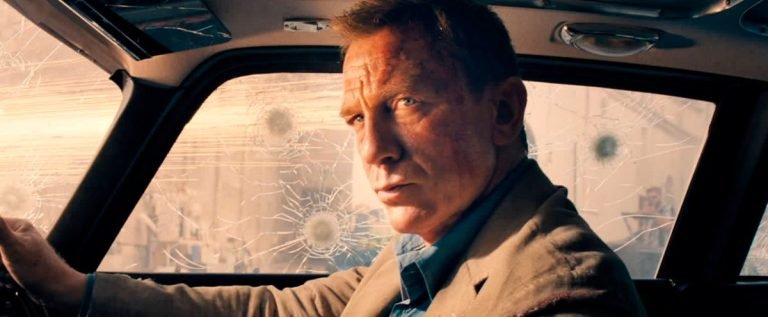
007 Contenders: The Nerd Guide to Almost-Bonds Before Craig
The name is Bond, James Bond. For over sixty years, those words have evoked a singular image of espionage, sophistication, and action. Yet, behind every iconic portrayal lies a rigorous, often secretive, casting process that has the power to define an era for the beloved British agent. The selection of a new James Bond is not merely picking an actor; it’s choosing the very soul of the franchise for the next decade, a decision scrutinized by millions of fans and industry experts alike. When the search for a new 007 commenced following Pierce Brosnan’s departure, the pressure was immense. The producers sought a fresh direction, a Bond for the 21st century that could revitalize the series while honoring its storied legacy.
Daniel Craig, with his rugged charm and intense screen presence, ultimately secured the coveted role, ushering in an era celebrated for its emotional depth and grounded realism, beginning with the acclaimed Casino Royale. His tenure redefined what audiences expected from Bond, moving away from the more lighthearted, gadget-heavy interpretations towards a character grappling with the psychological toll of his profession. But the path to Craig’s casting was anything but direct. A select group of talented actors, each with their own unique take on the super-spy, auditioned, tested, and came remarkably close to donning the famous tuxedo. These were the men who, at one point, seemed destined to become the next face of MI6, offering intriguing glimpses into how dramatically the franchise’s trajectory could have shifted. For any devoted Nerd fan of the 007 universe, understanding these near-misses provides a richer appreciation for the profound impact of the final choice.
The meticulous process of selecting Bond is a blend of physical presence, acting prowess, and an indefinable ‘Bond factor’ that resonates with global audiences. Every actor who enters the audition room faces the challenge of embodying a character that is both familiar and ripe for reinvention. The stories of these almost-Bonds are not just tales of missed opportunities, but fascinating insights into the evolving demands of the role and the specific vision the producers had for the series at that critical juncture.
Unmasking the Almost-Bonds: A Nerd Deep Dive into Daniel Craig’s Competition
Before Daniel Craig was officially announced as James Bond for 007: Casino Royale, a number of distinguished actors were considered, each undergoing screen tests and interviews to gauge their suitability for the iconic role. These contenders brought varied interpretations and backgrounds to the highly competitive casting process, making the final decision a pivotal moment in the franchise’s history.
The pool of talent vying for the role of James Bond prior to Daniel Craig’s casting was diverse, encompassing actors from various backgrounds who each presented their unique interpretation of the iconic character. Their auditions and interactions with the producers offer a compelling narrative of a franchise at a crossroads, seeking to redefine its central figure for a new generation while maintaining its foundational allure.
Matthew Rhys: The Limp and the Patch
The Welsh actor Matthew Rhys, known for his roles in The Americans and Brothers & Sisters, was among those who auditioned for the role of James Bond. During his screen test, he was reportedly asked what he would do differently with the character to distinguish his portrayal. His response, delivered in a jocular tone, was to suggest giving Bond a limp and a patch over one eye, perhaps as a way to inject some unexpected eccentricity into the traditionally suave agent.
Unfortunately for Rhys, this playful approach did not resonate with the casting directors or producers, who were reportedly seeking a more serious and grounded interpretation at the time. His lighthearted suggestions were met with silence, leading to a quick exit from the running. This anecdote highlights the critical balance between bringing originality to Bond and understanding the fundamental tone sought by the franchise’s custodians.
Dougray Scott: The Echo of Previous Bonds
Scottish actor Dougray Scott, recognized for his work in Mission: Impossible 2 and Ever After, was heavily rumored to be a frontrunner for the Bond role during the casting period. While specific details of his audition remain largely unconfirmed, industry speculation suggests that he was a strong candidate. However, one prevailing hypothesis regarding his eventual non-selection points to his perceived similarity to previous Bonds.
Sources indicated that producers might have felt Scott’s aesthetic and acting style bore too close a resemblance to Pierce Brosnan and Timothy Dalton, two actors who had previously held the mantle. The franchise, at this juncture, was actively seeking a radical departure from its immediate past, aiming for a Bond that would distinctly differentiate the new era. This desire for a fresh, less conventional interpretation may have inadvertently worked against Scott, despite his talent.
Sam Worthington: Youth and Nationality
Australian actor Sam Worthington, who would later achieve global fame with roles in Avatar and Clash of the Titans, also auditioned for James Bond. The reasons behind his non-selection are not publicly known, leading to various theories. One prominent suggestion is that Worthington might have been deemed too young for the role at the time, especially when compared to Daniel Craig, who was eight years his senior when cast.
Another theory revolves around his nationality. While Bond has traditionally been portrayed by British actors, George Lazenby, also an Australian, famously took on the role for On Her Majesty’s Secret Service. However, this precedent might not have been a strong enough factor to sway producers who were perhaps looking to firmly re-establish a more conventionally British interpretation following Brosnan’s Irish lineage.
Karl Urban: The Scheduling Conflict
New Zealand actor Karl Urban, known for his roles as Eomer in The Lord of the Rings trilogy and Billy Butcher in The Boys, reportedly advanced quite far in the casting process for James Bond. His rugged charisma and proven action capabilities made him a compelling choice for many fans. However, his journey to becoming 007 was ultimately derailed by an unforeseen logistical challenge.
According to reports, Urban missed the crucial final screen test due to a prior commitment, which prevented him from attending. This unfortunate scheduling conflict effectively cost him the opportunity to compete in the ultimate stage of the selection process, leaving fans to ponder what his portrayal might have offered had circumstances been different. It underscores how meticulous and demanding the Bond casting timeline can be.
Michael Fassbender: The Recommendation
Irish-German actor Michael Fassbender, who gained widespread acclaim for his roles as Magneto in the X-Men prequel films and in films like Inglourious Basterds, was another notable name among the contenders. Fassbender himself confirmed his audition for the role. In a surprising turn, he revealed that he actually recommended Daniel Craig to the producers, signaling his belief in Craig’s suitability for the character.
While Fassbender’s talent was undeniable, his self-professed recommendation speaks volumes about Craig’s undeniable presence and the clear vision he projected for Bond even in the audition phase. Fassbender’s subsequent career trajectory has certainly proven his capabilities as a leading man, making his brief consideration for Bond another intriguing chapter in the franchise’s casting lore.
Henry Cavill: The Almost-But-Too-Young Bond
While not one of the original five detailed for Casino Royale, Henry Cavill’s near-miss for the Bond role is a frequently discussed topic among fans and was confirmed by director Martin Campbell. The British actor, who would later become Superman in the DCEU and Geralt of Rivia in The Witcher, was very close to securing the part. Director Campbell praised Cavill’s audition, acknowledging that he performed exceptionally well and had all the necessary qualities.
However, the decisive factor against Cavill was his age; at the time, he was considered too young for the mature, world-weary Bond the producers envisioned for Casino Royale. This decision highlights the franchise’s deliberate choice to cast an actor who could immediately convey the gravitas and experience of a seasoned spy, a quality more readily found in Craig, who was already in his late thirties.
The Evolving Face of Bond: Why Casting Choices Define an Era for Every Nerd
The journey to selecting James Bond is a complex narrative, deeply intertwined with the prevailing cultural zeitgeist and the specific creative vision producers hold for the franchise. Each actor who has taken on the role has, in turn, imprinted their era with a distinct interpretation of the super-spy, shaping audience expectations and the cinematic landscape. The choices made, both successful and nearly successful, profoundly impact the franchise’s direction.
The era preceding Daniel Craig’s selection saw a desire to move away from the more overtly charming and gadget-focused Bond, a style that had become a hallmark of actors like Roger Moore and, to some extent, Pierce Brosnan. Producers were looking for a grittier, more vulnerable, and psychologically complex interpretation. This shift was not merely a stylistic preference; it was a strategic move to ground Bond in a post-9/11 world, where traditional espionage tropes felt less relevant without an underlying sense of realism and danger.
The Impact of Daniel Craig’s Casting
Daniel Craig’s casting marked a bold departure. He brought a raw physicality and an emotional depth previously unseen in the character. This decision, though initially met with some skepticism from a segment of the fanbase, ultimately revitalized the franchise. His Bond was a man burdened by his missions, prone to mistakes, and undeniably human, a stark contrast to the almost superhuman agents of the past.
This redefinition allowed the series to explore darker themes and more complex narratives, leading to critical and commercial success. The choice of Craig set a precedent for future Bond castings, emphasizing not just traditional good looks and suave demeanor, but also intense dramatic capability and a willingness to explore the character’s internal struggles. It proved that a willingness to challenge established norms could lead to greater rewards.
Lessons from the Almost-Bonds
The stories of the actors who almost became Bond offer valuable insights into the intricacies of the casting process. They reveal that suitability for the role extends beyond mere talent or popularity. Factors such as perceived resemblance to past actors (Dougray Scott), age (Henry Cavill, Sam Worthington), and even the ability to align with the producers’ specific vision for the character’s tone (Matthew Rhys) play crucial roles.
Karl Urban’s situation also underscores the logistical demands and the importance of availability during critical decision-making phases. These narratives collectively illustrate that the Bond role is not just a prestigious acting job; it’s a carefully curated brand identity, where every attribute of the chosen actor is weighed against the overarching strategic goals for the franchise. The legacy of these almost-Bonds serves as a testament to the enduring allure and profound responsibility that comes with portraying one of cinema’s most iconic figures.
The Next Chapter: Future Trends and the Search for a New 007
As Daniel Craig has officially concluded his impactful tenure as James Bond with No Time to Die, the cinematic world once again turns its attention to the monumental task of finding his successor. The search for the next 007 is not just a casting call; it’s a global conversation, igniting speculation and anticipation among fans, critics, and the industry alike. This ongoing quest will inevitably be shaped by the legacy of past choices and the evolving landscape of entertainment.
The producer Amy Pascal has indicated that an announcement regarding the next James Bond could come by the end of 2026, setting a timeline for this highly anticipated decision. Furthermore, reports have begun to circulate about potential creative talents joining the franchise, with Denis Villeneuve reportedly eyed for the director’s chair and Steven Knight linked to the screenwriting duties. These names alone suggest a continued commitment to high-caliber, auteur-driven storytelling, echoing the quality benchmark set by Craig’s era.
Daniel Craig’s Enduring Advice for His Successor
Upon his departure, Daniel Craig offered poignant advice to his successor: “Leave the character better than he found it.” This statement encapsulates the immense responsibility and creative imperative that comes with portraying James Bond. It’s a call not merely to maintain the status quo but to evolve the character, to push boundaries, and to ensure that Bond remains relevant and compelling for future generations.
The challenge for the next actor will be precisely this: to build upon the foundations laid by Craig, acknowledging the grittier, more human elements he introduced, while also carving out a unique identity for 007 that speaks to contemporary audiences. They must navigate the balance between tradition and innovation, proving themselves worthy of the iconic tuxedo and the immense legacy it represents.
What the Next Bond Era Could Bring for the Nerd Community
The ongoing search and the rumored creative team signal a clear direction: the franchise aims to continue its high-quality, character-driven approach. For the devoted Nerd community, this means the potential for a Bond who is not just an action hero, but a figure capable of deep emotional resonance and complex moral dilemmas.
Trends in modern cinema suggest a move towards greater diversity in casting and storytelling, which could influence the choice of the next Bond. Whether the character retains his traditional demographics or embraces a more inclusive future remains a key point of discussion. Regardless, the casting will likely prioritize an actor with significant dramatic weight and the ability to carry a sophisticated narrative. The enduring allure of James Bond ensures that whoever takes on the role will inherit a challenge as exhilarating as any of 007’s missions.
Frequently Asked Questions About the James Bond Casting Process
| Question | Answer |
|---|---|
| What was unique about Daniel Craig’s portrayal of James Bond? | Daniel Craig’s portrayal stood out for its unprecedented realism and emotional depth. He presented a grittier, more vulnerable Bond, who was visibly affected by his missions and less reliant on gadgets. Craig infused the character with a humanizing blend of brutality and inner conflict, moving away from the suave, almost infallible image of previous iterations. His performance emphasized physical prowess and a grounded approach to espionage, redefining audience expectations for the franchise. |
| Why was Daniel Craig ultimately chosen for the role of James Bond? | While the specific reasons are multifaceted, Daniel Craig was chosen because producers sought a radical shift in the character’s direction, aiming for a Bond who was less polished and more rugged. Craig’s screen test likely showcased his ability to convey intensity, vulnerability, and a grounded physicality, aligning perfectly with the vision for a more serious and psychologically complex 007 for the Casino Royale era. His acting gravitas promised a fresh, impactful take that could revitalize the franchise. |
| Are any of the actors who almost played Bond still contenders for future roles? | While actors like Henry Cavill and Karl Urban have achieved significant fame since their initial Bond auditions, it’s generally unlikely they would be reconsidered for the current search. The Bond franchise typically looks for fresh faces and actors who are not already heavily associated with other major franchises. Additionally, factors like age and current contractual commitments often play a role in disqualifying past contenders, ensuring the chosen actor can commit fully to a multi-film tenure. |
| How involved are directors in the James Bond casting process? | Directors play a significant role in the James Bond casting process, often working closely with producers to identify the actor who best fits their vision for a particular film and the character’s arc. For Casino Royale, director Martin Campbell was actively involved, even confirming Henry Cavill’s near-casting. Their input is crucial in evaluating an actor’s performance during screen tests, their chemistry with potential co-stars, and their ability to embody the required tone and style. |
| Has James Bond ever been played by a non-British actor before? | Yes, James Bond has been portrayed by a non-British actor once. George Lazenby, an Australian, took on the role for the 1969 film On Her Majesty’s Secret Service. While the majority of actors who have played Bond have been British or from Commonwealth nations, Lazenby’s tenure stands as the exception, demonstrating that nationality, while often a strong preference, is not an absolute prerequisite for the iconic role. |
| What makes the James Bond casting process so uniquely challenging? | The James Bond casting process is uniquely challenging due to the immense global recognition of the character, the high expectations of a devoted fanbase, and the long-term commitment required for a multi-film franchise. The chosen actor must possess a rare combination of charisma, physicality, dramatic range, and the ability to embody a character that is both traditional and adaptable to contemporary sensibilities. The decision carries significant financial and cultural weight, scrutinized unlike almost any other in cinema. |
| What advice did Daniel Craig give his successor for the James Bond role? | Daniel Craig offered sage advice to the next actor to take on the James Bond mantle: to "leave the character better than he found it." This counsel emphasizes the responsibility of stewardship over the iconic role, encouraging the successor not just to maintain its legacy but to evolve and improve upon it. It highlights the creative imperative to bring a fresh perspective and continue pushing the boundaries of what the character can represent in modern cinema. |
| What other iconic roles have these ‘almost-Bonds’ gone on to play? | The actors who almost became Bond went on to achieve significant success in other iconic roles. Karl Urban became known for Eomer in The Lord of the Rings and Billy Butcher in The Boys. Michael Fassbender famously portrayed Magneto in the X-Men prequel films. Henry Cavill took on Superman in the DCEU and Geralt of Rivia in The Witcher. Sam Worthington starred as Jake Sully in Avatar. Matthew Rhys captivated audiences as Philip Jennings in The Americans. Dougray Scott played the antagonist in Mission: Impossible 2. |
The journey to becoming James Bond is fraught with anticipation, intricate decisions, and the subtle interplay of talent, timing, and cinematic vision. For the dedicated Nerd, exploring the paths not taken offers a fascinating parallel narrative to the Bond saga we know. The stories of Matthew Rhys, Dougray Scott, Sam Worthington, Karl Urban, Michael Fassbender, and Henry Cavill are not merely footnotes; they are compelling chapters in the franchise’s enduring history, showcasing the immense pressure and prestige associated with the role.












Post Comment