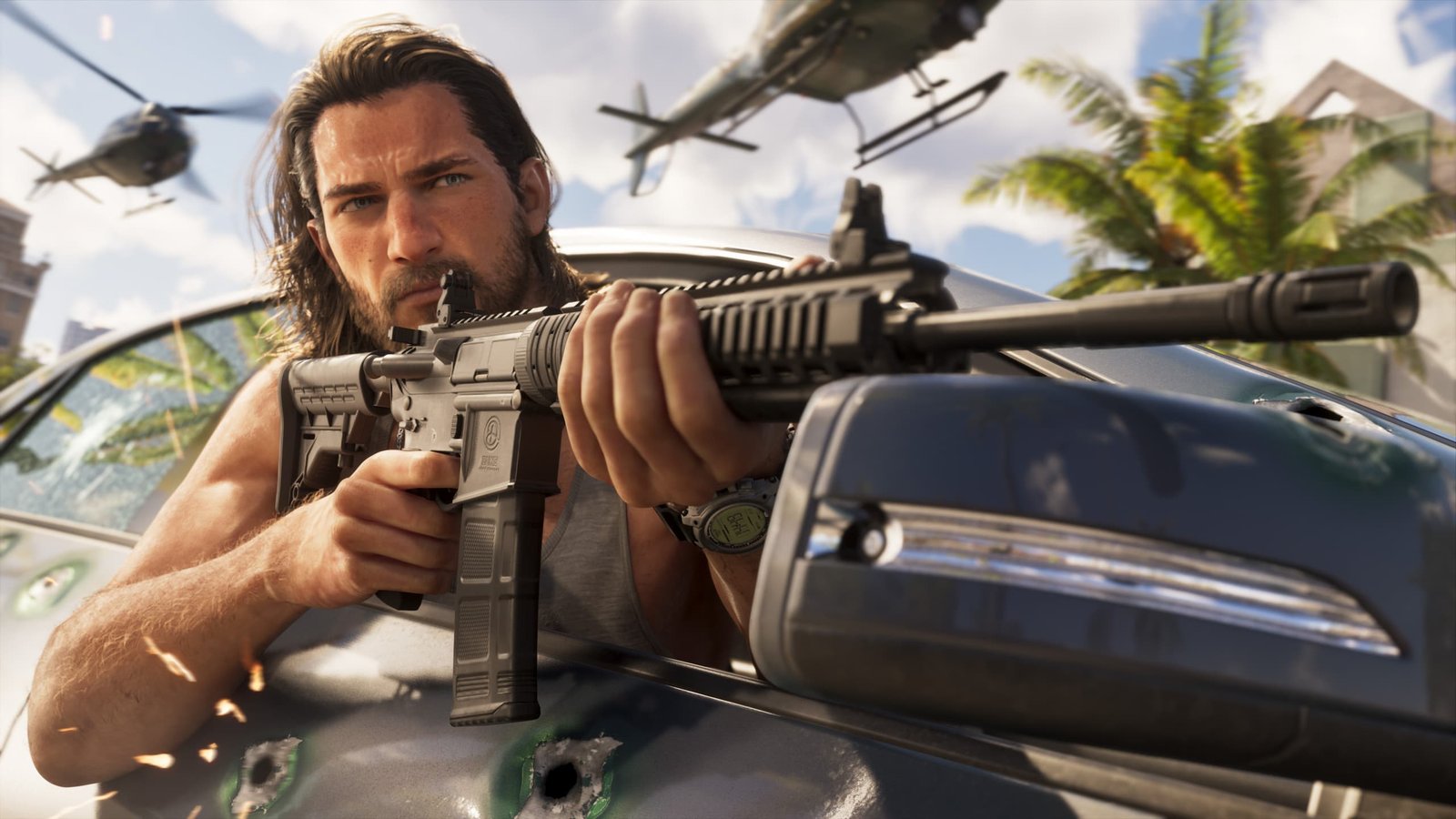
GTA 6, Zelda User Scores Attacked on Metacritic
In the vast, interconnected universe of video games, platforms like Metacritic serve as crucial barometers for gauging public and critical reception. They aggregate scores, offering a snapshot of a title’s standing within the industry. Yet, even these established systems are not immune to the volatile currents of player sentiment, which can, at times, transform consensus into controversy. Recently, two titans of the gaming world—the unreleased but highly anticipated Grand Theft Auto VI and the universally revered classic, The Legend of Zelda: Ocarina of Time—found their user scores under an unprecedented assault, sparking widespread debate across online forums and communities.
Grand Theft Auto VI, despite being years away from its official release and having only received its initial critic scores, has already become a focal point of intense discussion. Its predecessor, GTA V, set an impossibly high bar, shaping expectations for what Rockstar Games could deliver next. Simultaneously, The Legend of Zelda: Ocarina of Time stands as a monument in gaming history, frequently cited as one of the greatest games ever made, with a legacy spanning decades. The notion that both could become targets for mass negative user reviews, despite their critical acclaim or future promise, underscores a deeper, more complex narrative unfolding within the gaming community.
This isn’t merely about individual disappointment; it’s about a coordinated, multifaceted phenomenon known as ‘review bombing.’ What drives thousands of players to descend upon a game’s profile, deliberately tanking its score? The motivations are often as varied as the players themselves, ranging from ideological clashes and cultural grievances to genuine dissatisfaction with perceived gameplay directions. The events surrounding GTA VI and Zelda: Ocarina of Time reveal a profound disconnect between the almost perfect scores awarded by professional critics and the starkly contrasting public reception. This chasm highlights the challenges faced by developers, review aggregators, and the community itself in navigating a landscape where passion can quickly turn into protest.
As we delve deeper into this Metacritic mayhem, we will explore the precise triggers behind these attacks, the disparate groups involved, and the implications for the future of game reception. Understanding these dynamics is crucial for anyone interested in the evolving interaction between creators, critics, and the immensely influential global player base.
The Unfolding Drama: How Recent Games Became Battlegrounds on Metacritic
Metacritic, as a leading review aggregator, presents two distinct yet equally important metrics: the Metascore, compiled from professional critic reviews, and the User Score, representing the collective opinion of the gaming public. While professional critics often evaluate games based on objective criteria such as innovation, technical prowess, narrative depth, and gameplay mechanics, user scores typically reflect subjective enjoyment, personal expectations, and broader community sentiment. This inherent duality was starkly highlighted in the recent Metacritic controversies involving Grand Theft Auto VI and The Legend of Zelda: Ocarina of Time.
Grand Theft Auto VI, a title still in development, found its Metacritic user page bombarded with negative reviews, causing its score to plummet to a mere 5.6 out of 10. This drastic drop occurred amidst a significant volume of 95,760 public analyses, a stark contrast to its near-perfect critical Metascore of 99. Initially, the user score had hovered at a respectable 9.6, indicating initial positive reception, before the coordinated effort took hold, transforming its page into a battleground.
In a related but retaliatory move, the original Metacritic user page for The Legend of Zelda: Ocarina of Time—a timeless classic, referred to in some discussions, including our source material, as a ‘remake’ in the context of this targeted campaign—also saw its user score decline. Despite its own stellar critical Metascore of 99 (with slightly higher decimals than GTA VI), its user score fell from an impressive 9.6 to 8.4. This descent was driven by 44,245 user reviews, with the most recent submissions clearly stemming from fans of GTA seeking retribution, illustrating the interconnected nature of online gaming communities and their rivalries.
In response to these unusual events, Metacritic reportedly attempted to mitigate the damage. Actions included temporarily closing the review submission windows, delaying the publication of new user analyses, and even deleting some reviews that were deemed malicious or irrelevant. However, these measures proved insufficient to fully stem the tide, leaving both titles with significantly altered public perceptions on the platform.
Direct Answer: Recently, both Grand Theft Auto VI and The Legend of Zelda: Ocarina of Time experienced significant user review bombing on Metacritic. Despite near-perfect critical scores of 99 for both games, GTA VI’s user score plummeted to 5.6 amidst accusations of being ‘woke’ or having a slow pace, while Zelda: Ocarina of Time’s score dropped to 8.4 due to retaliatory attacks from GTA fans. Metacritic attempted damage control, but the scores largely reflect the widespread public backlash and online cultural conflicts.
Grand Theft Auto VI: A Confluence of Discontent
The user review bombing of Grand Theft Auto VI was not a monolithic event but rather a convergence of several distinct grievances, each contributing to its precipitous score decline. At least three primary factions of internet users were identified as driving the negative sentiment, making the situation far more intricate than a simple coordinated attack.
One discernible group consisted of players who specifically created profiles to bolster The Legend of Zelda: Ocarina of Time’s score while simultaneously submitting low scores for GTA VI. This suggests a direct engagement in a ‘culture war’ within the gaming community, where loyalty to one franchise might translate into animosity towards another, particularly when perceived as rivals in terms of influence or cultural standing.
A second, and perhaps more vocal, segment of dissatisfied players entered the fray fueled by ideological concerns. These individuals posted reviews accusing GTA VI of being ‘woke’ or ‘lacrador’ (a Portuguese term implying excessive political correctness), especially when compared to previous installments in the Grand Theft Auto series. This criticism often stems from a perception that modern games are incorporating progressive social commentary that deviates from traditional narratives or player expectations, igniting debates about artistic freedom versus audience appeal.
Finally, a significant number of players appeared to act independently of any cultural war or ideological stance. Their dissatisfaction with GTA VI stemmed purely from perceived gameplay elements, specifically a ‘slower pace’ and ‘calmer missions.’ This group’s sentiment gained traction over the weekend, with comparisons being drawn to classic games like Shenmue on the Dreamcast, a title known for its deliberate pacing and inclusion of mundane, everyday activities. This critique highlights how evolving player expectations regarding action and narrative flow can profoundly impact initial reception, even for unreleased titles.
The Legend of Zelda: Ocarina of Time: Collateral Damage
The revered status of The Legend of Zelda: Ocarina of Time within the pantheon of video games makes its involvement in the Metacritic user score drama particularly notable. Unlike Grand Theft Auto VI, which faced a multifaceted attack rooted in various forms of discontent, Ocarina of Time’s user score decline was largely a direct consequence of retaliatory actions.
Following the widespread negative reviews targeting GTA VI, fans of the Rockstar title seemingly orchestrated a counter-campaign, redirecting their frustration towards The Legend of Zelda: Ocarina of Time. This tit-for-tat escalation saw a rapid influx of negative reviews on Ocarina of Time’s Metacritic user page, pushing its score down from 9.6 to 8.4. This action underscores the sometimes-vindictive nature of online communities, where perceived slights against one beloved franchise can trigger a reciprocal attack on another, irrespective of the latter’s historical significance or individual merit. The incident illustrates how a game’s reputation can become collateral damage in larger, often unrelated, online disputes.
Understanding Review Bombing in Modern Games
Review bombing is a phenomenon where a large number of users post negative reviews for a product—in this context, video games—within a short period, often with the intent of artificially lowering its aggregate score. This collective action is usually orchestrated rather than being a spontaneous outpouring of individual, unrelated criticisms. The goal is to send a strong message, whether it’s a protest against developer decisions, perceived ideological stances, technical issues, or broader cultural disagreements.
Historically, review bombing has been a recurring issue across various platforms. Early instances often targeted games for issues like controversial monetization strategies, server instability, or broken launches. Over time, however, the scope expanded to encompass social and political statements, as players increasingly voiced opinions on how developers portrayed diversity, inclusivity, or specific narratives within their titles. This evolution has transformed review bombing from a reactive measure against product flaws into a potent, albeit often destructive, tool for ideological expression within the gaming community.
The motivations behind review bombing are diverse and complex. They can range from genuine user dissatisfaction with a game’s quality or changes to a franchise, to coordinated political activism aiming to punish developers for perceived ‘woke’ or ‘anti-consumer’ practices. Sometimes, it’s a form of collective grievance, allowing players to feel heard when they believe their concerns are being ignored. The impact, however, is rarely constructive. It can unfairly tarnish a game’s reputation, demotivate development teams, and distort the true sentiment of the broader player base, making it difficult for new players to discern legitimate feedback from orchestrated attacks. Review platforms continually grapple with how to effectively moderate these campaigns without suppressing valid criticism.
Direct Answer: Review bombing in games is a coordinated effort by a large group of users to post overwhelmingly negative reviews, artificially lowering a game’s aggregate score on platforms like Metacritic. Motivations vary widely, including protests against developer decisions, perceived ideological shifts, or technical issues. Its impact can unfairly damage a game’s reputation, affect sales, and undermine the credibility of user review systems by blurring the line between genuine feedback and targeted attacks.
The Divide: Critic Consensus Versus Player Sentiment in Games
The stark divergence between professional critic scores and user scores for Grand Theft Auto VI and The Legend of Zelda: Ocarina of Time on Metacritic exemplifies a recurring tension within the gaming industry. While both games garnered near-perfect ratings from established reviewers, their user scores tell a dramatically different story, highlighting the fundamental differences in how these two groups evaluate interactive entertainment.
| Metric | Grand Theft Auto VI (Critic Score) | Grand Theft Auto VI (User Score) | The Legend of Zelda: Ocarina of Time (Critic Score) | The Legend of Zelda: Ocarina of Time (User Score) |
|---|---|---|---|---|
| Initial Score | 99 | 9.6 | 99 | 9.6 |
| Current Score (Post-Bombing) | 99 | 5.6 | 99 | 8.4 |
| Total User Reviews | N/A | 95,760 | N/A | 44,245 |
| Context of Attack | N/A | Multi-faceted (woke, slow pace, cultural war) | N/A | Retaliation from GTA fans |
Professional critics, often with years of experience and a deep understanding of game design principles, typically assess games through a lens of objective technical merit, innovation, artistic vision, and industry impact. Their reviews consider factors like graphics, sound design, control mechanics, narrative coherence, and overall technical execution. They aim to provide a balanced, informed perspective, often contextualizing a game within its genre and the broader history of gaming. For GTA VI, even in its unreleased state, and for a masterpiece like Ocarina of Time, this rigorous evaluation leads to high scores reflecting exceptional quality and significance.
Player sentiment, however, is a far more subjective and diverse beast. User scores are driven by personal enjoyment, alignment with individual preferences, and the fulfillment of pre-release hype or long-held expectations for a beloved franchise. Players may prioritize elements like narrative choices, character representation, gameplay loop satisfaction, or even the feeling of community connection. When these personal or communal expectations are unmet, or when cultural/political viewpoints clash with a game’s direction, user scores can plummet, irrespective of a game’s objective quality. This makes user reviews a powerful, democratic, but also easily manipulable, reflection of the collective gaming consciousness.
The benefits of user reviews are clear: they provide a direct, unfiltered voice for the player base, offering a democratic counterpoint to professional critiques. They foster community engagement and can highlight issues that critics might overlook. However, their limitations are equally apparent. Susceptibility to manipulation through review bombing, a lack of consistent evaluation standards, and the tendency for emotional rather than balanced responses can compromise their reliability. This dual nature means that while user scores are vital for understanding public perception, they must be interpreted with an awareness of their potential for distortion.
Direct Answer: The divide between critic and user scores in games stems from differing evaluation criteria. Critics typically focus on objective technical merit, innovation, and industry impact, while user scores reflect subjective enjoyment, personal expectations, and community sentiment. This gap can become pronounced when games face review bombing campaigns driven by dissatisfaction, cultural clashes, or targeted retaliation, making user scores a less reliable indicator of objective quality but a strong gauge of community feeling.
Metacritic’s Response and the Future of User Feedback in Games
The Metacritic user score controversies surrounding Grand Theft Auto VI and The Legend of Zelda: Ocarina of Time presented significant challenges for the review aggregation platform. In response to the clear indications of orchestrated negative review campaigns, Metacritic reportedly implemented several measures aimed at mitigating the immediate damage and attempting to restore some semblance of integrity to its user scoring system. These actions included temporarily disabling user review submissions for the affected games, delaying the public display of newly submitted reviews, and actively deleting a number of reviews deemed to be part of the bombing efforts. However, the lasting impact on the scores indicates the immense difficulty in fully countering such widespread, coordinated attacks.
For review aggregators like Metacritic, balancing the principle of open, democratic feedback with the necessity of preventing abuse is a perpetual tightrope walk. Their primary challenge is to distinguish between genuine, albeit negative, criticism and malicious, organized campaigns designed to unfairly tarnish a product’s reputation. This distinction is often blurry, as some review bombing campaigns might genuinely reflect a segment of the user base’s strong dissatisfaction, even if expressed in an exaggerated or coordinated manner.
To safeguard the integrity of user feedback on games, review platforms are exploring and implementing various best practices. These often include more sophisticated moderation systems, combining both AI-driven pattern recognition to detect suspicious activity and human oversight for nuanced judgment. Delaying the availability of user reviews until a game has been released for a certain period (e.g., 24-48 hours) can help filter out day-one emotional responses or pre-release biases. Implementing stricter verification methods, such as requiring proof of purchase or significant playtime, could also deter malicious reviewers. Clearer community guidelines and consistent enforcement are equally vital in fostering a healthier review environment.
The future of user feedback in games is likely to involve a multi-pronged approach. We may see a greater emphasis on qualitative feedback over purely quantitative scores, more curated community hubs where discussions are actively moderated, and the integration of AI tools not just for filtering, but for summarizing legitimate sentiments. The goal is to evolve beyond raw numerical averages, offering a more nuanced and resilient representation of player opinion, one that can withstand organized attempts at manipulation while still empowering the collective voice of the gaming public.
Direct Answer: Metacritic responded to the review bombing of these games by temporarily closing review submissions, delaying new reviews, and deleting some. The future of user feedback on such platforms involves balancing open expression with abuse prevention. Best practices include enhanced AI and human moderation, delaying review publication post-launch, stricter reviewer verification, and clearer community guidelines, all aiming for a more resilient and representative system against coordinated attacks.
Navigating the Cultural Wars in the World of Games
The “woke” and “lacrador” accusations leveled against Grand Theft Auto VI highlight a growing and increasingly contentious aspect of modern gaming: the intersection of creative content with contemporary cultural and political discourse. These terms, often used pejoratively, refer to the perception that certain games are incorporating progressive social themes, diverse character representations, or inclusive narratives in a way that some segments of the audience find preachy, forced, or contrary to their expectations for a given franchise.
For many players, particularly those nostalgic for earlier, less overtly political eras of gaming, the introduction of explicit social commentary can be jarring. They may feel that developers are prioritizing ideological messaging over traditional gameplay or narrative elements, leading to a sense of alienation or betrayal. This sentiment is amplified in established franchises like Grand Theft Auto, where a long history of satirical, often edgy, content sets a specific precedent. Any perceived shift towards more conventional social narratives can be interpreted as a dilution of the series’ core identity, fueling accusations of ‘going woke.’
This cultural friction extends beyond individual titles, contributing to broader ‘cultural wars’ within the gaming community. These conflicts pit different player demographics against each other, often along ideological lines, leading to intense debates and, as seen with GTA VI, even coordinated online protests like review bombing. The consequences of these cultural clashes are significant: they can polarize the player base, create a hostile environment for developers attempting to innovate or reflect contemporary society, and ultimately fragment the sense of shared community that once defined gaming. Navigating this landscape requires both creators and consumers to engage with greater empathy and understanding of diverse perspectives, seeking common ground rather than exacerbating divides over the artistic direction of games.
Direct Answer: Cultural wars in games, often manifesting as ‘woke’ accusations, arise when some players perceive titles like GTA VI as prioritizing progressive social themes or diverse representation over traditional gameplay or established franchise identity. This generates polarization, leading to intense debates and actions like review bombing, fragmenting the gaming community and posing challenges for developers who navigate creative freedom against diverse audience expectations.
Frequently Asked Questions About Games and Review Bombing
What is Metacritic and its role in the gaming industry?
Metacritic is a website that aggregates reviews of games, movies, TV shows, and music albums from various professional critics and users. It then calculates an average score, known as the Metascore for critics and the User Score for the public. Its role in the gaming industry is significant, as a high Metascore can heavily influence a game’s sales, marketing, and even the bonuses awarded to development teams. It serves as a benchmark for quality and a central hub where consumers can quickly gauge general consensus, though the reliability of user scores can be compromised by coordinated actions like review bombing.
What exactly is review bombing in the context of video games?
Review bombing refers to the practice of a large, often coordinated, group of users submitting overwhelmingly negative reviews for a video game on platforms like Metacritic or Steam. The primary goal is usually to artificially lower the game’s overall score, often as a form of protest. This protest can be against various issues: technical problems at launch, controversial monetization strategies, developer decisions perceived as anti-consumer, or even ideological objections to a game’s content, narrative, or representation. It’s a powerful, albeit often destructive, way for a segment of the audience to voice extreme dissatisfaction.
Why was Grand Theft Auto VI specifically targeted by negative user reviews?
Grand Theft Auto VI’s user score suffered from a confluence of factors. Firstly, some players participated in a broader ‘cultural war,’ actively downvoting GTA VI while boosting rival games like Zelda. Secondly, a significant portion of the backlash stemmed from accusations that the game was ‘woke’ or ‘lacrador,’ implying it was overly politically correct or incorporating progressive social commentary that alienated long-time fans accustomed to the series’ more irreverent tone. Lastly, some players genuinely expressed dissatisfaction with what they perceived as a ‘slower pace’ and ‘calmer missions’ in the upcoming title, comparing it unfavorably to more action-packed predecessors or other games like Shenmue.
Why was The Legend of Zelda: Ocarina of Time also targeted?
The Legend of Zelda: Ocarina of Time, a universally acclaimed classic, found its user score targeted primarily as a retaliatory measure. After Grand Theft Auto VI received a barrage of negative user reviews, some fans of the GTA series seemingly responded by orchestrating a counter-campaign against Ocarina of Time. This action was not based on any intrinsic flaw of the Zelda title itself, but rather served as a form of reprisal in the ongoing online cultural conflicts between fan bases. It demonstrates how innocent games can become collateral damage in disputes driven by external factors rather than genuine critiques of the game’s quality.
How do critic scores differ from user scores on Metacritic for games?
Critic scores on Metacritic, known as the Metascore, are derived from professional reviewers who typically evaluate games based on objective criteria such as graphics, sound, gameplay mechanics, narrative quality, innovation, and technical performance. User scores, on the other hand, reflect the subjective opinions of the public. They are driven by personal enjoyment, fulfillment of expectations, emotional connection, and sometimes, ideological alignment. This difference means critic scores often represent a more technical and industry-standard assessment, while user scores offer a democratic, albeit more volatile and easily manipulated, snapshot of collective player sentiment regarding games.
What is the significance of the ‘woke’ accusation in gaming?
The accusation of a game being ‘woke’ signifies a critique from a segment of the audience who believes the title is overtly incorporating progressive social or political themes, diverse character representations, or inclusive narratives in a way they perceive as forced, preachy, or detrimental to the game’s artistic vision or established franchise identity. This often sparks cultural debates, leading to significant polarization within the gaming community. For some players, it represents a departure from what they consider the core purpose of games—entertainment—and can trigger strong negative reactions, including review bombing campaigns.
How does a game’s pace influence player reception, as seen with GTA VI?
A game’s pace significantly influences player reception, as evidenced by some criticisms directed at GTA VI’s perceived ‘slower pace’ and ‘calmer missions.’ Modern games often strive for immediate gratification and constant action, and players accustomed to this style may find titles with deliberate pacing or more mundane, everyday activities unsatisfying. For Grand Theft Auto, a series celebrated for its high-octane action and chaotic freedom, a shift towards a more contemplative or realistic pace could diverge sharply from established expectations. This highlights that player enjoyment is highly contingent on how a game’s rhythm aligns with their preferred style of engagement.
What actions can review platforms like Metacritic take against review bombing?
Review platforms can implement several strategies to combat review bombing. These include: temporarily closing user review submissions during controversies to cool down tensions; delaying the publication of new user reviews for a period after a game’s launch to allow for more considered feedback; actively monitoring and deleting reviews that violate terms of service (e.g., contain hate speech or are clearly irrelevant); and implementing stricter verification methods, such as requiring proof of game ownership or a minimum playtime before allowing a review. The goal is to preserve the integrity of user scores while still allowing genuine public feedback on games.
Does review bombing truly reflect a game’s quality?
No, review bombing typically does not truly reflect a game’s objective quality. While genuine criticism might be embedded within a bombing campaign, the phenomenon itself is characterized by a coordinated effort to artificially lower a score, often driven by factors external to the game’s actual merit—such as cultural grievances, political statements, or rivalries between fanbases. It distorts the aggregate user score, making it an unreliable indicator for prospective players seeking an honest assessment. True quality is better gauged through a balanced consideration of professional critic reviews, in-depth analyses, and a diversity of legitimate, non-bombing user feedback on games.











Post Comment