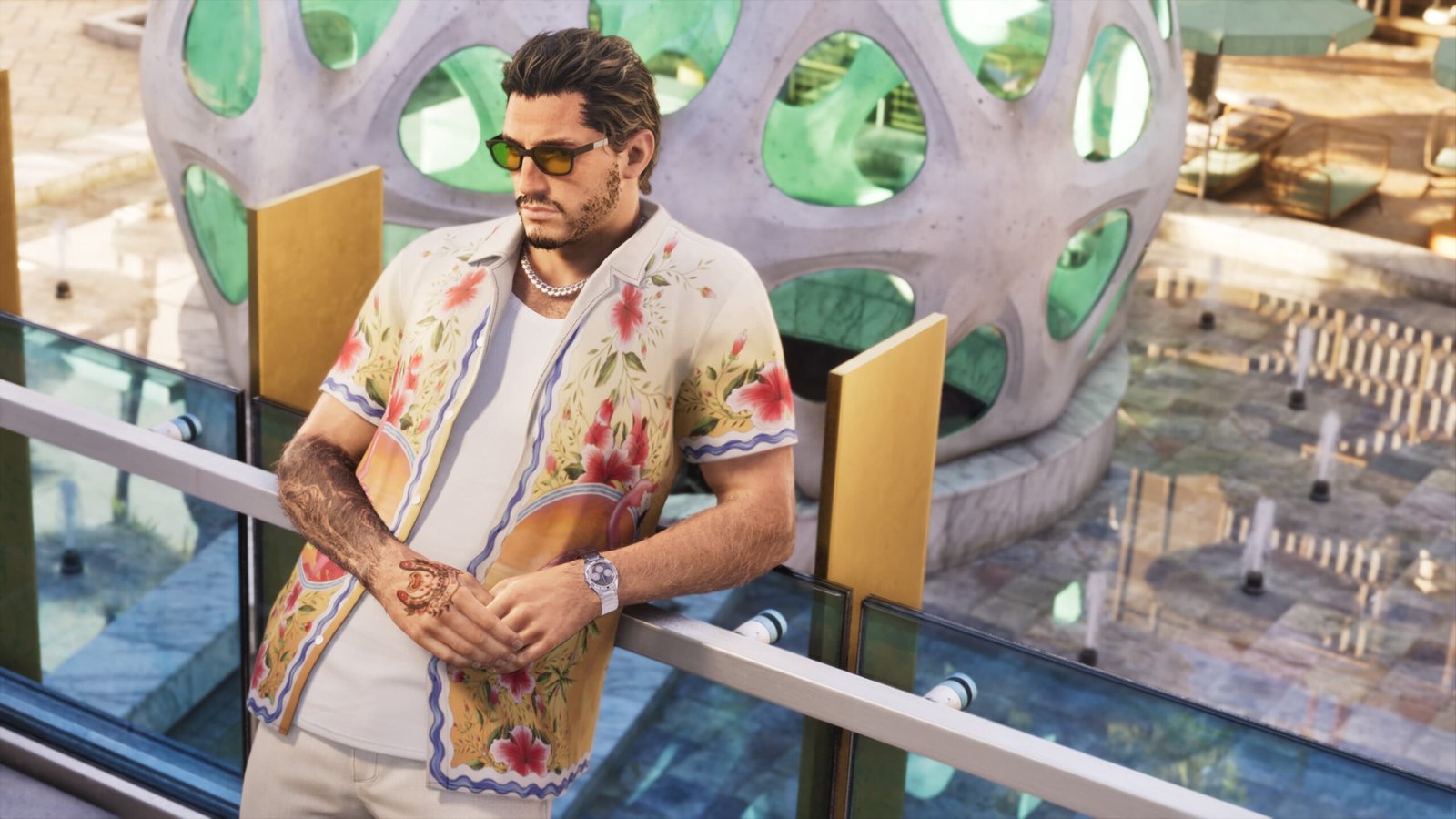
GTA 6: From Hater to Hype – A Gamer’s Special Report
In the dynamic landscape of video games, player perceptions often evolve, yet a complete turnaround from deep-seated skepticism to fervent anticipation remains a compelling narrative. Such is the journey of one gamer, Thomas Schulze, who, despite decades of outright aversion to the Grand Theft Auto (GTA) franchise, now finds himself eagerly awaiting the delivery of GTA 6. This transformation isn’t merely a casual change of heart; it represents a significant shift in what players seek from open-world titles and how game developers, even those with established formulas like Rockstar Games, are responding to these evolving desires.
For years, the sprawling, chaotic worlds of Grand Theft Auto held no allure for Schulze, a sentiment deeply rooted since the days of the very first PC iteration. His disdain wasn’t born from moralistic objections to the franchise’s often controversial themes, but rather from a fundamental disconnect with its core gameplay loop. What he perceived as an ‘office boy simulator’—a series of mundane deliveries and aimless wanderings serving as thin pretexts for linear, unengaging missions—failed to ignite any passion. Even the acknowledged significance of GTA 3 in pioneering 3D open worlds couldn’t sway his personal preference. He remained content in his role as a GTA detractor, unfazed by aggressive marketing campaigns for the latest installment.
Yet, the initial reveal of GTA 6, particularly through extensive live gameplay streams and early player testimonials, began to chip away at this long-held indifference. What emerged from these unfiltered glimpses was a game seemingly distinct from its predecessors, offering experiences beyond the expected cycle of heists and mayhem. This wasn’t merely GTA 5.5; it hinted at a richer, more nuanced world brimming with activities that resonated with a different kind of player. The narrative of this conversion offers a fascinating lens through which to view the future of open-world game design, suggesting that even the most iconic franchises are capable of radical reinvention to capture broader imaginations.
This exclusive insight unpacks the specific elements that catalyzed Schulze’s surprising shift, exploring how GTA 6 appears to be weaving in unexpected layers of immersion and player agency. It delves into the influences from other beloved genres and titles, particularly the ‘life-sim’ mechanics reminiscent of games like Shenmue, that are seemingly transforming the Grand Theft Auto experience. As the gaming world braces for what promises to be one of the most significant releases in recent memory, understanding these evolving perceptions becomes crucial for both developers and players alike, painting a vivid picture of how a once-skeptical audience can be won over by genuine innovation.
The Unforeseen Appeal of GTA 6: A Special Report on Evolving Gameplay
The journey from rejecting the Grand Theft Auto series to eagerly anticipating GTA 6 highlights a remarkable evolution in gameplay design and player expectations, signaling a potential new direction for the iconic franchise. For some, like Thomas Schulze, the shift was propelled by the discovery of a GTA that transcends its traditional, crime-centric loop, incorporating elements that foster deeper, more varied player engagement beyond the expected mayhem and linear missions.
A core appeal of GTA 6 for previously skeptical players lies in its apparent departure from what was once perceived as a repetitive “office boy simulator,” replacing mundane delivery quests with a richer, more diverse array of interactive opportunities that enhance immersion and player agency within its sprawling open world. This special report highlights how new gameplay dynamics are broadening the franchise’s appeal.
A Legacy of Disinterest: Why Traditional GTA Failed to Connect
For decades, the Grand Theft Auto franchise, despite its monumental success and cultural impact, remained inaccessible to a segment of players who found its core mechanics unengaging. Thomas Schulze articulated this sentiment by labeling it an “office boy simulator,” where the primary loop involved navigating vast distances to undertake relatively linear tasks or initiating arbitrary chaos without a compelling narrative purpose. This critique wasn’t about the game’s mature themes, but rather a perceived lack of meaningful, diverse interaction beyond repetitive mission structures and consequence-free destruction.
This perspective underscores a common criticism among players seeking more profound engagement in open-world environments. While the freedom to wreak havoc held immense appeal for many, others yearned for systems that fostered exploration, progression, and social interaction in ways that felt less superficial. The sheer scale of GTA worlds was always impressive, but for some, the activities within them often felt disconnected from a sense of personal investment or genuine role-playing, leading to a profound disinterest that persisted across multiple installments.
The Tipping Point: Unveiling GTA 6’s Unexpected Depth
The unveiling of GTA 6, particularly through prolonged gameplay streams and early community reactions, served as a powerful catalyst for changing long-held perceptions. What was initially dismissed as merely an incremental update, “GTA 5.5,” began to reveal surprising layers of depth and interactivity that transcended the franchise’s established norms. It wasn’t the expected expansion of car chases and shootouts that captured attention, but rather the inclusion of seemingly mundane yet profoundly immersive activities.
Observers noted missions that involved painting household walls, repairing roofs, venturing into the ocean for treasure hunts, and even cataloging local fauna. These activities, far from being tedious, resonated with players who appreciate meticulous world-building and the opportunity to engage with their virtual environment in non-combative, richly detailed ways. This unexpected integration of ‘life-sim’ elements into the traditionally action-packed GTA formula hinted at a game designed to cater to a broader spectrum of player preferences, offering meaningful interaction beyond the criminal underworld.
Echoes of Shenmue: How GTA 6 Embraces Life-Sim Elements
The transformation in perception for GTA 6 is deeply tied to its emergent embrace of “life-sim” elements, drawing comparisons to revered titles that prioritize player immersion in living, breathing worlds. This shift suggests a conscious effort by Rockstar Games to blend its signature grand-scale action with the nuanced, everyday interactions that define games celebrated for their ambient depth and character-driven narratives.
GTA 6 appears to be integrating deep “life-sim” elements, echoing the immersive, everyday interactions found in titles like Shenmue, a pioneer in open-world design that prioritizes social engagement and detailed civilian life. This strategic infusion aims to provide a more holistic player experience, extending beyond traditional action sequences to foster meaningful engagement with the game’s vibrant world and characters.
Beyond Mayhem: The Allure of Everyday Immersion
The appeal of games like Shenmue and Animal Crossing lies in their capacity to create worlds where players can engage in small, ‘edifying moments’ that contribute to a larger sense of community and personal growth. Whether it’s caring for a stray kitten, visiting a local arcade, or meticulously completing a museum collection, these titles offer a different kind of gratification than high-stakes combat. They foster participation in society, allowing players to discover curious characters and experience a simulacrum of daily life. This focus on mundane beauty and relational depth provides a powerful contrast to the adrenaline-fueled chaos often found in other open-world genres.
For players like Schulze, who cherishes the meticulous completionism of Animal Crossing’s museum and the intricate social fabric of Shenmue, the prospect of GTA 6 offering similar avenues for exploration and interaction is immensely attractive. It signifies an open world where the player’s impact extends beyond property damage and criminal enterprise, inviting a deeper, more personal connection to the virtual environment and its inhabitants.
Rockstar’s New Recipe: Balancing Grand Theft Auto with Grand Life Simulation
The potential integration of “Shenmue DNA” into GTA 6 represents a bold new recipe for Rockstar Games, aiming to balance the franchise’s traditional criminal narratives with the enriching elements of life simulation. This isn’t necessarily a dilution of the core GTA identity but rather an expansion, offering players a wider range of activities that complement the high-octane action. The ability to engage in activities like building relationships, customizing a couple’s style, or exploring marine life for discovery rather than profit, fundamentally alters the player’s interaction model.
This hybrid approach suggests that GTA 6 could cater to multiple playstyles simultaneously. Players who enjoy the classic GTA formula of escalating wanted levels through audacious crimes can still find that experience, but those who prefer the quiet satisfaction of nurturing a relationship, engaging in community tasks, or embarking on non-violent explorations now have equally compelling avenues. This strategic blend positions GTA 6 as a title that respects its legacy while fearlessly innovating, potentially setting new benchmarks for player freedom and immersive depth within the open-world genre.
The Broader Implications: Redefining Open-World Expectations
The evolving design philosophy exemplified by GTA 6’s perceived direction has far-reaching implications for the open-world genre as a whole. It challenges long-standing assumptions about player motivations and the types of experiences that can thrive within these expansive digital sandboxes. This shift reflects a growing desire among players for more nuanced, holistic engagements that go beyond mere spectacle.
The integration of “life-sim” elements in GTA 6 signifies a pivotal moment in open-world game design, broadening appeal beyond traditional action and setting new benchmarks for player engagement. This trend reflects evolving player preferences for diverse activities and deeper immersion, pushing the genre towards more multifaceted experiences.
Player Evolution: From Pure Action to Holistic Engagement
The gaming audience has matured, and with it, their expectations for virtual worlds have grown. Where once the novelty of vast, explorable spaces filled with action was enough, many players now seek deeper meaning and varied interactions. The concept of “holistic engagement” describes this desire for games that offer a spectrum of activities – from high-stakes action to tranquil exploration, from character development to community building. Players are increasingly looking for worlds where their actions, whether grand or mundane, feel significant and contribute to a richer overall experience.
This evolution means that a game that solely focuses on one aspect, like continuous combat or linear mission progression, might find it harder to capture the attention of a diverse player base. Titles that successfully blend different genres and activities, allowing players to seamlessly transition between intense moments and contemplative ones, are likely to define the next generation of open-world gaming. GTA 6, with its rumored “Shenmue DNA,” appears poised to tap into this evolving player demand by offering a multifaceted gameplay tapestry.
The Future of Sandbox Gaming: Trends Towards Deeper Interactivity
The discernible trends in game development point towards an emphasis on deeper interactivity and emergent gameplay within sandbox environments. Developers are exploring ways to make their worlds react more dynamically to player actions, creating consequences and opportunities that extend beyond scripted events. This includes more robust NPC routines, complex environmental systems, and detailed mini-economies that allow for a greater sense of agency and impact.
Future open-world games are likely to feature enhanced systems for social interaction, reputation, and character progression that aren’t solely tied to combat prowess or criminal endeavors. The ability to genuinely shape one’s identity within a game world, whether as a respected citizen, a skilled artisan, or a benevolent explorer, will become increasingly important. Rockstar’s apparent pivot with GTA 6 towards these elements suggests a foresight into this future, aiming to create a game that is not just a stage for action, but a vibrant, responsive world inviting countless forms of engagement. This approach could inspire a new wave of open-world titles that prioritize player choice and immersive depth above all else.
Embracing the Hype: A Personal Journey into GTA 6’s Special Offerings
The personal transformation from GTA detractor to ardent enthusiast for GTA 6 is more than just a marketing success story; it’s a testament to the profound impact that innovative game design can have on even the most entrenched preferences. For Thomas Schulze, this shift underscores how a developer’s willingness to experiment and broaden their creative horizons can unlock entirely new avenues of player engagement, creating a truly special offering within a familiar franchise.
Thomas Schulze’s journey from skeptic to super fan for GTA 6 exemplifies how its unique blend of traditional action with rich “life-sim” elements creates a special offering that appeals to diverse player preferences. This personal account highlights the game’s transformative potential, proving that even iconic franchises can redefine expectations.
From Critic to Enthusiast: The Transformative Power of Game Design
Thomas Schulze’s long-standing critique of GTA stemmed from a genuine gameplay incompatibility, not a moral judgment. He appreciated the artistic freedom of games, including violent ones, but simply found the traditional GTA loop unfulfilling. The revelations about GTA 6, showcasing an emphasis on relationship building with characters like Lucia, engaging in personal style choices for a couple, or diving into the ocean to discover marine life instead of robbing a store, resonated deeply with his preferred playstyle. This shift wasn’t about abandoning the series’ roots entirely, but rather finding a new, personal connection within its expansive world.
This personal narrative highlights the transformative power of thoughtful game design. When developers expand the scope of player interaction beyond conventional expectations, they open doors to audiences who might have previously felt excluded. It’s a reminder that player satisfaction is multifaceted, and offering diverse paths to engagement can turn long-time critics into some of a game’s most passionate advocates, celebrating a product that genuinely caters to their unique tastes.
What This Means for Fellow Gamers: Finding Your Niche in Evolving Worlds
Thomas Schulze’s experience with GTA 6 offers valuable lessons for the broader gaming community. It encourages an open-minded approach to new game releases, urging players not to dismiss titles based on preconceived notions or a franchise’s past iterations. The gaming landscape is constantly evolving, with developers pushing boundaries and experimenting with genre blends. What might seem like a departure from tradition could, in fact, be an innovative step towards a more inclusive and diverse gaming experience.
For gamers who, like Schulze, have felt that certain franchises didn’t align with their preferences, GTA 6’s apparent direction suggests that it’s always worth revisiting established series. The industry is increasingly striving to create worlds that offer something for everyone, whether it’s high-octane action, deep narrative exploration, intricate social simulations, or peaceful, immersive activities. The journey from hater to hype for GTA 6 serves as a compelling reminder that the next great gaming experience might just be waiting in the most unexpected of places, ready to surprise and captivate anew.
FAQ
-
What traditionally made some players dislike the GTA franchise?
Historically, some players, like Thomas Schulze, expressed dislike for the GTA franchise due to its perceived “office boy simulator” gameplay loop. This involved frequent, often mundane, travel across vast maps for what felt like linear and unengaging missions. The focus on creating chaos and engaging in criminal activities, while appealing to many, didn’t resonate with those seeking deeper narrative connections, more varied forms of interaction, or activities that built a sense of personal investment beyond score or progression. These players often found the core gameplay repetitive and lacking in the kind of immersive depth they sought from open-world environments, preferring games with more ‘life-sim’ elements or community-focused activities.
-
What specific elements of GTA 6 are attracting former skeptics?
Former skeptics are being drawn to GTA 6 by the inclusion of surprising, non-traditional gameplay elements that go beyond the expected criminal activities. Early gameplay glimpses and reports have highlighted missions involving seemingly mundane tasks like painting walls, repairing roofs, engaging in underwater treasure hunts, and even cataloging local wildlife. These activities signal a richer, more diverse open world that offers opportunities for exploration, personal engagement, and immersive daily life simulation. This broader spectrum of interactions contrasts sharply with previous installments, captivating players who value detailed world-building and varied gameplay experiences.
-
How does “Shenmue DNA” influence GTA 6’s appeal?
The concept of “Shenmue DNA” refers to GTA 6’s apparent integration of elements popularized by the classic Dreamcast title Shenmue, which pioneered immersive open-world design through detailed daily routines, social interactions, and ‘edifying moments.’ In Shenmue, players could engage in mini-games, care for animals, and build relationships within a living, breathing city. GTA 6’s rumored emphasis on activities like building romantic relationships, customizing a couple’s appearance, and peaceful exploration (e.g., diving for marine life) suggests a similar philosophy. This enriches the game beyond its criminal core, offering a more holistic, life-sim experience that appeals to players who value deep immersion and diverse forms of engagement.
-
Are hardcore GTA fans also embracing these new features?
The reception of GTA 6’s new features among hardcore GTA fans is mixed, highlighting a division in expectations. While many long-time enthusiasts welcome the expanded possibilities and enhanced realism, some have expressed concern over a perceived shift from the franchise’s traditional focus on high-octane crime and chaos. Complaints about a more “cadenced and realistic” pace and a potential lack of emphasis on pure criminal activities have emerged. However, many also see these additions as an evolution, allowing for a richer, more replayable experience that complements the core GTA identity rather than replacing it, ultimately appealing to a broader player base.
-
What are the benefits of integrating “life-sim” elements into open-world games?
Integrating “life-sim” elements significantly enhances the depth and replayability of open-world games. It offers players a wider array of activities beyond combat and linear missions, catering to diverse playstyles. Benefits include increased immersion, as players can engage with the world in more personal and meaningful ways (e.g., building relationships, participating in community tasks, pursuing hobbies). This fosters a stronger sense of connection to the game world and its characters, extending the game’s longevity and appeal. It also allows for more emergent storytelling and provides a calming contrast to high-stakes action, creating a more balanced and enriching experience for a broader audience.
-
How might this shift impact the future of the open-world genre?
This shift towards integrating deeper “life-sim” elements in a prominent title like GTA 6 is likely to profoundly impact the future of the open-world genre. It could set a new industry standard, encouraging other developers to move beyond purely action-centric or quest-driven models. We may see more open-world games emphasizing player agency in daily life, robust social systems, environmental exploration for discovery, and non-combat progression paths. This trend promises more diverse, immersive, and replayable sandbox experiences, blurring genre lines and fostering worlds that truly feel alive and responsive to player choices, catering to a wider demographic of gamers.
-
Is GTA 6 sacrificing its core identity for broader appeal?
The discussion around GTA 6’s new direction raises the question of whether it’s sacrificing its core identity, but available insights suggest it’s more of an evolution than an abandonment. While incorporating “life-sim” elements and a more cadenced pace, the game remains firmly rooted in the Grand Theft Auto universe, featuring its signature criminal underworld and satirical tone. Rockstar appears to be expanding the scope of player freedom rather than replacing it, offering more ways to engage with the world. This strategy aims to broaden appeal by satisfying both traditional fans and those seeking richer, more varied experiences, proving that a franchise can innovate without losing its fundamental essence, but rather enhancing it.
The journey from skepticism to fervent anticipation, as vividly described by Thomas Schulze’s experience with GTA 6, stands as a compelling narrative in the ever-evolving world of video games. It’s a powerful illustration of how innovation in game design, particularly the strategic infusion of diverse gameplay elements, can utterly transform long-held perceptions. This isn’t merely about one player changing his mind; it’s a window into the future of open-world gaming, where depth, variety, and the ability to forge personal connections within a vast digital landscape are becoming paramount.
Rockstar Games, with what appears to be a bold new direction for its flagship franchise, is not just delivering another installment; it’s crafting a special experience that consciously blends its iconic high-octane action with the nuanced, immersive qualities of life simulation. By embracing influences from titles like Shenmue, GTA 6 is poised to offer a world where players can equally pursue grand criminal enterprises and savor the quiet satisfaction of daily life, exploration, and meaningful relationships. This dual appeal ensures that the game resonates with a broader audience, from the seasoned GTA veteran to the lifelong ‘life-sim’ enthusiast.
As the release date approaches, the anticipation around GTA 6 transcends typical hype cycles. It embodies a significant moment where an industry giant is actively listening to, and creatively responding to, the maturing desires of its audience. For anyone passionate about Nerd Culture and Entertainment, particularly those who appreciate games that push boundaries and redefine player engagement, GTA 6 promises not just a game, but a sprawling, dynamic universe where every player can find their own unique, special journey. It’s a testament to the enduring power of imaginative storytelling and groundbreaking design, proving that even the most iconic franchises can still surprise and captivate us anew.












Post Comment