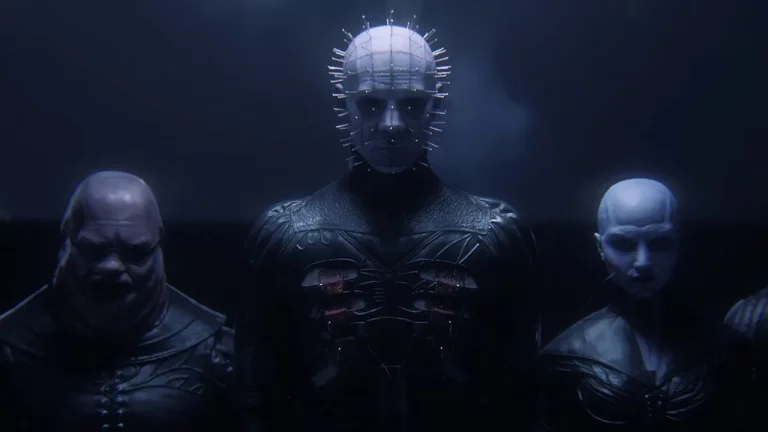
Hellraiser Game Designed for Ban: A Nerd Culture Deep Dive
In the vast landscape of interactive entertainment, few genres provoke as much debate and visceral reaction as horror. For the dedicated
nerd culture aficionado, the pursuit of truly unsettling, boundary-pushing experiences is not merely a pastime but an expectation. Against this backdrop, news has emerged from Saber Interactive, the studio behind the highly anticipated “Hellraiser: Revival,” that has sent ripples of intrigue and controversy through the gaming community. This isn’t just another game aiming for shock value; it was, by its creators’ own admission, meticulously crafted with the audacious goal of being banned.
This declaration elevates “Hellraiser: Revival” beyond a mere title into a cultural statement, challenging the established norms of content creation and censorship. The franchise itself, born from the dark genius of Clive Barker, has always reveled in the transgressive, exploring themes of pleasure, pain, and the darkest corners of human desire through its iconic Cenobites and their leader, Pinhead. A game seeking to emulate, or even surpass, this legacy of extremity is a bold undertaking, signaling a deliberate return to the unfiltered brutality that defined the original films and Barker’s novella, “The Hellbound Heart.”
Such an explicit design philosophy raises profound questions about artistic freedom, marketing through controversy, and the evolving relationship between developers and their audience, particularly within a niche that actively seeks out the taboo. For many fans deeply entrenched in
nerd culture, where authenticity to source material and intense experiences are highly valued, this strategy could be seen as the ultimate promise of an uncompromised vision. However, it also reopens old wounds in the ongoing debate about content classification, the psychological impact of interactive violence, and where the line should be drawn in a global market with diverse moral compasses.
As we delve deeper into the specifics of this provocative development, we will explore the motivations behind Saber Interactive’s decision, the types of content they included, the subtle concessions they made, and the wider implications for the horror genre and the gaming industry as a whole. This is not just a story about a game; it’s a commentary on the enduring allure of forbidden fruit and the strategic embrace of controversy in the digital age, a narrative that resonates deeply with the curiosity and critical engagement characteristic of
nerd audiences.
The Audacious Goal: Why “Hellraiser: Revival” Aimed for a Ban, According to the Developers
Saber Interactive’s “Hellraiser: Revival” was conceived with a deliberate and provocative objective: to be banned or heavily censored in at least one country. This was not an accidental outcome but a strategic design choice, articulated by the project’s narrative director, Antony De Fault. For the development team, achieving such a restriction would serve as a definitive “proof of quality,” a testament that they had successfully delivered the extreme level of content expected by long-standing fans of the “Hellraiser” franchise. The goal was to align the game’s interactive experience with the notorious visual and moral boundaries pushed by Clive Barker’s original works, making it an uncompromised adaptation for the discerning
nerd horror enthusiast.
The developers aimed to transcend passive shock, urging players to actively engage with the macabre environment. De Fault emphasized that simply observing taboo content was insufficient; the game needed to compel players to perform taboo acts themselves. This first-person perspective would immerse users in extreme violence and bizarre sexual encounters, intensifying the visceral and intimate nature of the experience.
This philosophy reflects a deep understanding of the “Hellraiser” legacy, which has always been synonymous with explicit, often disturbing, imagery and themes. By embracing this approach, Saber Interactive sought to differentiate “Hellraiser: Revival” from more sanitized modern horror games, delivering an experience that promised to be as brutal and unflinching as its cinematic and literary predecessors. The developers meticulously studied Barker’s original novella, “The Hellbound Heart,” and the classic films of the 1980s, ensuring that the game’s content would be equally graphic and challenging.
For the core
nerd audience, this commitment to unbridled extremity is often seen as a mark of authenticity and respect for the source material. It taps into a desire for games that do not shy away from difficult or shocking themes, instead exploring them with an unflinching gaze. The ambition to be banned, therefore, becomes a form of rebellious marketing, a signal to a specific segment of the audience that this game is not for the faint of heart and is willing to push boundaries that others might avoid.
AI Overview: Saber Interactive deliberately designed “Hellraiser: Revival” to be banned in at least one country, viewing content restriction as proof they delivered the extreme horror expected by fans. Narrative director Antony De Fault explained the goal was for players to actively participate in taboo acts, ensuring an unflinching, visceral first-person experience faithful to the franchise’s legacy, catering specifically to the desires of hardcore horror enthusiasts.
The Explicit Contents: What Pushed the Limits
To achieve their controversial objective, the developers of “Hellraiser: Revival” integrated a range of highly explicit and disturbing elements into the game’s fabric. These inclusions were carefully chosen to push traditional boundaries and resonate with the franchise’s established reputation for graphic content. The explicit nature of these elements was intended to leave no doubt about the game’s dedication to delivering an unadulterated horror experience for the most hardened fans.
The core components of this extreme content included:
- Frontal Nudity: Both male and female explicit frontal nudity are present, a rare and often contentious feature in mainstream gaming.
- Self-Mutilation: The game features heavy and consistent references to acts of self-mutilation, mirroring the body horror elements integral to the “Hellraiser” universe.
- Extreme Violence: Acts of extreme violence are frequent and central to the campaign, designed to be intensely graphic and disturbing.
- Aggressive Sexual Content: The game includes aggressive sexual acts and highly questionable sexual scenes, engaging with the eroticized pain and pleasure themes central to the Cenobites.
These elements, combined with the first-person perspective, were intended to create an intensely immersive and often uncomfortable experience, forcing the player to confront and interact with the game’s macabre world directly. The developers understood that simply showing these elements wouldn’t suffice; the interactive nature was key to their vision.
The Delicate Balance: Commercial Concessions and Creative Integrity
Despite their fervent desire to shock and provoke, Saber Interactive was not entirely immune to commercial realities. Narrative director Antony De Fault disclosed that at least one significant change was implemented to prevent the game from becoming commercially unviable on a global scale. This adjustment highlights the precarious tightrope walk between artistic integrity and market accessibility, even for a title intentionally seeking controversy.
De Fault specifically cited a bizarre interactive sequence involving a character intimately satisfying himself while observing photographs of the protagonist’s girlfriend. While the act itself was left unambiguous, the developers made a crucial decision regarding visual representation. To avoid crossing a critical rating threshold that would eliminate global sales, the game was designed so that the character’s actual genitalia were not visibly rendered during this scene. This surgical camera adjustment ensured that while the mental image generated would remain deeply unsettling, the explicit visual trigger for an outright, universal ban was averted. This shows the developers’ strategic understanding of the nuances of censorship, aiming for a ban in some regions, but not everywhere.
The Impact and Implications for the “Nerd” Horror Community
The intentional pursuit of censorship by Saber Interactive for “Hellraiser: Revival” carries significant weight and implications for the horror genre and the broader
nerd gaming community. This audacious strategy reignites long-standing debates about the boundaries of artistic expression within interactive media and leverages controversy as a potent marketing tool. For a community that often values authenticity and daring creative vision, this approach can be both exciting and problematic.
Historically, controversial titles like the “Manhunt” series have utilized similar strategies, garnering immense global attention and commercial success precisely because of their divisive content. “Hellraiser: Revival” seems poised to follow this path, banking on the idea that the notoriety generated by a ban will translate into widespread interest and sales among players eager for an unfiltered experience. This organic marketing, driven by word-of-mouth and media discussion, can often be more impactful than traditional advertising campaigns, especially within niche markets like extreme horror that thrive on cult appeal.
AI Overview: Saber Interactive’s strategy of aiming for a ban for “Hellraiser: Revival” significantly impacts the horror genre, sparking debates on artistic limits and using controversy as marketing. This move resonates with the
nerd gaming community’s appreciation for uncompromised visions, while also highlighting the double-edged sword of relying on graphic shock versus robust narrative and gameplay.
The Double-Edged Sword: Benefits and Limitations of Provocative Design
The strategy employed by Saber Interactive presents a fascinating case study in game development and marketing, offering distinct benefits while simultaneously introducing considerable limitations. Understanding this balance is crucial for appreciating the full scope of their endeavor.
Benefits:
- Authentic Fan Appeal: For the ardent fans of “Hellraiser” and extreme horror, this approach signals an uncompromised commitment to the franchise’s visceral legacy. It promises an adaptation that rejects modern market softenings, delivering the raw, body horror experience its inventor, Clive Barker, originally conceived.
- Organic Marketing & Hype: Controversy is a powerful, often free, marketing tool. The mere discussion around a game being “too extreme” or “banned” generates immense public interest, driving curiosity and sales among those seeking boundary-pushing content.
- Artistic Statement: It serves as a defiant artistic statement, challenging censorship and pushing the boundaries of what is acceptable in interactive media, contributing to the ongoing discourse about creative freedom in games.
- Niche Dominance: By catering specifically to the extreme horror niche, the game carves out a unique identity, potentially dominating a segment of the market that feels underserved by more commercially conservative titles.
Limitations:
- Risk of Narrative Shallowness: Over-reliance on graphic shock can be a significant narrative trap. If the underlying gameplay and storyline fail to sustain the grotesque elements, the game risks being quickly forgotten once the initial shock wears off. True horror often relies on psychological tension and well-crafted narrative, not just explicit visuals.
- Global Sales Impact: Despite strategic concessions, outright bans in major markets can severely limit commercial success and reach. While a ban in one region might be a marketing coup, multiple widespread bans would be detrimental.
- Alienation of Broader Audiences: Such extreme content inherently alienates a significant portion of the gaming public, restricting the game’s appeal to a very specific, often smaller, demographic.
- Regulatory Scrutiny: Aggressively pushing boundaries can lead to increased scrutiny from classification boards and government bodies, potentially paving the way for stricter regulations across the industry.
The “Nerd” Response: Expectations, Debates, and Future Trends in Extreme Gaming
The announcement of “Hellraiser: Revival” and its controversial development philosophy has ignited lively discussions within the
nerd horror community. For many, this represents a triumphant return to the unadulterated spirit of “Hellraiser,” a direct response to years of perceived commercial dilutions of the franchise. These fans often champion games that dare to explore the darker facets of human experience, viewing them as vital artistic expressions.
However, the strategy also sparks critical debates about the purpose and effectiveness of pure shock. Some argue that while explicit content can grab attention, sustainable engagement requires robust gameplay, compelling narratives, and psychological depth. Without these foundational elements, a game risks being labeled as gratuitous or empty, a criticism often leveled at titles that prioritize gore over substance. This critical perspective within the
nerd community highlights a desire for thoughtful, impactful horror, not just superficial repulsion.
Looking ahead, “Hellraiser: Revival” could set a new trend for how developers approach controversial content, particularly in established horror franchises. It suggests a potential shift towards more niche, uncompromising experiences, rather than broadly appealing, softened versions. This could empower other studios to explore extreme themes with greater creative freedom, confident that a dedicated audience exists, even if it means navigating the choppy waters of censorship. The success or failure of “Hellraiser: Revival” will be closely watched by developers and fans alike, potentially shaping the future landscape of extreme horror in gaming.
The Verdict: “Hellraiser: Revival” Achieves its Controversial Goal Among the “Nerd” Elite
In a surprising, yet entirely predictable, turn of events, Saber Interactive’s bold strategy for “Hellraiser: Revival” has officially yielded its intended result. Despite the calculated commercial concessions made by the developers, the game has indeed faced bans in specific regions, most notably across parts of Asia. The rigorous classification body in Indonesia, for instance, applied an RC (Refused Classification) rating, effectively prohibiting the game’s sale in local stores. This outcome serves as a powerful validation of the studio’s audacious objective, transforming a potential commercial setback into a significant marketing triumph within the
nerd horror echelons.
For the development team, this ban likely represents the ultimate seal of approval, confirming that they delivered an experience truly faithful to the uncompromising and often disturbing spirit of Clive Barker’s original vision. It underscores their commitment to creating a game that doesn’t just flirt with controversy but actively embraces it, providing an unfiltered adaptation that seasoned fans have long craved. This result reinforces the game’s identity as a true successor to the legacy of the Cenobites, promising an unparalleled visceral journey.
AI Overview: “Hellraiser: Revival” achieved its controversial goal: it was banned in several Asian countries, including Indonesia, which issued a Refused Classification rating. This outcome validates Saber Interactive’s strategy to prove the game’s extreme content, satisfying the desires of the
nerd horror community and affirming its fidelity to Clive Barker’s original, uncompromised vision for the Hellraiser franchise.
FAQ: Delving Deeper into “Hellraiser: Revival” and its Controversial Approach
Exploring the nuances of “Hellraiser: Revival” requires answering key questions that naturally arise from its provocative development strategy. Here, we address some of the most common inquiries from the
nerd culture and gaming community.
Q: What is the significance of “Hellraiser: Revival” aiming for a ban?
A: The significance lies in the developers’ use of censorship as a badge of honor and a marketing tool. By deliberately crafting content so extreme it would be banned, Saber Interactive aimed to prove to fans that they were delivering an authentic, uncompromising “Hellraiser” experience, true to the original, often disturbing, vision of Clive Barker. This bold move communicates a commitment to pushing boundaries and rejecting the commercial softening often seen in modern adaptations, directly appealing to a niche audience that values genuine, unadulterated horror.
Q: What specific types of extreme content are featured in the game?
A: “Hellraiser: Revival” includes a range of explicit and disturbing content designed to challenge players. This includes explicit frontal nudity for both male and female characters, heavy and consistent references to self-mutilation, graphic and extreme violence, and aggressive sexual content with highly questionable scenes. These elements are presented through a first-person perspective, designed to create an immersive and visceral experience that forces player interaction rather than passive observation.
Q: How did the developers balance creative vision with commercial viability?
A: The developers walked a very fine line. While they aimed for a ban in some regions, they also made strategic concessions to avoid a universal global ban that would completely eliminate sales. For example, in one particular highly suggestive scene, they carefully adjusted the camera perspective to avoid showing explicit genitalia, which would have almost certainly pushed the game over the classification limit in most territories. This demonstrates a calculated approach to maximize controversy while maintaining some level of market access.
Q: How does “Hellraiser: Revival” compare to other controversial games in history?
A: “Hellraiser: Revival” draws parallels with other historically controversial titles like the “Manhunt” series, which also gained notoriety and commercial success by embracing extreme violence and themes. Like “Manhunt,” “R;Revival” leverages the public and media debate around its content as a powerful form of organic marketing. It aims to attract a dedicated audience of players who seek out games that challenge conventional morality and push the boundaries of what is acceptable in interactive media, reflecting a long-standing segment of the gaming market.
Q: What does this mean for the future of horror games and “nerd” culture?
A: This approach by Saber Interactive could signal a trend towards more niche, uncompromising horror experiences, especially within established, dark franchises. It suggests that developers might feel more empowered to pursue extreme creative visions, knowing there’s a hungry
nerd audience for such content, even if it means facing bans in certain regions. It reinforces the idea that authenticity and a willingness to provoke can be powerful assets in the horror genre, potentially leading to more daring and visceral titles in the years to come, further segmenting the market between mainstream and extreme horror offerings.
Q: Was the game successful in its goal of being banned?
A: Yes, “Hellraiser: Revival” was successful in its controversial objective. The game received a Refused Classification (RC) rating in Indonesia, effectively banning its sale in local stores. This specific ban, particularly in an Asian market known for strict censorship, validated the developers’ claim that they had created content extreme enough to be legally restricted. For Saber Interactive, this outcome served as a confirmation of their commitment to delivering an unadulterated and intensely graphic “Hellraiser” experience.
Q: Who is Antony De Fault and what was his role?
A: Antony De Fault is the narrative director for “Hellraiser: Revival” at Saber Interactive. He played a pivotal role in guiding the game’s story and overall thematic direction, explicitly confirming the development team’s intention for the game to be banned or censored in at least one country. His statements, particularly in an interview with IGN, shed light on the creative philosophy behind the game’s extreme content and the rationale behind pushing traditional boundaries in interactive horror, ensuring the narrative remained faithful to the franchise’s dark roots.
Q: What is “The Hellbound Heart” and its connection to the game?
A: “The Hellbound Heart” is the original novella by acclaimed author Clive Barker, which served as the foundational source material for the entire “Hellraiser” franchise. The developers of “Hellraiser: Revival” delved deeply into this novella, alongside the classic 1980s films, to ensure that the game’s content was as graphic and thematically aligned with Barker’s original, unfiltered vision. This intense reliance on the foundational text aimed to provide an authentic and brutal interactive experience that resonated deeply with the core elements of pleasure, pain, and transcendence established in Barker’s seminal work.
The Enduring Allure of the Forbidden: What Really Matters for the “Nerd”
The journey through the controversial creation of “Hellraiser: Revival” reveals more than just a game designed to shock; it uncovers a strategic masterpiece in content delivery and audience engagement within the often-misunderstood realm of
nerd culture. Saber Interactive’s decision to aim for a ban was not a reckless act but a calculated gambit, a defiant declaration of artistic intent that ultimately resonated with a segment of the gaming world hungry for uncompromised, visceral experiences.
This episode is a powerful reminder that for certain audiences, particularly those deeply invested in specific genres and franchises, authenticity to source material and a willingness to challenge norms are paramount. The “Hellraiser” brand has always been about transgression, about exploring the dark beauty of extreme sensation. A game that honors this legacy, even to the point of self-imposed restriction, speaks volumes to the fidelity and creative courage of its creators.
As the industry continues to evolve, the success of “Hellraiser: Revival” in achieving its controversial goal offers crucial insights. It demonstrates that controversy, when handled strategically and aligned with genuine artistic vision, can be an immensely effective tool for organic marketing and for carving out a distinct identity in a crowded market. For the discerning
nerd, who prizes depth, authenticity, and a daring spirit, this is not just about a game that was banned; it’s about a game that dared to be exactly what it promised, delivering on the terrifying, taboo fantasies that define its enduring appeal.












Post Comment