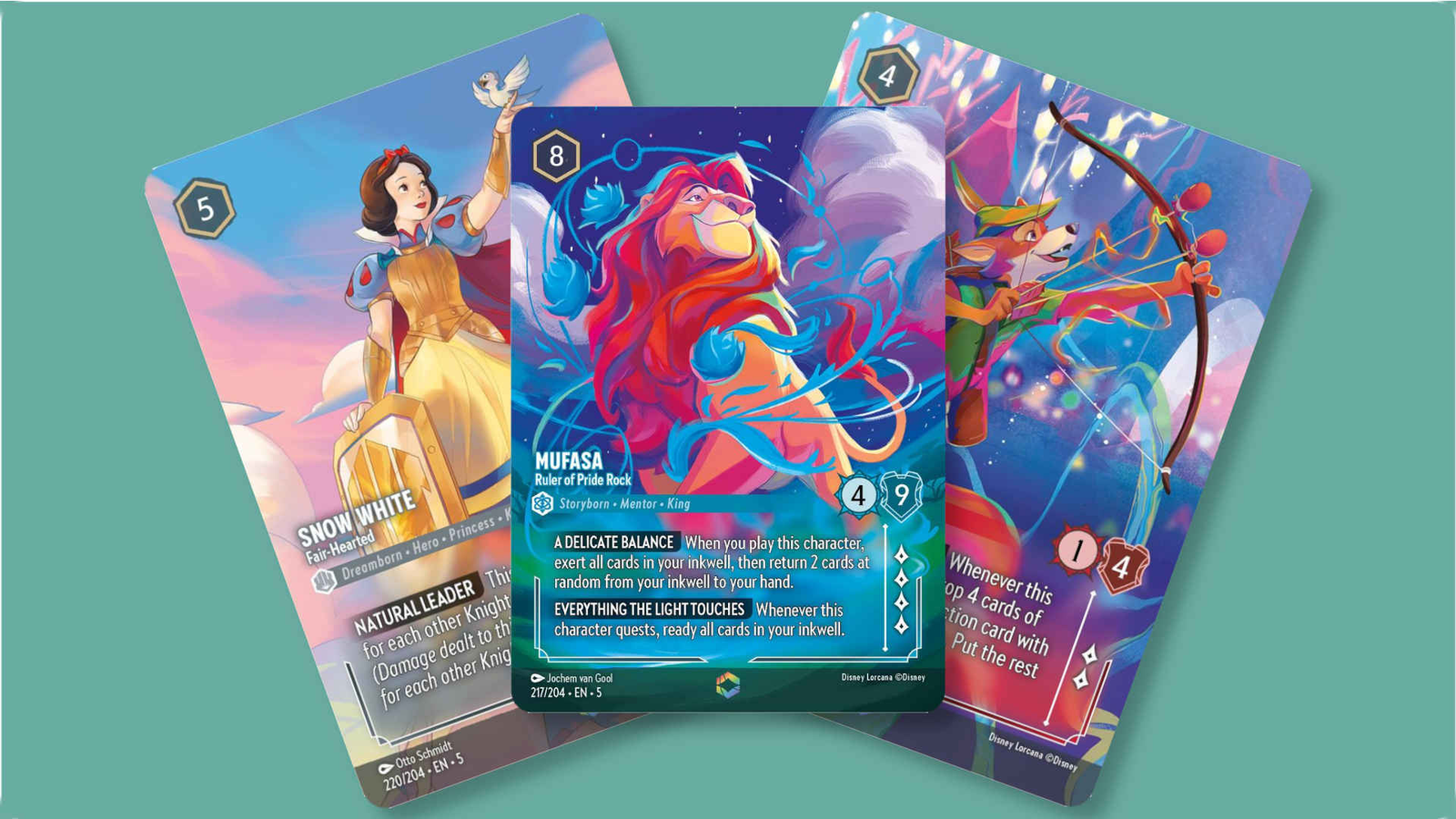
Mastering Ward, Resist, Evasive in Lorcana: FG Cards By Copag Guide
In the vibrant, enchanting world of Disney Lorcana, every move matters. From the moment an Illumineer inks a card to the thrilling climax of a lore race, strategic foresight is paramount. Yet, even the most meticulously planned turns can be disrupted by three formidable keywords: Ward, Resist, and Evasive. These abilities don’t just add flavor to characters; they fundamentally alter the game’s dynamics, demanding thoughtful responses and often forcing players to reconsider their entire strategy. Imagine holding the perfect answer in your hand, only for an opponent to drop a Kuzco – Temperamental Emperor with Ward, immediately rendering your chosen action useless. Or perhaps a Hercules – Beloved Hero, bolstered by Resist, shrugs off what should have been a decisive attack.
Understanding these keywords isn’t just about knowing what they do; it’s about comprehending how they reshape the battlefield and, crucially, how to overcome them. Misjudging an opponent’s protected character can cost you valuable ink, precious cards, and critical turns, ultimately turning the tide of a match. This guide delves deep into the mechanics of Ward, Resist, and Evasive, providing a comprehensive framework for responding to these challenges. We’ll explore their definitions, practical implications, and effective counter-strategies, complete with card examples from the Core sets—including Fabled reprints—that have proven their worth in the evolving meta. Whether you’re aiming to protect your own valuable characters or dismantle your adversary’s impenetrable defenses, mastering these interactions is key to ascending as a true Illumineer. Let’s explore how to turn these obstacles into opportunities, ensuring your strategy remains fluid and formidable, especially when leveraging the diverse array of options available through FG Cards By Copag.
Mastering Ward, Resist, and Evasive: Core Mechanics with FG Cards By Copag
Understanding the foundational mechanics of Ward, Resist, and Evasive is the first step toward effective counterplay in Disney Lorcana. Each keyword imposes specific limitations on how characters can be interacted with, transforming simple challenges into complex strategic puzzles. By dissecting their exact rules, players can identify vulnerabilities and develop precise responses, enhancing their command of the game and their collection of FG Cards By Copag.
Ward, Resist, and Evasive are three distinct keywords in Disney Lorcana that provide defensive capabilities to characters. Ward prevents opponents from choosing a character for effects other than challenges. Resist reduces the amount of damage a character takes from “deal” effects. Evasive limits challenges to only other characters with Evasive or Alert. Each requires specific counter-strategies to overcome.
Decoding Ward: Protection from Targeted Effects
Ward is arguably one of the most frustrating keywords for opponents, explicitly stating: "Opponents can’t choose this character except to challenge." This means any effect that uses the word "chosen" in its text cannot target a character with Ward if that effect originates from an opponent. This limitation immediately neutralizes common removal spells or abilities that pinpoint specific characters for adverse effects, such as bouncing a character back to hand or applying specific damage.
However, Ward has precise boundaries. It does not protect against effects that target characters generally without making a choice, such as "each opposing character" or "all characters." These broader effects bypass Ward’s protection entirely. Furthermore, Ward does not prevent a character from being challenged in combat; in fact, the card text often explicitly reminds players of this. It’s also crucial to remember that Ward only blocks opponents’ choices. An Illumineer can freely use effects that target their own Ward-protected characters, making abilities that grant Ward to allies, like Prince Phillip – Warden of the Woods, particularly potent for establishing a resilient board state.
Unraveling Resist: Damage Reduction in Practice
Resist +N is a straightforward yet powerful keyword that directly mitigates incoming damage. Whenever a character with Resist +N takes damage, the amount of damage dealt is reduced by N. This effect is cumulative; if a character gains Resist +1 from one source and Resist +2 from another, they would have Resist +3 in total. This keyword makes characters significantly tougher to banish through conventional damage-dealing abilities or challenges.
The key to understanding Resist lies in differentiating between "damage dealt" and "damage put" or "damage moved." Resist specifically reduces damage that is "dealt," meaning it comes from an attack or an ability explicitly stating "deal X damage." However, if an effect states to "put X damage" on a character or "move X damage" from one character to another, Resist does not apply. This subtle distinction is vital for planning effective removal, as certain abilities can bypass Resist entirely by applying damage through alternative means.
Understanding Evasive: The Aerial Advantage
Evasive grants a character a unique form of protection from challenges: "This character can only be challenged by characters with Evasive." This keyword creates a specialized combat scenario where only a select group of characters can engage an Evasive threat in battle. This significantly limits an opponent’s options for board control, especially if they lack Evasive characters in play.
To counter an Evasive character’s ability, an Illumineer needs their own character with Evasive, or a character possessing the "Alert" keyword. Alert allows a character to challenge as if it had Evasive, providing a direct answer without actually granting the Alert character Evasive for defensive purposes. It’s important to note that Evasive, unlike Ward, offers no protection against abilities or effects. An Evasive character can still be targeted by non-challenge effects, damaged by actions, or banished by various card abilities. Generally, characters can only be challenged when they are exerted, typically after questing, unless a specific card effect states otherwise, creating a window for counterplay.
Strategic Responses to Lorcana’s Defensive Keywords
Facing characters with Ward, Resist, or Evasive demands more than just brute force; it requires cunning, foresight, and a deep understanding of card interactions. Crafting an effective response often involves combining abilities, timing your plays, and sometimes sacrificing immediate lore gain for board advantage. These strategic nuances are what elevate gameplay with FG Cards By Copag to a truly competitive level.
Effective counter-strategies against Ward involve using non-targeted effects or direct challenges. Resist can be bypassed by damage-putting abilities or effects that explicitly ignore damage reduction. Evasive characters are best countered by other Evasive characters, those with Alert, or abilities that deal damage broadly without requiring a challenge.
Overcoming Ward: Non-Targeted Solutions
The primary challenge with Ward is its immunity to targeted effects. Actions like Piercing Attack, which target a "chosen character" to deal damage, or bounce effects designed to return a specific character to hand, become useless. To circumvent Ward, Illumineers must turn to abilities that affect multiple characters or bypass the "chosen" clause entirely.
One potent non-targeted solution is a song card like Malicious, Mean, and Scary, which costs 3 ink and "puts 1 damage counter on each opposing character." Because it doesn’t "choose" any specific character, it affects Ward-protected characters equally. While 1 damage might seem minor, it can set up more devastating plays. Consider a sophisticated combo: on Turn 4, play Prince Phillip – Warden of the Woods (4 ink), granting Ward to your other Hero characters. On Turn 5, play Kaa – Suspicious Serpent (3 ink), keeping Prince Phillip exerted (not questing) to avoid being challenged. On Turn 6, Kaa, now "dry" (in play since the start of your turn), can be exerted to sing Malicious, Mean, and Scary for free, placing 1 damage on each opposing character, including Ward-protected ones like Kuzco. Then, using 6 ink, you can Shift Prince Phillip – Vanquisher of Foes (Shift 6) over the Warden. Vanquisher banishes all damaged opposing characters upon entry, and Kuzco’s "No Touchy" ability won’t trigger because he wasn’t banished by a challenge. This powerful, multi-card sequence, while resource-intensive, provides a definitive answer to multiple Ward threats, often clearing the board and allowing Vanquisher to quest for lore immediately.
Piercing Through Resist: Damage Application Nuances
Characters with Resist, such as Hercules – Beloved Hero (6 ink, 6 Strength, 5 Willpower, Bodyguard, Resist +1), pose a direct threat to conventional damage strategies. A straightforward challenge from Napoleon – Patient Watchdog (3 ink, 5 Strength, 2 Willpower, Alert) might seem like an even trade, but Hercules’s Resist +1 reduces Napoleon’s 5 damage to 4, leaving Hercules standing while Napoleon is banished. This highlights the critical need to account for Resist.
To effectively banish a Resist-protected character, players must either deal significantly more damage than their Willpower or use effects that bypass Resist entirely. Piercing Attack, a 2-ink action, explicitly states that its 2 damage "can’t be reduced by Resist." Using Piercing Attack first on Hercules would leave him with 2 damage. Then, a subsequent challenge from Napoleon would deal 5 damage, reduced to 4 by Resist, totaling 6 damage against Hercules’s 5 Willpower, banishing him. Both characters would be banished in this exchange. Alternatively, Malicious, Mean, and Scary, which "puts" damage counters, can apply 1 damage to Hercules without being reduced by Resist. This initial damage, combined with Napoleon’s 4 effective damage from a challenge, would sum up to 5, enough to banish Hercules efficiently.
Challenging Evasive: Alert and Direct Engagement
Evasive characters, like Shere Khan – Fearsome Tiger (6 ink, 5 Strength, 4 Willpower, Evasive), cannot be targeted by non-Evasive challengers. Shere Khan also poses an additional threat by banishing a "chosen damaged character" when questing, further cementing the need for a swift response. While Ward protects your characters from Shere Khan’s questing ability, his presence still allows him to collect lore unimpeded.
The most direct answer to an Evasive threat is a character with Evasive or Alert. Napoleon – Patient Watchdog, with his Alert keyword, can directly challenge Shere Khan. With 5 Strength, Napoleon deals enough damage to banish Shere Khan (5 vs 4 Willpower). In return, Napoleon takes 5 damage and is also banished. For a more resilient response, a Sapphire/Steel deck can utilize Judy Hopps – Lead Detective (Shift 4, 6 Strength, 4 Willpower). If Judy Hopps – Snowball Patrol is already on the field, Lead Detective can be Shifted over her for 4 ink. Lead Detective gains Alert and Resist +2 during your turn for all Detective characters, allowing her to challenge Shere Khan. She deals 6 damage, banishing Shere Khan, and takes 5 damage, reduced to 3 by her Resist +2, leaving her with 1 Willpower remaining. However, this Resist bonus is only active during your turn; on the opponent’s turn, she becomes vulnerable. Another approach involves using actions that affect Evasive characters directly. Windstorm (4 ink) deals 1 damage to all opposing characters and locations, then an additional 2 damage to each opposing Evasive character. This means Shere Khan takes 3 damage. If combined with Malicious, Mean, and Scary (putting 1 damage counter), Shere Khan would take a total of 4 damage, exactly matching his Willpower, banishing him without needing a direct challenge.
Beyond Keywords: Maximizing Your Lore Gain with FG Cards By Copag
While understanding and countering keywords is vital, Disney Lorcana is ultimately a race to 20 lore. Strategic decisions, especially when confronting characters with Ward, Resist, or Evasive, must always be weighed against the overarching goal of collecting lore. Knowing when to banish a threat versus when to press your own lore advantage is a hallmark of an expert Illumineer and a key aspect of competitive play supported by FG Cards By Copag resources.
Beyond immediate keyword responses, players must strategically balance banishing threats against questing for lore. This involves careful calculation of current and projected lore totals, assessing the impact of losing a character, and recognizing when to prioritize board control to protect your lore-gathering engine. Understanding common misconceptions and implementing best practices ensures optimal resource management and consistent progress toward victory.
The Lore vs. Banishing Dilemma
A critical decision point in Lorcana often revolves around whether to use your characters to quest for lore or to challenge an opponent’s character. This choice becomes particularly complex when facing characters with defensive keywords. Consider a scenario where you have 13 lore and characters questing for a total of 4 lore per turn (e.g., Napoleon for 1, two others for 2 and 1). Your opponent has 12 lore with Kuzco (3 lore) and another character (1 lore), also totaling 4 lore per turn. If both players continue to quest, you reach 17 lore, then 21 on your next turn, securing victory.
However, if you decide to banish Kuzco with Napoleon instead of questing, your lore for that turn drops to 3, putting you at 16. Your opponent, losing Kuzco, collects only 1 lore, reaching 13. On the next turn, you reach 19, your opponent 14, and you only win on the third round (22 lore). This scenario demonstrates that a seemingly advantageous banish can sometimes delay your win condition. The best criterion for deciding to challenge is when, even if your opponent banishes your highest lore-producing character in retaliation, you still reach 20 lore before them. If your victory hinges on all your characters surviving, then sacrificing a character to remove a major threat like Kuzco, who slows your opponent’s lore gain by 3 per turn, might be worth the trade-off to buy crucial time.
Common Misconceptions and Best Practices
Navigating the intricacies of Ward, Resist, and Evasive can lead to common pitfalls. A frequent misconception is believing all damage types are affected equally by Resist; as discussed, "deal damage" is reduced, but "put damage" or "move damage" is not. Another error is assuming Evasive characters are immune to all forms of interaction; they are only protected from non-Evasive challenges, not from targeted or area-of-effect abilities. Understanding these distinctions is fundamental to precise play.
Best practices for dealing with these keywords include meticulously reading card texts for specific phrasing like "chosen," "deal," and "put." Always be aware of timing windows, such as when characters become "dry" for singing songs for free or when Shift abilities can be used. Crucially, always evaluate the current board state and the lore race before committing resources. Sometimes, a protected character simply isn’t generating enough lore or posing enough of a threat to warrant a costly removal. Instead, focusing on your own lore gain might be the superior strategy, leaving the opponent’s defensive character as an irrelevant presence on the board.
The Ever-Evolving Meta and FG Cards By Copag
Disney Lorcana is a living game, constantly evolving with new sets, reprints, and a dynamic competitive meta. The introduction of new cards can shift the power balance of existing keywords, creating novel interactions and requiring players to continuously adapt their strategies. A card that was once considered a niche answer might become essential, and vice-versa. For instance, the reprinting of older characters like Kuzco, Hercules, and Prince Phillip in Fabled sets ensures their continued relevance and accessibility for strategic deck building.
Staying informed about these developments, understanding how new cards interact with established keywords, and refining your deck with the latest powerful additions are crucial for maintaining a competitive edge. Reputable sources and official distributors, such as FG Cards By Copag, play a vital role in connecting Illumineers with the latest releases, ensuring players have access to the cards needed to implement these advanced strategies and explore the full potential of Disney Lorcana.
Your Next Steps to Dominance with FG Cards By Copag
The journey to becoming a master Illumineer in Disney Lorcana is an ongoing process of learning, adaptation, and strategic refinement. Understanding how to effectively counter Ward, Resist, and Evasive is not merely about memorizing rules; it’s about developing an intuitive grasp of the game’s intricate dance of abilities and anticipating your opponent’s moves. By applying the insights shared in this guide, you’re not just playing cards; you’re orchestrating powerful plays that outmaneuver even the most seasoned opponents.
The next steps for any aspiring Disney Lorcana player involve actively practicing these counter-strategies in live gameplay, evaluating their effectiveness, and continuously refining their deck builds. Engage with the community, analyze meta shifts, and explore new card releases, especially those offered by FG Cards By Copag, to maintain a competitive edge and deepen your strategic understanding.
FAQ: Navigating Common Queries About Lorcana’s Defensive Keywords
Here are answers to frequently asked questions about Ward, Resist, and Evasive in Disney Lorcana, providing quick insights into complex interactions.
-
What is the primary difference between Ward, Resist, and Evasive?
Ward protects a character from being specifically ‘chosen’ by opponent’s effects, except for challenges. Resist reduces the amount of ‘dealt’ damage a character takes. Evasive restricts challenges to only other Evasive or Alert characters. While all are defensive, they protect against different types of interaction: Ward against targeted effects, Resist against direct damage, and Evasive against general challenges.
-
Can Ward protect a character from all types of damage?
No, Ward does not protect a character from all types of damage. It specifically prevents opponents from ‘choosing’ the character for an effect. Damage that is dealt without choosing a specific target (e.g., ‘deal 1 damage to each opposing character’) or damage that is ‘put’ or ‘moved’ onto a character will still affect a Ward-protected character. Ward’s protection is about targeting, not damage immunity.
-
How does the ‘Alert’ keyword interact with ‘Evasive’?
The ‘Alert’ keyword allows a character to challenge an Evasive character as if the Alert character itself had Evasive. This provides a direct counter to Evasive characters, enabling combat that would otherwise be restricted. However, having Alert does not grant the character Evasive for defensive purposes; they can still be challenged by any character that can normally challenge.
-
Does a Shifted character inherit keywords from the card it was played over?
No, a Shifted character does not inherit keywords or abilities from the character card it was played over. When you Shift, the new character card replaces the old one, retaining only its exerted or ready state and any damage counters. All text, including keywords, abilities, and stats, are taken solely from the new top character card. Any keywords or abilities on the underlying card are effectively gone once the Shifted character is played.
-
When is it strategically best to banish an opponent’s character instead of questing for lore?
The strategic decision to banish over questing depends on the board state, lore totals, and the threat level of the opponent’s character. It’s often best to banish if the opponent’s character is questing for significant lore, possesses a game-altering ability, or is a crucial piece of a combo. Prioritize banishing when it disrupts the opponent’s win condition more than questing advances your own, or when delaying their lore gain directly leads to your victory.
-
Are there any universal cards that can bypass all three defensive keywords?
There isn’t a single ‘universal’ card that unilaterally bypasses Ward, Resist, and Evasive simultaneously, as they protect against different interaction types. However, general area-of-effect damage cards (like Malicious, Mean, and Scary) can bypass Ward and potentially Resist (if ‘put’ damage). Evasive still requires an Alert/Evasive challenger or direct damage effects. Players must use a combination of cards and strategies, rather than relying on one catch-all solution.
-
Why is understanding ‘deal damage’ versus ‘put damage’ important in Lorcana?
The distinction between ‘deal damage’ and ‘put damage’ is crucial because Resist only reduces ‘dealt’ damage. Effects that ‘put’ damage counters onto a character, such as Malicious, Mean, and Scary, bypass Resist entirely. Recognizing this allows players to use specific cards to overcome Resist-protected characters more efficiently, making precise card interpretation a key tactical advantage.
-
Where can I find official Disney Lorcana cards and reliable game information?
You can find official Disney Lorcana cards, booster packs, starter decks, and more at authorized retailers. For players in Brazil and seeking comprehensive resources, FG Cards By Copag serves as a reliable source for high-quality, official Lorcana products and community engagement. Always ensure you purchase from reputable sources to guarantee authenticity and support the game.











Post Comment