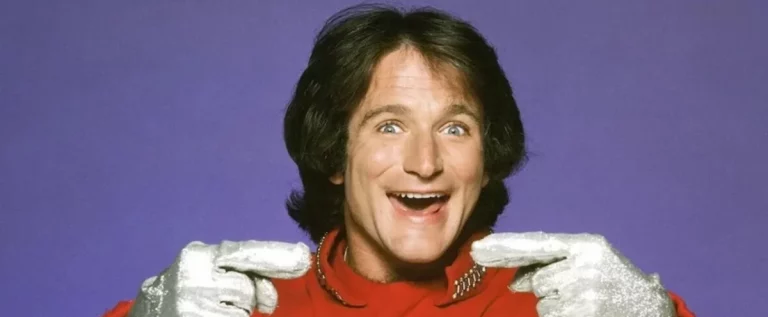
Mork from Ork: Robin Williams’ Most Iconic Nerd Character
In the vast cosmos of television history, few characters leave a mark as indelible and distinct as Mork from Ork. Long before Robin Williams was captivating global audiences with his dramatic depth and boundless comedic energy in films like ‘Good Will Hunting’ or ‘Mrs. Doubtfire’, he first beamed into American homes as an extraterrestrial with an insatiable curiosity for human customs. This character, Mork, wasn’t just a role; he was a canvas for Williams’ nascent improvisational genius, a gateway to stardom, and a uniquely peculiar figure who, perhaps unexpectedly, resonated deeply with what we now recognize as ‘nerd’ culture.
Mork’s journey began with a single, unforgettably eccentric audition, leading to a spin-off series, ‘Mork & Mindy’, that would etch itself into the annals of 1970s television. What started as a whimsical guest appearance evolved into a complex, often bizarre, narrative about an alien navigating human existence. From his unconventional greetings to his peculiar Orkan physiology, Mork embodied an ‘otherness’ that invited viewers to look at the mundane through a lens of complete wonder and confusion.
This article embarks on a comprehensive exploration of Mork’s creation, evolution, and enduring legacy. We’ll delve into the behind-the-scenes stories that forged a cultural phenomenon, trace the character’s surprising appearances beyond his primary series, and dissect the truly unique mythology that underpinned his world. For fans of sci-fi, comedy, and the remarkable talent of Robin Williams, understanding Mork isn’t just a trip down memory lane; it’s an appreciation of how a single character, with his profound innocence and peculiar intellect, became a touchstone for generations, particularly those who celebrate the unconventional and the extraordinary.
The Interstellar Nerd: Mork from Ork’s Unexpected Genesis
Mork from Ork emerged not from a meticulously planned series launch, but from a serendipitous audition that perfectly captured the burgeoning talent of Robin Williams. His portrayal of an inquisitive alien, often bewildered by human nuances, resonated immediately, setting the stage for one of television’s most unique comedic characters.
For those curious about Mork’s origin, this character first appeared in a 1978 episode of ‘Happy Days’ titled ‘My Favorite Orkan’. Robin Williams secured the role by improvising much of his audition while sitting upside down, a spontaneous act that captivated producers and audiences alike, leading directly to his own spin-off series.
An Audition Upside Down: Birth of a Legend
The year was 1978, and the popular sitcom ‘Happy Days’ was searching for an actor to portray an alien for an episode. When Robin Williams walked into the audition room, he didn’t just read the script; he transformed the moment. Instead of sitting conventionally, Williams reportedly stood on his head, delivering his lines with an unscripted brilliance that startled and delighted the production team.
Garry Marshall, the creator of ‘Happy Days’, recounted the audience’s overwhelming reaction during filming, stating that hundreds rose to their feet, something highly unusual for a live studio audience. Henry Winkler, who played The Fonz, vividly described Williams’ performance as an erupting volcano of talent. This single, unorthodox audition was more than just a casting call; it was the birth of a comedic icon and the first major public display of Williams’ unparalleled improvisational gifts.
From Guest Star to Phenomenon: The Rise of Mork & Mindy
The instant success of Mork’s appearance on ‘Happy Days’ was undeniable. The character’s unique charm and Williams’ electric performance left such an impression that producers swiftly greenlit a spin-off. Thus, ‘Mork & Mindy’ premiered later in 1978, launching Williams into his first leading role and cementing Mork’s status as one of the decade’s most memorable television figures.
The series quickly became a platform for Williams’ explosive comedic style, showcasing his ability to blend physical comedy with rapid-fire wit and heartfelt sincerity. ‘Mork & Mindy’ was more than just a comedy; it was a cultural touchstone, introducing a generation to a character who was an outsider, a literal alien, whose perspective on humanity offered both hilarious insights and poignant observations, making him a distinct figure within the emerging `nerd` pop culture landscape.
Navigating Earth: Mork’s Unique Worldview and Early Adventures
Once Mork landed on Earth, his primary mission, alongside the occasional misadventure, was to observe and understand human behavior. This premise provided endless comedic opportunities and a framework for Williams to explore various facets of the human condition through an alien’s often bewildered, yet innocent, eyes.
Mork’s unique worldview revolved around his mission from planet Ork to study humans, often leading to humorous misunderstandings of Earth customs. Living with Mindy McConnell, his attempts to adapt to human life and report back to Ork formed the core of his early adventures, highlighting his peculiar interpretations of everyday actions and emotions.
The Premise: An Alien Among Us
The central plot of ‘Mork & Mindy’ saw Mork take up residence in the attic of Mindy McConnell’s home in Boulder, Colorado. Mindy, played by Pam Dawber, served as Mork’s patient, often exasperated, guide to Earth’s bewildering array of customs, social norms, and emotional complexities. Mork’s interactions were often marked by his literal interpretations and the peculiar Orkan customs he’d try to apply to human situations, creating a constant stream of comedic gold.
This dynamic allowed for a fascinating exploration of cultural differences, albeit exaggerated for comedic effect. Mork’s unwavering curiosity, combined with his complete alienation from human logic, made him a captivating protagonist. He was, in essence, an intellectual tourist, meticulously recording his findings for his home planet, providing a mirror for viewers to see their own habits through a refreshingly bizarre lens.
Powers and Peculiarities: The Unwritten Rules of Ork
Mork’s Orkan heritage came with its own set of peculiar traits and, at times, inconsistent powers. According to the show’s mythology, Mork was created in a test tube and considered an anomaly even among his own people. This backstory immediately established him as an outsider among outsiders, a concept that resonates deeply with the `nerd` community, which often celebrates unique perspectives.
His powers were a convenient narrative device: a simple snap of the fingers could conjure almost any effect required by the plot. This lack of consistent explanation for his abilities underscored the show’s whimsical, free-form approach, allowing for maximum comedic impact without being constrained by rigid sci-fi rules. These ‘unwritten rules’ of Ork, combined with Mork’s test-tube origins, painted a picture of a character who was truly one-of-a-kind, even in a genre populated by eccentrics.
Beyond Television: Mork’s Multifaceted Appearances and Expansions
While ‘Mork & Mindy’ remains Mork’s most famous home, his unique appeal led to appearances in other, lesser-known formats, extending his presence beyond the main series and demonstrating his widespread impact.
Mork’s presence wasn’t limited to ‘Mork & Mindy’; he made notable appearances in a 1979 crossover episode of ‘Out of the Blue’ and even starred in an animated version as part of the 1982 ‘Mork & Mindy/Laverne & Shirley/Fonz Hour’, with Robin Williams and Pam Dawber reprising their voice roles for teenage versions of the characters.
Crossovers and Cartoons: Mork’s Extended Universe
The character of Mork was so popular that he briefly ventured into other television properties. In 1979, he appeared in a crossover episode of ‘Out of the Blue’ titled ‘Random’s Arrival’, which effectively served as the premiere for that spin-off series. This appearance underscored Mork’s reach and the producers’ willingness to leverage his popularity to launch new ventures.
Beyond live-action, Mork also transitioned into animation. In 1982, he was featured in an animated segment of the Saturday morning block ‘Mork & Mindy/Laverne & Shirley/Fonz Hour’. In this version, Robin Williams and Pam Dawber lent their voices to adolescent iterations of Mork and Mindy, introducing the characters to a younger audience and further expanding their universe through a different medium.
The Dick Van Dyke Show Connection: A Pre-Williams Blueprint
While Robin Williams’ performance undeniably defined Mork, the core concept of an extraterrestrial visitor charming and confounding humans wasn’t entirely new. The genesis of Mork can be traced back to an episode of ‘The Dick Van Dyke Show’ from 1963, titled ‘It May Look Like a Walnut’. This classic episode explored similar comedic themes of an alien invasion, long before Williams ever donned Mork’s silver suit.
This historical lineage highlights how certain comedic tropes, particularly those involving extraterrestrial visitors, have long fascinated storytellers. Mork, while distinct in execution, built upon a foundation laid decades earlier, demonstrating a timeless appeal in the idea of an ‘outsider’s’ perspective on human life, a narrative device particularly cherished by `nerd` audiences who often feel a similar sense of observation and analysis.
Unconventional Twists: The Most Bizarre Arcs in Mork’s Saga
As ‘Mork & Mindy’ progressed, its storylines ventured into increasingly eccentric and often bewildering territory, particularly in its later seasons, pushing the boundaries of what a sitcom could explore.
The fourth season of ‘Mork & Mindy’ introduced one of its most peculiar plotlines: Mork and Mindy have a child through an egg-laying process, with the resulting baby being portrayed by actor Jonathan Winters, who was 26 years older than Robin Williams. This was explained by the Orkan custom of aging in reverse, adding a truly bizarre and memorable twist to the series’ lore.
The Curious Case of Reverse Aging: Mork’s Son
The fourth season of ‘Mork & Mindy’ introduced one of the most famously unusual storylines in sitcom history: Mork and Mindy decide to have a child. True to Orkan form, the process involved Mindy laying an egg. The baby that hatched was played by none other than veteran comedian Jonathan Winters, who was 26 years older than Robin Williams.
To justify this age disparity, the show’s writers devised an explanation as peculiar as the premise itself: Orkans age in reverse. This meant the baby, named Mearth, would effectively get younger as the series progressed, further cementing the show’s reputation for embracing the utterly bizarre. This particular arc remains a prime example of the show’s willingness to commit to its alien premise, no matter how outlandish.
Time Travel and Cavemen: The Series Finale’s Wild Ride
The final season of ‘Mork & Mindy’ continued its dive into the unconventional, culminating in a series finale that was nothing short of a fantastical journey. The concluding episodes featured Mork and Mindy engaging in time travel, transporting them through different historical eras.
This culminated in an encounter with cavemen, providing a surreal yet fitting end to a show that consistently challenged traditional sitcom conventions. The finale encapsulated the series’ spirit of unbridled imagination and its embrace of the absurd, leaving a lasting impression of a show unafraid to explore the farthest reaches of its own mythology, a quality often appreciated by fans who embrace complex, unconventional narratives.
Mork’s Enduring Legacy for the Modern Nerd Culture
Mork from Ork transcended his comedic origins to become a significant cultural touchstone, particularly for those who identify with ‘nerd’ culture. His character offered a unique blend of intellectual curiosity, social awkwardness, and boundless imagination, qualities deeply resonant within this demographic.
Mork’s enduring legacy for modern ‘nerd’ culture lies in his embodiment of intellectual curiosity, his role as an eternal outsider navigating complex social norms, and his celebration of uniqueness. He provided a platform for Robin Williams’ improvisational genius, inspiring fans who appreciate deep lore, quirky characters, and the charm of an ‘otherworldly’ perspective on life.
A Showcase of Improvisational Genius
More than four decades after his final television appearance, Mork is still celebrated as one of the earliest and most vivid symbols of Robin Williams’ boundless improvisational talent. The character provided a fertile ground for Williams to experiment, to push boundaries, and to showcase the spontaneous brilliance that would define his legendary career. Mork’s rapid-fire observations, his unique vocalizations, and his unpredictable physical comedy were all hallmarks of Williams’ genius, first truly unleashed through this alien persona.
His performances as Mork were not merely scripted; they were alive with an energy that felt genuinely extraterrestrial. This raw, untamed talent captivated audiences and critics alike, laying the groundwork for a career that would span decades and genres. Mork remains a testament to Williams’ foundational impact on comedy, a character who allowed him to hone the skills that would make him one of the most celebrated actors of his generation.
Why Mork Continues to Resonate
Mork’s appeal to ‘nerd’ culture is multifaceted. As an alien, he represented the ultimate outsider, a character constantly striving to understand the complex, often illogical, rules of human society. This struggle to fit in, coupled with an insatiable intellectual curiosity, mirrors the experiences and values often found within `nerd` communities.
His unique perspective, his deep lore (even if inconsistent), and the sheer inventiveness of his character design — from his uniform to his Orkan sayings like ‘Nanu Nanu’ — made him a cult figure. Mork was, and remains, a celebration of otherness, of intellectual adventure, and of finding humor and humanity in the strangest of places. He taught us to embrace our peculiarities and to look at the world with a sense of wonder, making him a timeless icon for anyone who dares to think differently.
Frequently Asked Questions About Mork from Ork
This section addresses common inquiries about Robin Williams’ iconic alien character, Mork, delving into his unique story and lasting impact.
Q1: Who originally created the character of Mork from Ork?
A: The character of Mork was primarily created by Garry Marshall, Joe Glauberg, and Dale McRaven. His initial appearance was in a 1978 episode of ‘Happy Days’, a show co-created by Marshall. While the core concept of an alien observing humans had earlier roots, it was this creative team, alongside Robin Williams’ unparalleled improvisational talent, that truly brought Mork to life and developed the unique mythology of Ork, transforming a one-off guest role into a television phenomenon that resonated deeply with viewers.
Q2: How did Robin Williams secure the role of Mork?
A: Robin Williams’ audition for the role of Mork in ‘Happy Days’ is legendary. When asked to sit down for the reading, Williams reportedly stood on his head, delivering his lines from that upside-down position. This spontaneous and utterly unique act captivated Garry Marshall and the production team, immediately demonstrating Williams’ extraordinary comedic and improvisational abilities. His eccentric approach perfectly matched the character’s otherworldliness, earning him the part and setting the stage for his breakthrough role.
Q3: What was unique about Mork’s home planet, Ork?
A: Ork was depicted as a planet with customs and biology profoundly different from Earth. Most notably, Orkans like Mork were said to age in reverse, a bizarre physiological trait used to explain the casting of an older actor as Mork’s infant son. Additionally, Mork himself was described as being created in a test tube and considered ‘abnormal’ even among Orkans, highlighting his unique status. The planet’s culture and Mork’s background were designed to maximize comedic contrast with Earth’s norms, emphasizing his ‘nerd’ perspective.
Q4: Did Mork appear in other shows besides ‘Mork & Mindy’?
A: Yes, Mork’s initial appearance was as a guest star in a 1978 episode of ‘Happy Days’ titled ‘My Favorite Orkan’. Following the success of ‘Mork & Mindy’, the character also made a crossover appearance in a 1979 episode of ‘Out of the Blue’. Furthermore, an animated version of Mork and Mindy, with Robin Williams and Pam Dawber reprising their voice roles for teenage versions, was part of the 1982 Saturday morning cartoon block ‘Mork & Mindy/Laverne & Shirley/Fonz Hour’, expanding his universe into animation.
Q5: What was considered the most unusual storyline in ‘Mork & Mindy’?
A: The most unusual storyline in ‘Mork & Mindy’ is widely regarded as the plot arc in the fourth season where Mork and Mindy have a child. The process involved Mindy laying an egg, and the resulting baby, named Mearth, was played by veteran comedian Jonathan Winters, who was significantly older than Robin Williams. This was justified by the explanation that Orkans age in reverse, making for one of the most peculiar and memorable narrative decisions in sitcom history, a testament to the show’s embrace of the unconventional.
Q6: How did Mork’s powers work, and were they consistent?
A: Mork possessed various powers, such as freezing objects or people with a finger snap, or generating different effects as needed by the plot. However, these powers were notably inconsistent throughout the series. Their functionality often served as a convenient plot device for comedic effect rather than adhering to a rigid set of scientific or fantastical rules. This playful inconsistency allowed the writers maximum flexibility in crafting scenarios for Mork’s adventures, underscoring the show’s lighthearted and whimsical approach to its sci-fi premise.
Q7: Why is Mork considered a ‘nerd’ icon?
A: Mork is considered a ‘nerd’ icon due to his embodiment of several core traits appealing to ‘nerd’ culture. His profound intellectual curiosity, his role as an outsider constantly analyzing human behavior, and his often socially awkward yet sincere attempts to connect, resonate with those who feel different or who appreciate deep dives into unique lore. His eccentricities and the show’s blend of sci-fi with observational comedy speak to a demographic that celebrates intelligence, individuality, and the joy of exploring unconventional perspectives, solidifying his status as a beloved `nerd` character.
Q8: What is Mork’s lasting impact on pop culture and Robin Williams’ career?
A: Mork’s lasting impact is multifaceted. In pop culture, he is remembered for his iconic catchphrases like ‘Nanu Nanu’ and ‘Shazbot’, and for embodying the lovable alien trope. For Robin Williams’ career, Mork was revolutionary. It served as his breakout role, showcasing his unparalleled improvisational skills, rapid-fire wit, and unique physical comedy to a national audience. The series established Williams as a major comedic talent, laying the foundation for his subsequent success in both comedy and dramatic films, influencing an entire generation of performers and fans alike.
The Next Step: Embracing the Unconventional Legacy of a Legendary Nerd
Mork from Ork is far more than a relic of 1970s television; he represents a pivotal moment in comedic history and a defining chapter in the legendary career of Robin Williams. This character, with his boundless curiosity and peculiar customs, not only launched Williams into superstardom but also etched himself into the hearts of audiences who appreciated his unique blend of humor, intellect, and profound otherworldliness.
For fans of ‘nerd’ culture, Mork stands as an enduring symbol of embracing what makes us different. His alien perspective offered a comedic yet often insightful critique of human society, encouraging viewers to question the mundane and celebrate the eccentric. From his upside-down audition to the bizarre reverse-aging of his son, Mork’s narrative arc was a testament to creative freedom and the power of improvisation.
As we look back, Mork’s legacy continues to resonate, reminding us of Williams’ extraordinary genius and the profound impact a single, well-crafted, and eccentrically portrayed character can have. He remains a beloved figure, a true pioneer whose story continues to inspire admiration for his originality, his humor, and his timeless appeal to anyone who has ever felt like an alien observing the human condition.








Post Comment