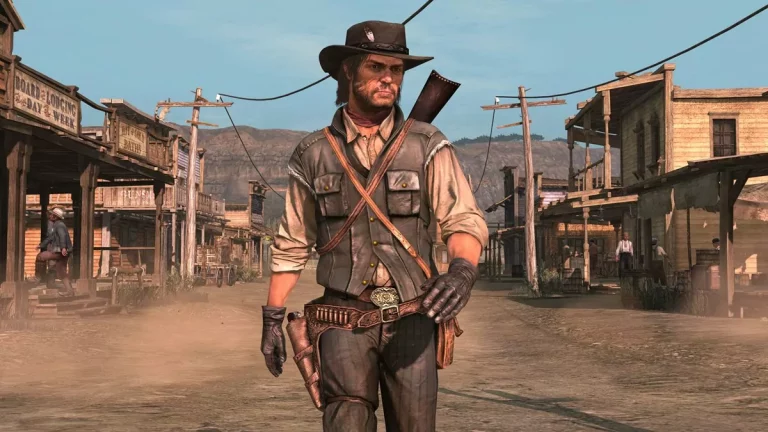
Rockstar Secrets: Red Dead & Bully’s Near Miss for Nerds
For millions of fans worldwide, the journey into the sprawling, unforgiving American West of Red Dead Redemption or the chaotic, yet endearing, halls of Bullworth Academy in Bully feels like a natural, almost inevitable part of gaming history. These titles, celebrated for their ambitious narratives, immersive worlds, and groundbreaking gameplay, have cemented their place as classics within the annals of interactive entertainment. Yet, the true story behind their existence is far more precarious than many might imagine. Behind the polished final product, there often lies a turbulent path of creative struggles, technical hurdles, and moments where the entire project teeters on the brink of cancellation. This unseen reality of game development, a world rarely glimpsed by the enthusiastic players who passionately consume its fruits, was recently brought to light by one of its most influential architects.
Dan Houser, a visionary cofounder of Rockstar Games and a pivotal creative force behind many of its most iconic franchises, offered a rare and startling confession. In an interview, Houser disclosed that both Red Dead Redemption and Bully were perilously close to never reaching the public. His comments pull back the curtain on the often-romanticized world of game creation, revealing the immense pressures and serendipitous turns that define the industry. For anyone who has invested countless hours exploring Rockstar’s meticulously crafted digital realms, this revelation isn’t just a piece of trivia; it’s a profound reminder of the fragile, human-driven process behind the digital masterpieces they cherish. It compels us to consider the alternate reality where these games, foundational pillars for many dedicated fans, simply didn’t exist.
Houser’s insights arrive at a particularly charged moment for Rockstar, with the gaming world holding its breath for the release of Grand Theft Auto 6, a title poised to redefine industry benchmarks. His words serve as a vital piece of context, bridging the past struggles of beloved games with the immense current expectations. They remind us that even the most acclaimed studios navigate a precarious balance of artistic ambition, logistical complexity, and the unpredictable nature of creative breakthroughs. This deep dive into Houser’s statements explores the implications of near-cancellations, the delicate balance of game development, and what these revelations truly mean for the passionate community of gamers who eagerly await Rockstar’s next epic.
The Untold Struggles Behind Beloved Rockstar Titles for the Modern Nerd
Dan Houser, a name synonymous with some of the most influential and successful video games ever created, candidly shared that both Red Dead Redemption and Bully endured periods of extreme uncertainty during their development cycles. These weren’t mere minor setbacks; Houser described moments where the very existence of these now-iconic games hung in the balance. This profound revelation challenges the common perception that successful titles follow a linear, well-oiled path from concept to market. Instead, it underscores a reality often hidden from the public: even the most critically acclaimed games can emerge from a crucible of doubt and difficulty.
For the modern gaming enthusiast, or Nerd deeply invested in the lore and craftsmanship of Rockstar’s universe, Houser’s words offer a new lens through which to appreciate these games. It transforms the experience from passive consumption to an active recognition of the monumental effort and perseverance required. He elaborated that the survival of these turbulent projects often hinged on two critical factors: the unwavering focus of the right people on the original vision, and the unpredictable occurrence of a “good build” or a moment when “the game suddenly clicks.” This ‘click’ signifies a pivotal breakthrough where disparate elements coalesce, and the game’s core identity solidifies, often rescuing a project from the brink.
Houser also hinted at other projects that, unlike Red Dead or Bully, were not as fortunate and never saw release. This acknowledgement opens up a fascinating, albeit melancholic, thought experiment: what other innovative concepts or potential masterpieces might exist only in the archives of game development history due to a lack of that serendipitous ‘click’ or the absence of a resilient team? His statement offers a stark reminder that while vision and talent are paramount, success in the highly complex and resource-intensive world of AAA game development often involves an element of chance and the ability to adapt to unforeseen challenges.
Direct Answer: Rockstar cofounder Dan Houser revealed that critically acclaimed titles Red Dead Redemption and Bully were nearly canceled during their development due to significant uncertainties. He emphasized that these projects were saved by the persistence of dedicated teams, a steadfast focus on the original creative vision, and crucial instances where the game’s disparate elements successfully converged, often referred to as finding a ‘good build’ or when the project ‘clicked’ into place.
More Than Just Code: The Human Element in Game Development
The intricate process of crafting a video game extends far beyond lines of code and digital assets; it is fundamentally a human endeavor. Houser’s insights highlight the indispensable role of dedicated individuals and cohesive teams. In the face of daunting challenges, it is the collective human will, the shared commitment to an artistic vision, and the ability to collaboratively problem-solve that often dictates a project’s fate. The narrative of Red Dead Redemption and Bully’s survival is, in essence, a testament to the power of human resilience and collaborative spirit within a creative industry.
Moreover, the leadership within these teams plays a crucial role in maintaining morale and steering the ship through stormy waters. Guiding a large-scale project, especially one as ambitious as a Rockstar title, requires not only technical expertise but also profound creative direction and managerial foresight. Houser’s emphasis on “the right people” suggests that specific individuals possess the unique blend of skill, passion, and stubborn determination to see a project through, even when faced with seemingly insurmountable obstacles. This underscores the intense personal investment and passion that developers pour into their creations, transforming abstract ideas into tangible, interactive worlds.
The Elusive ‘Click’: When Projects Transform from Concept to Masterpiece
What Houser describes as a “good build” or a moment when a game “suddenly clicks” is a concept well understood within creative industries, though perhaps less frequently articulated in the context of game development. This ‘click’ represents a critical juncture where the disparate components of a game – its mechanics, narrative, art style, and core loop – finally align harmoniously. Before this point, a game might feel disjointed, struggling to find its identity or its compelling hook. It’s often during this transformative phase that a project finds its soul, moving from a collection of ideas and prototypes to a cohesive, engaging experience.
This ‘click’ can be the result of a single brilliant design decision, a major technological breakthrough, or simply the cumulative effect of countless small refinements. For games like Red Dead Redemption, known for its expansive open world and complex morality system, finding that ‘click’ would have been monumental. It meant synthesizing vast ambition into playable, enjoyable segments. Similarly, for Bully, with its unique blend of school life simulation and open-world mischief, the ‘click’ would have defined how its various systems – from classes to combat to social interactions – intertwined to create its distinct charm. Without this pivotal moment, even the most promising concepts can fail to materialize into a truly captivating product.
Rockstar’s Legacy of Resilience and Innovation in Gaming Culture
Rockstar Games has carved out a unique position in the gaming landscape, not only for the quality and ambition of its titles but also for its willingness to push boundaries and embrace complex, often lengthy, development cycles. The stories of Red Dead Redemption and Bully are not isolated incidents but rather reflective of a broader pattern within the studio. Rockstar is renowned for its meticulous attention to detail, its expansive open worlds, and its commitment to creating rich, narrative-driven experiences. This approach, while often yielding critical and commercial blockbusters, inherently carries a higher risk of development challenges.
For the gaming community, especially the segment deeply entrenched in Nerd culture and its appreciation for gaming history, Rockstar’s journey serves as a fascinating case study in creative endurance. Red Dead Redemption, released in 2010, was a genre-defining title that set new standards for open-world Westerns, celebrated for its poignant story and groundbreaking mechanics. Bully, from 2006, offered a fresh perspective on the open-world formula, combining humor, social commentary, and engaging gameplay in a schoolyard setting. Both games went on to become cultural touchstones, demonstrating that the studio’s investment in overcoming initial struggles ultimately pays off with lasting legacies that resonate with players for years.
The Weight of Expectation: Grand Theft Auto 6 and Beyond
Houser’s recent comments gain particular relevance when viewed through the lens of the upcoming Grand Theft Auto 6. The anticipation surrounding this title is immense, perhaps unprecedented in the gaming industry. As per the original report, Grand Theft Auto 6 is slated for release on November 19, 2026, marking a staggering 13-year gap since the launch of Grand Theft Auto V. This extended hiatus has only amplified the already colossal expectations from fans and critics alike, who envision a game that will once again push the boundaries of what is possible in interactive entertainment.
The journey to Grand Theft Auto 6 has not been without its own public challenges, including reported postponements. The fact that the game has already been declared eligible for nominations at The Game Awards 2026 further underscores the industry’s fervent belief in its potential impact. In this context, Houser’s reflections on the near-misses of Red Dead and Bully serve as a powerful reminder that even the most anticipated projects from an established titan like Rockstar are not immune to developmental turbulence. It provides a humanizing perspective on the enormous pressure the studio faces, suggesting that behind the gloss of trailers and marketing, there is an intense creative struggle that mirrors past successes.
Lessons for Aspiring Developers and Enthusiastic Nerds Alike
Houser’s revelations offer profound lessons, not only for those within the game development sphere but also for the passionate audience that supports it. For aspiring developers, the narrative reinforces the idea that challenges are an inherent part of the creative process, and that perseverance, combined with a clear vision and adaptable team, is often the key to success. It demystifies the creation of beloved games, illustrating that even masterpieces require significant struggle and occasional strokes of luck to materialize.
For the enthusiastic Nerd, understanding this journey can deepen their appreciation for the games they love. It transforms a simple play-through into an experience imbued with the knowledge of the human effort, the creative battles, and the moments of serendipity that allowed these digital worlds to exist. It cultivates a greater empathy for developers and fosters a more nuanced understanding of the complex ecosystem that brings virtual realities to life. This perspective ultimately enriches the overall gaming experience, moving beyond mere entertainment to a deeper connection with the artistry and dedication involved.
| Aspect of Game Development | Traditional Perception | Reality (as per Dan Houser) |
|---|---|---|
| Project Genesis | Smooth, planned execution | Often turbulent, near-cancellation events |
| Success Factor | Perfect plan, unlimited resources | Resilient teams, clear vision, crucial ‘clicks’ |
| Role of ‘Luck’ | Minimal, purely skill-based | Significant, with serendipitous breakthroughs |
| Creative Process | Linear, predictable | Non-linear, prone to significant hurdles |
| Final Product | Inevitably destined for success | Result of overcoming immense challenges |
How These Revelations Shape the Future for Every Dedicated Nerd
Dan Houser’s insights into the precarious origins of Red Dead Redemption and Bully offer more than just historical anecdotes; they provide a fundamental recontextualization of game development for the modern Nerd. This understanding shifts the narrative from one of effortless creation to a recognition of the immense human effort, creative fortitude, and occasional strokes of serendipity that underpin every successful title. It highlights that the masterpieces we celebrate are not simply products of a well-oiled machine but rather testaments to overcoming significant adversity, often against formidable odds.
For the gaming community, this deeper knowledge enhances the appreciation for the craftsmanship and dedication involved in bringing complex virtual worlds to life. It fosters a more informed perspective on development timelines, potential delays, and the sheer complexity that even a seasoned studio like Rockstar navigates. As the industry continues to push technological and narrative boundaries, with titles like Grand Theft Auto 6 on the horizon, Houser’s comments serve as a crucial reminder that while innovation is vital, the human element—the resilient team, the singular vision, and that elusive ‘click’—remains the ultimate differentiator between an unreleased concept and a beloved classic. It underscores that the future of gaming, in all its ambitious glory, will always be a story of perseverance, passion, and the unpredictable magic of creation.
FAQ: Understanding Rockstar’s Development Insights
-
Who is Dan Houser and what did he reveal about Rockstar’s games?
Dan Houser is a cofounder of Rockstar Games, a renowned video game developer known for franchises like Grand Theft Auto and Red Dead Redemption. He recently revealed that two of Rockstar’s highly acclaimed titles, Red Dead Redemption and Bully, faced severe development challenges and were very close to being canceled. His insights shed light on the tumultuous nature of game creation even for successful studios.
-
Which games almost didn’t make it to release, according to Houser?
According to Dan Houser, the games that nearly didn’t see the light of day were Red Dead Redemption and Bully. These titles are now considered classics, making his revelation about their precarious development all the more significant for fans who hold them in high regard within gaming culture.
-
What factors did Dan Houser cite for saving troubled projects?
Houser attributed the survival of these challenging projects to several key factors. He emphasized the importance of dedicated teams maintaining focus on the original vision of the game. Crucially, he also highlighted moments where a “good build” emerged, or when the game “suddenly clicked,” indicating a breakthrough in design or functionality that brought the project together.
-
How do Houser’s comments relate to Grand Theft Auto 6?
Dan Houser’s comments offer valuable context for the highly anticipated release of Grand Theft Auto 6, which is expected on November 19, 2026. Given the immense expectations and the long development cycle (13 years since GTA V), Houser’s statements remind the gaming community that even a flagship title from Rockstar may navigate significant internal challenges, reinforcing the complexity behind such massive undertakings.
-
What is the significance of a ‘good build’ in game development?
In game development, a ‘good build’ signifies a version of the game where its core mechanics, design, and overall experience begin to coalesce effectively. It’s a pivotal moment when the game’s vision starts to become a playable reality, demonstrating its potential and often reigniting team morale. This ‘click’ can transform a struggling project into one with a clear path forward, making it a critical saving grace.
-
How does understanding game development challenges impact players’ appreciation?
Understanding the challenges inherent in game development, as revealed by Houser, significantly deepens players’ appreciation for the final product. It transforms the perception of a game from a simple entertainment medium to a complex work of art born from immense dedication, problem-solving, and creative struggle. This awareness can foster greater empathy for developers and a richer, more informed gaming experience for every passionate Nerd.
-
Are long development cycles common for Rockstar Games?
Yes, long development cycles are a characteristic of Rockstar Games. The studio is known for its meticulous attention to detail, ambitious open-world designs, and commitment to pushing narrative and technical boundaries. The 13-year gap between Grand Theft Auto V and the projected release of Grand Theft Auto 6 is a testament to this, highlighting their methodical approach to crafting high-quality, immersive experiences.
-
What does Houser’s statement imply about the ‘luck’ factor in game success?
Houser’s statement implies that while vision, talent, and hard work are crucial, there is an undeniable element of ‘luck’ or serendipity in game development. The “moments of chance” or when a game “suddenly clicks” suggest that unpredictable breakthroughs or timely convergences of ideas can play a significant role in saving and propelling a project towards success, beyond pure planning or effort.












Post Comment