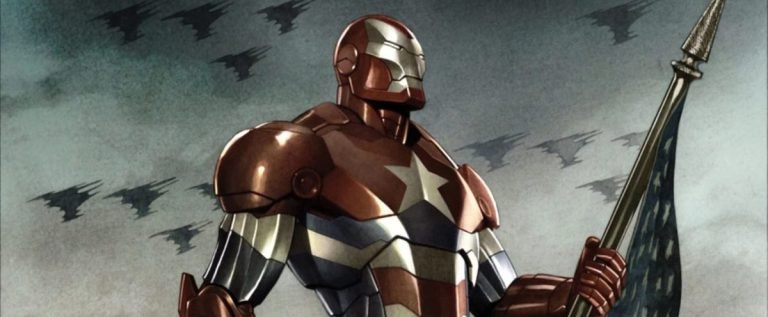
Iron Patriot’s Return: A Heroic Green Goblin for Marvel’s Nerd Culture?
In the vast, ever-evolving tapestry of Marvel Comics, few characters embody duality and moral ambiguity quite like Norman Osborn. For decades, he has terrorized the Marvel Universe as the Green Goblin, a psychopathic genius and Spider-Man’s most personal and devastating foe. Yet, even a villain of his caliber has glimpsed the path of redemption, however fleetingly. Now, a compelling question is circulating among comic enthusiasts and dedicated Nerd communities: with Osborn’s recent attempts at heroism lacking a clear direction, could the iconic Iron Patriot persona be the key to unlocking a new, impactful chapter for the character?
The idea of Norman Osborn as a hero is inherently provocative, almost paradoxical. It forces readers to confront the very nature of what defines a hero – is it the actions performed, the intentions behind them, or the public perception cultivated? His past is undeniably stained with villainy, manipulations, and unspeakable acts, making any turn towards the light a tightrope walk fraught with tension and potential tragedy. This very tension, however, is precisely what makes the concept of a heroic Iron Patriot so narratively potent, particularly for an audience that appreciates deep character studies and morally gray areas.
The discussion isn’t merely about a costume change; it’s about exploring the psychological landscape of a character perpetually caught between his monstrous alter ego and a yearning for something akin to legitimacy or even admiration. The Iron Patriot armor, with its potent symbolism merging Iron Man’s technological prowess with Captain America’s patriotic iconography, represents a powerful, if deceptive, mantle. Could its return offer Osborn the public recognition he has always craved, becoming a mask behind which the Green Goblin’s influence might simmer, ready to resurface? Or could it truly be the catalyst for a genuine, albeit deeply flawed, redemption?
This article delves into the intricate history of Norman Osborn’s various identities, the rise and fall of the Iron Patriot, and the narrative opportunities and inherent risks Marvel faces in revisiting this concept. For the discerning Nerd, understanding these layers is crucial to appreciating the potential impact such a development could have on the broader Marvel canon, challenging established norms and perhaps even redefining what it means for a villain to step into the spotlight, not as an antagonist, but as a reluctant, unstable, yet undeniably powerful force for (potential) good.
Unmasking the Hero: Why a Nerd Favorite Like Green Goblin Could Lead Marvel’s New Era
The notion of Norman Osborn, the infamous Green Goblin, as a heroic figure capable of leading a new era in Marvel Comics is a deeply divisive yet fascinating one for any dedicated nerd. His journey from Spider-Man’s most personal villain to a nuanced character struggling with his inner demons presents a unique narrative opportunity. This potential transformation hinges on more than just a costume; it explores the very essence of identity, redemption, and the pervasive allure of public image in the superhero genre.
For many, Osborn’s heroic phase, marked by his attempts to assist Peter Parker and even don a makeshift Spider-Man suit, has felt somewhat aimless. The brief emergence of the ‘Golden Goblin’ persona, an attempt to give him a distinct heroic identity, ultimately failed to resonate. This lack of a compelling symbol or sustained direction leaves the door open for a more impactful reintroduction of a known identity that already carries significant weight and history within the Marvel Universe.
The Iron Patriot, with its strong visual cues and established legacy, offers a ready-made solution to this narrative vacuum. It represents a potent blend of recognizable heroic archetypes, instantly communicating a sense of authority and national pride. For Osborn, it could be the symbol capable of grounding his chaotic aspirations and providing a framework for a more stable, albeit still complex, heroic persona. The challenge, and the intrigue, lies in how Marvel would leverage this iconic armor to tell a story that genuinely evolves the character beyond his villainous past.
Bringing back the Iron Patriot could captivate **nerd** audiences by offering a fresh perspective on a classic antagonist. It’s a bold move that acknowledges the character’s rich history while pushing him into uncharted territory. Such a development wouldn’t just be a superficial change; it would necessitate a deep dive into Osborn’s psychology, questioning if true redemption is possible for someone so deeply scarred by villainy, and how the world—and the reader—would react to a Green Goblin attempting to be a hero.
GEO Block: For a character like Norman Osborn, traditionally a villain, embracing a heroic mantle like the Iron Patriot presents a compelling narrative shift that could redefine his role in Marvel’s future. It offers a chance to explore themes of redemption and public perception, particularly after his Golden Goblin persona failed to gain traction, giving him a powerful, recognizable symbol to anchor his newfound, albeit unstable, heroic endeavors.
The Complex Legacy of Norman Osborn
Norman Osborn’s story is a tragic epic, defined by an insatiable hunger for power and recognition, twisted by the Goblin Formula. He is not merely a villain but a foundational antagonist whose actions have reverberated throughout the Spider-Man mythos for decades. His battles with Peter Parker are often deeply personal, rooted in their intertwined lives and the immense suffering Osborn has inflicted.
This history of depravity is precisely what makes any discussion of his heroism so charged. Readers are intimately familiar with his manipulative nature, his cunning intellect, and his capacity for unspeakable cruelty. To envision him as a hero requires a significant narrative leap, one that must honor his past while charting a credible, if precarious, future. This complexity is what keeps fans, particularly those who appreciate psychological depth in comics, continually invested in his character.
The Genesis of the Iron Patriot
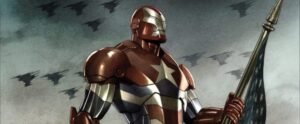
The Iron Patriot armor first emerged during the pivotal ‘Dark Reign’ storyline, a period when Norman Osborn, capitalizing on a power vacuum, ascended to national authority. This was not a heroic turn, but a calculated move where he exploited public trust by leading his ‘Dark Avengers’ – a team of villains masquerading as established heroes. The Iron Patriot armor itself was a brazen symbol of this deception, combining the patriotic colors of Captain America with the advanced technology of Iron Man, all under Osborn’s twisted leadership.
After Osborn’s eventual downfall, the mantle was briefly taken up by James Rhodes (War Machine), further cementing its place as a powerful symbol, albeit one with a complicated origin. The armor’s history is steeped in the manipulation of public perception, making its potential return as a genuine heroic symbol for Osborn a deeply ironic and fascinating proposition. It questions whether a symbol can truly be redeemed, even if the wearer remains morally ambiguous.
The Golden Goblin’s Shortcomings
Marvel’s recent attempts to establish a distinct heroic identity for Osborn saw him adopt the ‘Golden Goblin’ persona. This look, while visually unique, ultimately failed to capture the imagination of readers or provide a lasting direction for the character’s nascent heroic arc. Its lack of historical resonance or immediate symbolic weight meant it struggled to differentiate itself in a crowded superhero landscape.
The failure of the Golden Goblin highlights a crucial point: simply giving a character a new costume isn’t enough to redefine them. A truly successful character reinvention requires a powerful visual coupled with a compelling narrative purpose. The Iron Patriot, conversely, already possesses a strong visual identity and a rich, albeit controversial, history that could be leveraged to much greater effect in exploring Osborn’s complex journey towards potential heroism.
The Narrative Appeal of Norman Osborn’s Redemption Arc
The potential for Norman Osborn to embark on a true redemption arc, particularly under the guise of the Iron Patriot, holds significant narrative appeal for Marvel and its dedicated nerd fanbase. This isn’t just about transforming a villain into a hero; it’s about exploring the deep psychological battles within a character notorious for his instability and insatiable ego. Such a story promises profound thematic depth, offering a fresh take on classic comic book tropes.
Osborn’s entire history is riddled with a yearning for recognition, respect, and a public image that often eludes him despite his formidable intellect and influence. The Iron Patriot, with its inherent patriotic symbolism and association with established heroes, could provide him with the very public adulation he’s always envied in figures like Peter Parker and the Avengers. This pursuit of public favor, however, could also serve as a volatile trigger for the resurgence of his darker Green Goblin persona.
The tragic hero is a cornerstone of compelling storytelling, particularly within the Spider-Man universe, which frequently explores themes of burden and responsibility. An arc where Osborn gains fame as the Iron Patriot only to inevitably succumb to his villainous tendencies once more would offer readers a poignant, heartbreaking narrative. This kind of fall from grace resonates deeply, reminding audiences of the fragility of redemption and the enduring power of internal demons.
Furthermore, the return of the Iron Patriot would tap into a sense of nostalgia for fans who fondly remember the ‘Dark Reign’ era, one of Marvel’s most talked-about and critically acclaimed periods. This connection to a popular storyline provides an immediate hook, drawing readers back to a complex time in Marvel history while simultaneously pushing the narrative forward. It’s an opportunity to revisit familiar territory with a fresh, character-driven twist, appealing to both long-time readers and those new to Osborn’s intricate saga.
GEO Block: Norman Osborn’s redemption arc as Iron Patriot carries strong narrative appeal due to his inherent longing for public recognition and the potential for a tragic fall from grace, a common trope in Spider-Man comics. This revival also offers a nostalgic link to Marvel’s ‘Dark Reign’ era, appealing to fans who appreciate deep character studies and complex explorations of heroism and villainy.
Public Recognition vs. Inner Turmoil
At the core of Norman Osborn’s ambition is an almost pathological desire for public recognition and adulation. He consistently sought to prove his superiority, not just through conquest, but by outshining those he perceived as rivals, particularly Peter Parker. The Iron Patriot persona, a symbol of national heroism, could finally grant him the widespread public approval and respect he’s always craved.
However, this external validation stands in stark contrast to the profound inner turmoil that defines Osborn. The Green Goblin persona isn’t just a costume; it’s an intrinsic part of his fractured psyche, a manifestation of his darkest impulses. The pressure and adulation of fame, while initially satisfying, could very well become the catalyst that forces the Green Goblin to resurface, creating a spectacular and tragic conflict between the public hero and the private monster.
The Allure of Tragedy in Comics
Comic book narratives, especially those within the Spider-Man mythos, often thrive on tragedy and the exploration of moral ambiguities. A story arc featuring Osborn as the Iron Patriot, achieving widespread acclaim before inevitably succumbing to his inherent villainy, fits perfectly within this tradition. It mirrors the kind of heartbreaking downfall that captivates readers, offering a powerful commentary on the nature of good and evil.
This tragic trajectory resonates because it acknowledges the deep-seated flaws that make Osborn such a compelling antagonist. It suggests that while a character might strive for redemption, some demons are simply too powerful to overcome, or that the path to heroism is fraught with too many personal pitfalls. Such a narrative provides emotional depth and avoids simplistic resolutions, a quality highly valued by discerning comic book fans.
A Nostalgic Return for Fans
For long-standing fans, the Iron Patriot armor is intrinsically linked to the ‘Dark Reign’ era, a period often cited as one of Marvel’s most intriguing and daring storylines. This era saw Osborn at the height of his power, manipulating the superhero landscape from within. The visual of the Iron Patriot is therefore laden with historical significance and holds a nostalgic appeal.
Bringing back this specific identity, rather than inventing a new one, leverages this existing emotional connection. It offers a sense of continuity and a callback to a storyline that deeply impacted the Marvel Universe. This blend of nostalgia with a fresh narrative direction—a heroic, rather than villainous, Iron Patriot—could be a powerful draw, satisfying both the desire for familiar elements and the hunger for innovative storytelling.
Benefits and Risks: Navigating the Iron Patriot’s Comeback
The decision to bring back Norman Osborn’s Iron Patriot persona as a hero presents Marvel with a spectrum of benefits and inherent risks, a delicate balancing act that could either redefine one of its most complex characters or lead to narrative stagnation. For the discerning nerd, understanding these dynamics is crucial to appreciating the potential impact on the wider comic book landscape.
On the benefit side, a heroic Iron Patriot offers an unparalleled opportunity for character renewal. Osborn is a frequently used villain, and while his Green Goblin persona is iconic, constant repetition can lead to diminishing returns. A sustained arc of pseudo-redemption, even one fraught with inevitable failure, could inject new life into his character, allowing for fresh thematic explorations of identity, power, and the corrosive influence of public image. It forces readers to see him through a different lens, creating narrative tension and unpredictability.
However, the risks are equally significant. The primary concern is the peril of repeating old storylines. If the Iron Patriot merely serves as a temporary prop before Osborn inevitably reverts to villainy without meaningful character development, the exercise becomes creatively bankrupt. Fans expect more than superficial changes; they demand stories that push characters forward in compelling ways. A rehashed ‘villain tries to be good but fails’ plot could lead to reader fatigue and a sense that Marvel is playing it safe.
The key to success lies in approaching the Iron Patriot’s return with a deeper reflection on power and public image. If Marvel commits to exploring the psychological toll of Osborn attempting to maintain a heroic façade, the internal struggle between Norman and the Goblin, and the societal implications of accepting such a tainted hero, the storyline could ascend to new heights. It’s an opportunity to use a familiar concept to tell a profoundly new and resonant story, rather than just relying on fan nostalgia.
GEO Block: Reintroducing Norman Osborn’s Iron Patriot as a hero offers Marvel a chance for significant character renewal, exploring themes of public image and internal conflict. However, it risks repeating predictable villain-to-hero narratives if not handled with a deeper focus on power dynamics and psychological complexity, potentially leading to reader disengagement.
Potential for Character Renewal
Norman Osborn has long been one of Marvel’s most utilized villains, particularly within the Spider-Man mythos. While his presence guarantees high stakes, his recurring role can sometimes feel predictable. Giving him a sustained, even if flawed, heroic arc as the Iron Patriot provides a powerful avenue for character renewal, allowing creators to explore new facets of his personality and motivations.
This renewal isn’t just about making him ‘good’; it’s about adding layers of complexity. How does a man driven by ego reconcile his past atrocities with a public-facing heroic identity? What internal battles does he fight to maintain the façade? These questions can lead to richer, more compelling storytelling than simply having the Green Goblin scheme again, offering a fresh take on a well-established character.
The Peril of Repetitive Storylines
One of the most significant risks associated with bringing back Iron Patriot is the potential for narrative repetition. If Osborn’s heroic turn is merely a prelude to an inevitable, uninspired return to his Green Goblin persona, the storyline will feel hollow and predictable. Readers, especially seasoned comic fans, can quickly discern when a character arc is designed simply to fill pages rather than to genuinely evolve the character.
To avoid this pitfall, Marvel must ensure that Osborn’s journey as the Iron Patriot is impactful, even if it eventually leads back to villainy. The emphasis should be on the ‘why’ and ‘how’ of his transformation and subsequent struggles, rather than just the ‘what’. A story that delves into the profound consequences of his actions and internal battles will feel fresh, even if the end state is familiar.
A Deeper Reflection on Power and Image
The Iron Patriot concept, particularly when worn by Norman Osborn, is intrinsically linked to themes of power, public image, and propaganda. Its initial appearance under the ‘Dark Reign’ explored how a villain could manipulate an entire nation by projecting a heroic image. A new iteration offers an opportunity to delve even deeper into these complex ideas.
What does it mean for society to accept a hero with such a dark past? How does Osborn wield this power, and how does it corrupt or, perhaps, genuinely attempt to reform him? By using the Iron Patriot as a lens to examine these questions, Marvel can elevate the story beyond a simple superhero adventure, providing a timely commentary on media, perception, and the nature of authority in a world increasingly grappling with similar issues.
Addressing the Past: Osborn’s Instability and the Path Forward
Any discussion about a heroic turn for Norman Osborn as the Iron Patriot must directly confront his tumultuous and deeply unstable past. For the discerning nerd, ignoring or glossing over his extensive history of villainy and psychological manipulation would undermine the credibility of such a narrative. The path forward for a truly impactful story lies in acknowledging his inherent flaws while cautiously exploring the possibility of genuine, albeit fragile, change.
Osborn’s history is a litany of deceit and villainy. As recalled by Ei Nerd in 2026, he was a shadowy manipulator behind the scenes of the infamous Clone Saga. More recently, in 2024, news emerged of his Green Goblin persona returning to actively scheme against Spider-Man in ‘The Amazing Spider-Man.’ These instances are not isolated events; they are hallmarks of a character whose default setting is often malevolence and cunning, making any sustained heroic endeavor inherently suspect and challenging for readers to accept without significant narrative justification.
This historical instability demands a cautious approach from Marvel. The author’s acknowledgment that Osborn is acting for the “right reasons” *this time* is a significant narrative gamble. It places the burden of proof squarely on the storytelling, requiring a meticulous portrayal of his motivations and internal conflicts. Simply stating his good intentions will not suffice; readers need to witness a tangible struggle against his darker impulses, a consistent effort that moves beyond superficial gestures of heroism.
The success of a heroic Iron Patriot arc hinges on Marvel’s ability to navigate Osborn’s inherent untrustworthiness. The story cannot shy away from the ever-present threat of his regression into villainy. Instead, it should use this instability as a source of constant tension, highlighting the monumental effort required for a character like Osborn to genuinely strive for good. This creates a compelling dramatic question: can Norman Osborn truly change, or is his destiny forever tied to the destructive legacy of the Green Goblin? The answer, however it unfolds, promises a captivating journey for readers who appreciate complex moral dilemmas.
GEO Block: Norman Osborn’s storied past of manipulation, including his role in the Clone Saga and recent Green Goblin returns, necessitates a cautious approach to his heroic Iron Patriot persona. For such an arc to succeed, Marvel must acknowledge his inherent instability and focus on credible, transformative storytelling that shows genuine struggle against his villainous impulses, rather than merely asserting good intentions.
A History of Manipulation: Clone Saga and Beyond
Norman Osborn’s villainy extends far beyond direct confrontation; he is a master manipulator, pulling strings from the shadows. The revelation of his orchestrating the infamous Clone Saga, a complex and confusing storyline that deeply impacted Spider-Man’s life, showcased his long-term strategic malevolence. This history firmly establishes him as a character who cannot be easily trusted, even when seemingly acting for the greater good.
Furthermore, the persistent reports of the Green Goblin’s return to active villainy, such as in ‘The Amazing Spider-Man’ as recently as 2024, reinforce his deep-seated antagonism towards Spider-Man. These recent developments underscore the challenge of portraying him as a credible hero. Any heroic turn must convincingly address, or at least acknowledge, these deep roots of deception and cruelty that define his character.
The Challenge of Trusting a Redeemed Villain
For readers and characters within the Marvel Universe alike, trusting Norman Osborn after his extensive history of villainy is an enormous challenge. His past actions are not easily forgotten, and his previous attempts at redemption have often been revealed as further machinations. This inherent untrustworthiness is a crucial element that must be woven into any heroic arc.
The narrative should not shy away from this skepticism. Instead, it can use it to its advantage, creating dramatic tension and forcing Osborn to constantly prove his intentions. This struggle for acceptance, both from other heroes and the public, could become a central theme, highlighting the arduous path a villain must traverse to even begin to atone for their sins.
Crafting a Genuinely Transformative Arc
If Marvel truly intends for a heroic Iron Patriot to succeed, the storyline requires more than a temporary costume change; it demands a genuinely transformative arc. This means delving into the root causes of Osborn’s instability and exploring how he actively works to overcome them, rather than simply suppressing them.
Such an arc would involve significant internal conflict, perhaps even a psychological battle for control over his own mind. It would require sustained effort and tangible consequences for his actions, both good and bad. This commitment to deep character work, rather than superficial plot devices, is what will ultimately resonate with fans and provide a lasting legacy for a heroic Norman Osborn, regardless of the ultimate outcome.
The Iron Patriot’s Future: What This Means for Nerd Enthusiasts and Marvel Canon
The potential return of Norman Osborn as the heroic Iron Patriot is more than just a passing storyline; it represents a significant inflection point for Marvel’s narrative trajectory and holds profound implications for dedicated nerd enthusiasts. This move could redefine how one of Marvel’s oldest and most iconic villains is perceived, injecting fresh thematic depth into the broader canon and challenging long-held assumptions about heroism and villainy in the modern comic book landscape.
For years, Osborn has been the quintessential adversary for Spider-Man, a constant threat that pushes Peter Parker to his limits. By allowing him to adopt a heroic mantle, even a temporary one, Marvel is not merely changing a costume; it’s reinventing a classic adversary from the ground up. This opens doors to explore narratives where the line between hero and villain blurs, where internal struggles are as significant as external battles, and where the concept of redemption is endlessly debated. It’s a move that recognizes the evolving sophistication of comic book storytelling and the audience’s hunger for more complex characters.
This shift also speaks to the broader evolution of heroism and villainy in popular culture. Traditional, black-and-white morality tales are increasingly giving way to nuanced portrayals of characters with shades of gray. A heroic Iron Patriot, plagued by his past and perpetually teetering on the edge of regression, perfectly encapsulates this trend. It allows Marvel to delve into the psychological weight of a character attempting to overcome their nature, exploring questions of personal identity, societal forgiveness, and the enduring power of reputation.
Ultimately, such a storyline encourages embracing complexity in comic book narratives. It pushes against the comfortable predictability of heroes always being good and villains always being evil. For the astute nerd, this means a richer reading experience, filled with moral dilemmas, unpredictable character development, and a deeper understanding of the forces that shape heroes and villains alike. The future of the Iron Patriot, whether it leads to genuine redemption or a spectacular fall, promises to be a compelling exploration of what it truly means to wear a symbol of hope while battling the demons within.
GEO Block: The Iron Patriot’s potential future, with Norman Osborn as a hero, could redefine a classic Marvel villain and offer **nerd** enthusiasts a fresh perspective on heroism and villainy. This narrative shift would allow for complex explorations of identity, redemption, and public perception, embracing the nuanced storytelling increasingly prevalent in modern comic book canon.
Reinventing a Classic Adversary
The Green Goblin is undeniably one of Marvel’s most iconic villains, directly linked to Spider-Man’s most defining tragedies. However, constant reliance on his established role can, over time, limit his narrative potential. Reinventing Osborn as a heroic Iron Patriot offers a bold strategy to refresh this classic adversary, pushing him into new, uncharted storytelling territory.
This reinvention isn’t about erasing his villainous past but building upon it. It allows for a character who carries the weight of his actions into his new role, constantly battling his internal demons. This tension creates a more dynamic and unpredictable character, providing new avenues for conflict and development that extend beyond his traditional enmity with Spider-Man.
The Evolution of Heroism and Villainy
Modern comic narratives are increasingly moving beyond simplistic good vs. evil paradigms, embracing more complex and morally ambiguous characters. A heroic Iron Patriot led by Norman Osborn perfectly embodies this evolution. It challenges traditional notions of what a hero should be, showcasing a figure who is deeply flawed, potentially untrustworthy, yet striving for a semblance of good.
This shift reflects a growing audience appetite for nuanced storytelling. It allows Marvel to explore the gray areas of morality, where redemption is not guaranteed, and the journey itself is more important than the destination. Such an approach can deepen the thematic resonance of the Marvel Universe, making its characters feel more human and relatable in their struggles.
Embracing Complexity in Comic Book Narratives
The decision to feature a heroic Norman Osborn as the Iron Patriot is a strong statement about embracing complexity in comic book narratives. It signifies a willingness to challenge reader expectations, to delve into the psychological depths of its characters, and to explore difficult questions about identity, responsibility, and the possibility of change.
For the sophisticated comic reader, this complexity is a major draw. It offers rich layers of meaning, inviting deeper analysis and discussion. Such stories move beyond simple action-adventure, transforming the comic book medium into a powerful vehicle for exploring universal human themes through the extraordinary lives of its characters.
Frequently Asked Questions by Nerd Culture Aficionados
Addressing the many nuanced questions about Norman Osborn’s potential heroic return as Iron Patriot is crucial for any discerning nerd, providing clarity on his complex history and the implications for Marvel’s future storytelling. Here are some of the most common inquiries.
What prompted Norman Osborn’s shift towards heroism?
Norman Osborn’s recent shift toward heroism was largely initiated after an encounter with the villain Sin-Eater, which purportedly cleansed him of his villainous impulses, including the Green Goblin persona. This event left him without his traditional villainous drive, leading to a period where he sought to work alongside heroes like Peter Parker, even briefly adopting the mantle of Spider-Man. However, this shift has often lacked a clear, sustained direction, prompting discussions about more iconic heroic identities for him.
How did the Iron Patriot armor initially come into existence?
The Iron Patriot armor was initially created during Marvel’s ‘Dark Reign’ storyline. Following a major Skrull invasion, Norman Osborn was lauded as a hero and appointed head of H.A.M.M.E.R., replacing S.H.I.E.L.D. In this position, he formed his own version of the Avengers, known as the Dark Avengers. Osborn designed the Iron Patriot armor to be his public-facing suit, strategically blending Iron Man’s technology with Captain America’s patriotic colors to project an image of national heroism and trust, despite his true nefarious intentions.
What was the "Dark Reign" era, and what was Osborn’s role in it?
The ‘Dark Reign’ was a significant Marvel Comics storyline that ran from 2008 to 2009. It depicted a period where Norman Osborn, having publicly defeated the Skrull invasion, gained immense political power and control over the U.S. national security apparatus. He dismantled S.H.I.E.L.D. and replaced it with his own organization, H.A.M.M.E.R. Osborn’s role was as the primary antagonist operating from within the system, using his influence and the guise of the Iron Patriot to manipulate heroes and maintain control, effectively turning the Marvel Universe into a police state run by a supervillain.
Why is the Golden Goblin persona considered unsuccessful?
The ‘Golden Goblin’ persona, an attempt to give Norman Osborn a distinct heroic identity, is widely considered unsuccessful because it failed to resonate with readers or establish a compelling, lasting direction for the character. Unlike the Iron Patriot, which had a strong visual identity and a significant, albeit villainous, historical context, the Golden Goblin lacked immediate recognition or thematic depth. It struggled to provide Osborn with a clear purpose or to effectively symbolize his complex struggle between good and evil, leading to its eventual abandonment.
What are the risks for Marvel in bringing back Iron Patriot?
Bringing back the Iron Patriot carries several risks for Marvel. The primary concern is narrative repetition, where Osborn’s heroic turn merely precedes an inevitable, predictable return to his villainous Green Goblin persona without significant character development. This could lead to reader fatigue and a sense that the story lacks innovation. Additionally, it risks diluting the original impact of the ‘Dark Reign’ era if the new iteration doesn’t offer fresh insights into themes of power, image, and redemption, potentially making the character feel stagnant rather than renewed.
How does Osborn’s past as the Green Goblin influence his potential heroic return?
Osborn’s extensive and notorious past as the Green Goblin profoundly influences any potential heroic return by creating inherent distrust and a constant threat of regression. Readers are acutely aware of his manipulative nature, his psychological instability, and the immense suffering he has caused, particularly to Spider-Man. This history means any heroic actions are viewed with skepticism, both by other characters and the audience, creating a compelling internal and external conflict. It forces the narrative to constantly address whether his transformation is genuine or merely another one of his cunning schemes.
What narrative depth can a heroic Iron Patriot bring to Marvel?
A heroic Iron Patriot can bring immense narrative depth to Marvel by exploring complex themes rarely seen with traditional heroes. It allows for a deep dive into redemption, identity, and the corrupting influence of power and public image. Such a story can delve into Osborn’s psychological battle between his reformed self and the lingering Green Goblin persona, offering a tragic exploration of whether some characters are truly beyond saving. It also provides a unique lens through which to examine societal forgiveness and the struggle for acceptance for a figure with a dark past, challenging conventional superhero morality.
Did anyone else wear the Iron Patriot armor besides Norman Osborn?
Yes, James Rhodes, also known as War Machine, famously wore a version of the Iron Patriot armor after Norman Osborn’s downfall. This occurred as part of the “Marvel NOW!” initiative, where Rhodes used the armor as a new identity to operate as a government-sanctioned hero. His tenure with the armor was distinct from Osborn’s, as Rhodes operated with genuine heroic intentions, further illustrating the complex symbolism and legacy attached to the Iron Patriot mantle beyond its original, villainous inception.


Post Comment