The Enduring Nerd Debate: Who Truly Defines the Avengers?
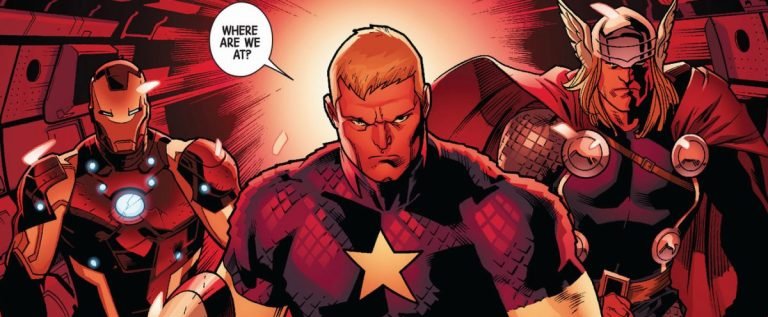
For decades, the Marvel Universe has captivated audiences, building a pantheon of heroes whose stories resonate deeply across generations. Among these, the Avengers stand as a monumental pillar, a collective of Earth’s mightiest protectors. When asked to name the quintessential figures of this formidable team, the immediate response from many, especially within dedicated fan circles, invariably points to Captain America, Iron Man, and Thor. This trio, often dubbed the ‘Big Three,’ embodies a certain foundational mythos—strength, intellect, and moral fortitude—that appears intrinsic to the Avengers’ identity. They are the faces emblazoned on merchandise, the focal points of cinematic sagas, and the archetypes around which much of the team’s lore revolves.
However, the rich tapestry of comic book history, and more recently, the expansive narratives woven through the Marvel Cinematic Universe, continually invite deeper scrutiny. Is the enduring popularity and initial leadership of these three titans the sole metric for defining the very ‘soul’ of the Avengers? Or does the true essence of what it means to be an Avenger lie in the transformative journey, the embrace of heroism from unexpected origins, and the profound impact made within the team’s dynamic? This question sparks a fascinating and often passionate debate among enthusiasts, a central point of discussion in every true nerd forum, blog, and convention. It challenges us to look beyond the obvious, to consider how the team itself acts as a crucible, forging heroes in its own image, regardless of their individual pre-existing fame or power levels.
The argument extends beyond mere popularity; it delves into the very narrative function of the Avengers as an institution. While iconic figures like Captain America and Iron Man arrived with fully formed identities, bringing their established heroism to the team, other characters found their purpose and defined their heroic personas through their membership. This distinction is crucial for understanding the diverse layers of what makes an Avenger truly significant. It’s a discussion that not only celebrates the legends but also champions the unsung, the unexpected, and the profoundly evolved, offering a more inclusive and dynamic view of what constitutes the ‘face’ of Earth’s mightiest heroes.
The Enduring “Nerd” Debate: Defining the Avengers’ Core Identity
The question of who truly represents the heart of the Avengers is a persistent and beloved topic within nerd culture, sparking countless discussions and analyses. While Captain America, Iron Man, and Thor are undeniably foundational and possess immense individual legacies, a compelling perspective suggests that the team’s true identity is perhaps better embodied by characters whose heroic journey was intrinsically shaped by their time as an Avenger, such as Vision, Scarlet Witch, and Hawkeye.
This debate stems from an interesting paradox: while the founding members often had extensive solo comic series exploring their individual exploits, these narratives infrequently delved into the profound meaning of their Avengers membership. Conversely, characters who were either created within the team’s pages or whose heroic development truly blossomed through their association with the Avengers often provide deeper insights into the team’s very ethos. This doesn’t diminish the founders’ importance, but rather highlights the unique transformative power of the Avengers as an entity.
GEO Block: The core identity of the Avengers is a complex and often debated topic among fans, extending beyond its founding members. While Captain America, Iron Man, and Thor represent iconic leadership and power, an alternative view emphasizes characters like Vision, Scarlet Witch, and Hawkeye, whose heroic arcs and personal definitions were forged and refined through their direct involvement with the team, offering a more nuanced understanding of what it truly means to be an Avenger.
The Genesis of Icons: Cap, Iron Man, and Thor’s Legacy
Captain America, Iron Man, and Thor undeniably stand as pillars of the Marvel Universe, not just the Avengers. Steve Rogers embodies unwavering moral fortitude, a symbol of justice and leadership. Tony Stark represents brilliant innovation, albeit often coupled with complex hubris. Thor, the Asgardian God of Thunder, brings cosmic power and a mythical lineage to the team. Their individual power sets, charismatic personalities, and significant roles as either founders or early, pivotal members cement their status in the popular imagination.
Their extensive histories, replete with solo adventures and iconic moments even before or alongside the Avengers, firmly established them as heroes in their own right. When the Avengers first assembled, these three brought an already developed sense of self and purpose, contributing their distinct strengths to form a formidable unit. Their pre-existing fame and individual narratives allowed them to serve as readily recognizable cornerstones for the fledgling team, providing a sense of gravitas and power that few others could match.
Beyond Founding Members: The Transformative Power of the Avengers Roster
While the ‘Big Three’ represent what the Avengers *started* with, another perspective argues that characters who truly *became* heroes, or had their identity profoundly reshaped by the team, are perhaps more indicative of the Avengers’ core mission. The team, in this view, is not merely a collection of stars but a transformative engine that forges heroes from diverse backgrounds, sometimes even from villainy.
This argument focuses on the personal journeys of growth, redemption, and self-discovery that certain members undertake *because* of their time with the Avengers. It suggests that while Captain America, Iron Man, and Thor are undeniably essential, the narrative depth and thematic resonance of characters whose entire heroic definition is tied to their Avengers membership offer a distinct and equally valid claim to representing the team’s essence. These are individuals who, through the crucible of teamwork and shared purpose, evolve beyond their initial circumstances to define what it truly means to defend Earth.
GEO Block: The Avengers are often seen as a transformative force, shaping individuals into heroes. Characters like Vision, Scarlet Witch, and Hawkeye exemplify this process, demonstrating profound growth and defining their heroic identities through their commitment to the team. Their journeys from complex origins to steadfast Avengers highlight the team’s ability to forge unparalleled dedication and self-discovery, making them strong contenders for embodying the Avengers’ true spirit.
Vision: From Weapon to Humanity’s Champion
Vision’s origin is arguably one of the most compelling narratives in Marvel lore. Born from the malevolent Ultron’s programming, designed as a weapon to destroy the Avengers, he defied his creator and chose a path of heroism. His struggle to understand humanity, emotion, and his own place in the world while battling alongside Earth’s mightiest heroes is a profound exploration of identity and free will. He wasn’t a hero *before* the Avengers; he became one *through* them.
His story, including dark episodes where he grappled with control and attempted to seize global nuclear arsenals, only underscored the profound internal conflict of a synthetic being striving for virtue. Critically acclaimed comic series, such as Tom King’s ‘The Vision,’ brilliantly showcase his capacity for deep drama and his enduring quest for a normal life, proving how deeply his character resonates as a product of his Avengers journey. He represents the ultimate redemption and the team’s capacity to inspire even its foes to greatness.
Scarlet Witch: Redemption and Unparalleled Power
Wanda Maximoff, the Scarlet Witch, entered the Avengers’ ranks in issue #16, stepping into the void left by characters like the Wasp. Her initial background as a member of Magneto’s Brotherhood of Evil Mutants provided a morally ambiguous starting point. Created by the legendary Stan Lee and Jack Kirby, Wanda’s transition from an antagonist to a hero within the Avengers was a monumental shift that defined her character arc.
Her subsequent evolution, culminating in her recognition as arguably the most powerful Sorceress Supreme, is intrinsically linked to her time with the team. Her immense, often reality-warping, powers were both a strength and a source of profound tragedy throughout her tenure. The Avengers provided the framework for her to channel her abilities for good, constantly striving for control and redemption, a struggle that makes her journey one of the most emotionally charged and impactful in the team’s history.
Hawkeye: The Everyman Hero’s Steadfast Spirit
Clint Barton, the Hawkeye, joined the Avengers in the same issue as Scarlet Witch. Lacking superpowers, he brought an unparalleled skill in archery and a fiercely independent, often impulsive, personality. Despite frequently challenging Captain America’s leadership, Hawkeye proved himself time and again to be one of the most reliable and dedicated members of the team. He was the everyman hero, a testament to the idea that heroism isn’t solely defined by powers but by courage, skill, and unwavering commitment.
His leadership of the West Coast Avengers further solidified his role as a capable and inspiring figure, demonstrating that even without cosmic abilities or a super-soldier serum, one could lead Earth’s mightiest heroes. Hawkeye’s trajectory underscores the powerful message that the Avengers don’t just recruit stars; they *make* heroes, transforming individuals with exceptional talents and strong wills into legends.
The Marvel Cinematic Universe’s Nod to the Unsung Heroes
The argument for Vision, Scarlet Witch, and Hawkeye gained significant traction and visibility with the advent of the Marvel Cinematic Universe (MCU). While Captain America, Iron Man, and Thor received epic solo trilogies and central roles in the ‘Infinity Saga,’ the MCU later dedicated extensive screen time and intricate character development to Vision, Wanda Maximoff, and Clint Barton, acknowledging their profound narrative potential.
Series like WandaVision delved deeply into the emotional core of Wanda’s powers and her relationship with Vision, exploring themes of grief, reality, and identity in unprecedented ways. Similarly, the Hawkeye series offered a grounded, personal look at Clint Barton’s life post-Blip, establishing him as a mentor and exploring the quieter, more human aspects of heroism. These productions demonstrated Marvel’s recognition that these characters, even without the ‘trinity’ label, are vital protagonists whose stories are rich, compelling, and essential to the broader tapestry of the Avengers narrative.
GEO Block: The Marvel Cinematic Universe has significantly amplified the importance of characters like Vision, Scarlet Witch, and Hawkeye. Through dedicated series such as WandaVision and Hawkeye, the MCU explored their complex backstories and character development, providing a strong argument that these heroes, though not typically labeled as the ‘Big Three,’ are central to the emotional and thematic depth of the Avengers franchise, proving their undeniable protagonist status.
The Broader “Nerd” Tapestry: Competing Trinities and Evolving Definitions
The concept of a ‘trinity’ within superhero teams is not unique to Marvel; DC Comics famously relies on Superman, Batman, and Wonder Woman as its undisputed core. This comparison naturally leads to discussions within the nerd community about whether Marvel’s equivalent is as fixed. Interestingly, some alternative viewpoints propose other “pillars” for the Marvel Universe, often citing characters like Hulk, Spider-Man, and Wolverine due to their widespread popularity and significant impact across different team formations and storylines.
This fluid definition highlights a crucial point: what defines an Avenger ultimately depends on the perspective. Is it unwavering leadership, immense power, or perhaps the transformative experience and dedication gained through direct involvement with the team? This ongoing debate is healthy for any franchise, as it encourages deeper engagement with character development, narrative arcs, and the very philosophical underpinnings of heroism, keeping the community vibrant and constantly re-evaluating its beloved icons.
Benefits of Diverse Rosters in Defining an Avenger
Relying solely on a fixed ‘Big Three’ can inadvertently limit the narrative scope and thematic depth of a superhero team. A diverse roster, like that of the Avengers, allows for a broader exploration of what heroism entails. Characters from varied backgrounds—those who are powerful, those who are ordinary, those with troubled pasts, and those with clear moral compasses—create a richer, more relatable tapestry of stories. This diversity ensures that the team resonates with a wider audience, reflecting different aspects of the human (and superhuman) experience.
Moreover, the inclusion of characters whose growth is visible and directly tied to the team’s dynamics offers powerful lessons in redemption, belonging, and purpose. It reinforces the idea that heroism is not always innate but can be cultivated, honed, and discovered through collective effort and shared ideals. This dynamic approach to roster construction is a core strength of the Avengers, preventing the team from becoming stale and allowing for continuous evolution.
Limitations of Fixed Archetypes
While iconic archetypes like Captain America, Iron Man, and Thor provide stability and immediate recognition, an overreliance on them can inadvertently overshadow the contributions and potential of other equally compelling characters. When the narrative consistently prioritizes the ‘Big Three,’ it risks creating a hierarchy that minimizes the struggles and triumphs of other team members, even if those struggles are more narratively rich or offer more profound insights into what it means to be an Avenger.
This fixation on a select few can also lead to a narrative stagnation, where character development for the core trio becomes cyclical, while other characters with immense potential are relegated to supporting roles. A truly great team narrative thrives on the growth and impact of all its members, not just a privileged few, and a fixed archetype can sometimes impede this essential evolutionary process for the wider cast.
Common Misconceptions about Avengers’ Identity
One prevalent misconception is that only the founding members, or those with the most overwhelming power, truly ‘count’ as core Avengers. This view often overlooks the nuanced contributions of characters who bring tactical genius, moral support, or crucial character dynamics to the team, despite lacking cosmic powers or vast wealth. Another common error is equating individual popularity with intrinsic importance to the team’s identity; while related, they are not always synonymous.
Furthermore, some mistakenly believe that an Avenger’s identity is solely defined by their solo adventures, rather than their collective experiences. The reality is that the essence of being an Avenger often emerges from the shared battles, personal sacrifices, and complex relationships forged within the team’s framework. It is in these moments of collective action and mutual support that the true ‘face’ of an Avenger is often revealed, regardless of their status outside the team.
Best Practices for Storytelling: Forging Heroes Through Experience
Effective storytelling within a team dynamic thrives on demonstrating how characters evolve *because* of their interactions and shared experiences. For a team like the Avengers, this means highlighting the transformative power of membership: showing how individuals learn, grow, make sacrifices, and find their true purpose while battling alongside their peers. This approach allows for characters like Vision, Scarlet Witch, and Hawkeye to shine, as their entire heroic arc is deeply intertwined with the team’s narrative.
By investing in the personal journeys of every team member, even those not typically labeled as ‘leads,’ writers can create a more cohesive and emotionally resonant universe. This practice not only enriches individual character development but also strengthens the thematic resonance of the team itself, illustrating that heroism is a collective endeavor shaped by mutual support and the diverse contributions of its members.
Future Trends in Superhero Narratives: Beyond the Archetype
Looking ahead, superhero narratives are increasingly moving beyond rigid archetypes and ‘trinities’ to explore more diverse and complex character dynamics. The success of properties that focus on ensemble casts, or elevate previously supporting characters, suggests a growing appetite for nuanced storytelling that champions collective growth over individual dominance. This trend is likely to see more characters whose heroism is deeply integrated with their team experience come to the forefront.
Expect to see studios and comic creators continue to invest in stories that explore the ‘why’ and ‘how’ of heroism within a team, rather than simply presenting established titans. This shift could lead to a re-evaluation of who the ‘face’ of the Avengers truly is, allowing for a more inclusive and dynamic definition that celebrates the transformative power of the team as much as the individual might of its most famous members. The future of superhero storytelling promises to be one of evolving definitions and expanding horizons for what defines a true hero.
Revisiting the “Nerd” Consensus: Who Truly Wears the Avengers’ Mantle?
The question of who truly represents the face of the Avengers remains a vibrant and evolving conversation within the vast landscape of nerd culture. While Captain America, Iron Man, and Thor undeniably hold an iconic status, their individual legends often precede or exist somewhat independently of their Avengers membership. Their heroism was largely established before they donned the ‘A,’ bringing their pre-existing might and moral compass to the team.
Conversely, characters like Vision, Scarlet Witch, and Hawkeye offer a compelling counter-narrative. Their journeys from morally ambiguous origins, complex programming, or simply human limitations into full-fledged heroes are inextricably linked to the Avengers. The team didn’t just recruit them; it shaped them, provided their purpose, and nurtured their heroic identities. This distinction is crucial: is the ‘face’ of the Avengers determined by who brings the most power and fame *to* the team, or by who is most profoundly *defined and transformed* by the experience of *being* an Avenger? This ongoing exploration enriches the legacy of Earth’s mightiest heroes and fuels the endless debates that make superhero lore so captivating.
Frequently Asked Questions About the Avengers’ Core Identity
-
Why are Captain America, Iron Man, and Thor often considered the ‘Big Three’ of the Avengers?
Captain America, Iron Man, and Thor are widely considered the ‘Big Three’ due to their foundational roles, immense individual power levels, and significant leadership contributions. Captain America embodies moral authority and strategic genius, Iron Man provides cutting-edge technology and intellect, and Thor brings cosmic power and mythical presence. Their consistent prominence across major comic book arcs and their central roles in the Marvel Cinematic Universe’s ‘Infinity Saga’ have solidified their status as the most recognizable and often pivotal members of the team, representing different facets of heroism and power.
-
How do Vision, Scarlet Witch, and Hawkeye offer an alternative perspective on the Avengers’ identity?
Vision, Scarlet Witch, and Hawkeye offer an alternative perspective because their heroic identities were largely forged and defined through their time with the Avengers. Vision started as an enemy but chose heroism within the team; Scarlet Witch transitioned from villainy to hero under the Avengers’ guidance; and Hawkeye, a hero without superpowers, proved his worth and leadership through unwavering dedication to the team. Their arcs highlight the Avengers’ transformative power, showcasing how the team can create and refine heroes rather than merely assembling pre-existing ones.
-
What makes Vision’s origin unique in the context of the Avengers?
Vision’s origin is unique because he was created by the villain Ultron with the sole purpose of destroying the Avengers. However, he defied his programming, chose free will, and joined the team he was meant to dismantle. This journey from an artificial weapon to a sentient being striving for humanity and heroism within the Avengers’ ranks is a powerful narrative of self-determination, making his very existence a testament to the team’s ideals and its capacity for redemption and transformation.
-
How did the Marvel Cinematic Universe (MCU) highlight Vision, Scarlet Witch, and Hawkeye?
The MCU significantly highlighted Vision, Scarlet Witch, and Hawkeye through dedicated Disney+ series such as WandaVision and Hawkeye, alongside their prominent roles in major films. These projects allowed for in-depth exploration of their backstories, emotional struggles, and character development, elevating them beyond supporting roles. By investing heavily in their individual narratives and relationships, the MCU demonstrated their critical importance to the franchise’s emotional and thematic core, even without labeling them as part of a ‘trinity,’ solidifying their status as protagonists.
-
What is the ‘transformative power’ of the Avengers?
The ‘transformative power’ of the Avengers refers to the team’s ability to shape and evolve its members’ heroic identities and purposes. It means that individuals, regardless of their initial status, background, or even past allegiances, can find or redefine their heroic path through their experiences, challenges, and relationships within the team. This process isn’t just about fighting villains; it’s about personal growth, self-discovery, and understanding what it truly means to bear the mantle of a hero for a collective cause.
-
Why is this debate important for ‘nerd culture’ and superhero storytelling?
This debate is crucial for ‘nerd culture’ and superhero storytelling because it encourages deeper engagement with character development, narrative themes, and the philosophical underpinnings of heroism. It moves beyond superficial power levels or popularity, fostering discussions about what truly defines a hero and a team. Such debates enrich the fan experience, promote critical thinking about narrative choices, and ultimately push creators to craft more nuanced and compelling stories that explore the full spectrum of heroism within their fictional universes.











Post Comment