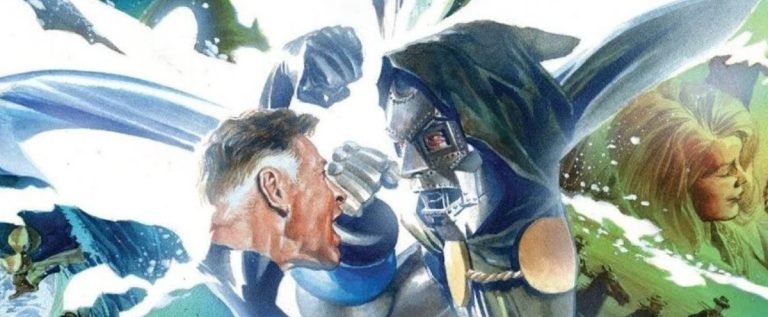
Marvel’s Midnight: Reed & Doom’s Darker Rivalry for Every Nerd
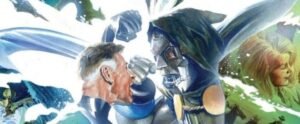
In the vast tapestry of comic book lore, few rivalries resonate with the intellectual intensity and personal animosity quite like that between Reed Richards, the brilliant leader of the Fantastic Four, and Victor von Doom, the enigmatic monarch of Latveria. For decades, their clashes have transcended mere superheroics, delving into philosophical debates about science, power, and destiny. This enduring conflict, born from a fateful university experiment that left Victor scarred and consumed by a thirst for superiority, has shaped the Marvel Universe in profound ways. It’s a cornerstone narrative, a timeless tale of what happens when two colossal intellects collide, one driven by exploration and the other by conquest.
However, the beauty of comic book storytelling lies in its boundless capacity for reinvention. The multiverse, a concept long cherished by comic book aficionados, allows creators to explore alternate realities, to twist familiar narratives, and to shed new light on beloved characters. It is within this spirit of audacious creativity that Marvel Comics has embarked on a truly radical reimagining, delving into the shadowy depths of its ‘Midnight Universe’ to present a startlingly fresh take on the Reed Richards and Doctor Doom saga. This new iteration, unveiled in ‘Midnight Fantastic Four #1’, promises not merely a different version of events, but a fundamental shift in the very essence of their rivalry, imbuing it with a tragic and deeply personal horror.
This is not a simple retelling; it is a narrative inversion that challenges our preconceived notions of heroes and villains, fate and free will. By weaving elements of cosmic horror and profound emotional regret into the very fabric of Doom’s origin, the ‘Midnight Universe’ offers a darker, more complex psychological landscape. It forces readers to confront the moral ambiguities inherent in genius and the devastating consequences of hubris, setting the stage for a conflict rooted not in envy, but in the raw, visceral pain of vengeance and the heavy burden of guilt. This groundbreaking approach is designed to captivate a discerning audience, pushing the boundaries of what these iconic characters can represent and exploring the darkest corners of their shared history. For any dedicated fan, understanding this dramatic shift is crucial to appreciating the evolving narrative landscape of Marvel Comics.
The Enduring Appeal of Marvel’s Iconic Rivalries for Every Nerd
Marvel’s Midnight Fantastic Four #1 radically reinterprets the classic rivalry between Reed Richards and Doctor Doom, shifting its origin from intellectual envy to guilt and vengeance within a Lovecraftian horror setting. This new narrative introduces a tragic, more human dimension to Victor von Doom’s transformation, driven by Reed’s culpability and the unexpected emergence of two Doctor Dooms.
The rivalry between Reed Richards and Doctor Doom stands as one of the most compelling and intricate narratives in the entire Marvel pantheon. In the mainstream Marvel Universe, their conflict originates during their university days, where Reed, already a prodigious talent, foresaw critical flaws in Victor von Doom’s ambitious, albeit reckless, experiment to rescue his mother’s soul from Mephisto. Despite Reed’s warnings, Victor proceeded, resulting in a catastrophic explosion that disfigured his face and fueled an unyielding obsession with Reed, whom he blamed for his misfortune. This initial incident forged a bond of antagonism rooted in intellectual arrogance, bruised ego, and an insatiable desire for revenge and superiority.
The ‘Midnight Universe’, however, is a departure from this well-trodden path. It is a new horror-infused imprint from Marvel, designed to re-imagine classic heroes and villains through a darker, more unsettling lens, often incorporating elements of cosmic dread reminiscent of H.P. Lovecraft. This specific imprint allows creators the freedom to explore darker themes and character motivations without disrupting the established continuity of the main Marvel-616 universe. It provides a unique sandbox for radical storytelling, offering familiar characters in unfamiliar, terrifying circumstances, appealing to a specific niche within the broad fan base.
The fundamental shift introduced in ‘Midnight Fantastic Four #1’ is the relocation of blame and the redefinition of motivation. No longer is Doom’s animosity solely born from envy or a perceived slight to his genius. Instead, this new narrative casts Reed Richards as directly culpable for Victor’s horrific transformation. This shift imbues the conflict with a much heavier emotional weight, transforming Doom’s vengeance into a more primal, understandable response to genuine tragedy rather than mere intellectual rivalry. It’s a gamble that pays off by creating a more visceral and, arguably, more human element to a villain often seen as a caricature of megalomania.
A New Foundation of Guilt and Vengeance
In this chilling alternate reality, Reed Richards remains a genius of unparalleled intellect, but his methods are depicted as alarmingly reckless. He relies on mysterious pills, hinting at a darker edge to his brilliance and possibly a compromised state of mind. Victor von Doom, in stark contrast to his mainstream counterpart, is portrayed as Reed’s postgraduate assistant and a genuinely kind, trusting friend. He is shown as someone who believed implicitly in his mentor, even when others harbored doubts about Reed’s erratic genius.
The pivotal moment of their tragic divergence occurs during an experiment involving a portal to another dimension. As Reed, influenced by his mysterious pills, prepares to activate the machine, Victor intervenes, attempting to subtly alter the connection to aid the experiment. Unaware of Victor’s help, or perhaps simply too far gone in his drugged state, Reed activates the device. The ensuing cataclysm engulfs Victor, incinerating him and leaving behind a horrifying, carbonized skeletal form. When questioned about what he witnessed in the brief, terrifying void beyond the portal, Victor can only utter a single, chilling word, implying an unspeakable cosmic horror.
This is where the ‘Midnight’ narrative truly diverges from the classic origin. Here, the undeniable culpability for Victor’s horrific accident rests squarely on Reed Richards. Consequently, Victor’s burgeoning hatred is not fueled by wounded pride or intellectual envy, but by the raw, profound pain of betrayal and an insatiable hunger for vengeance. He becomes the living embodiment of Reed’s greatest regret, a constant, grotesque reminder of the consequences of his scientific hubris and compromised judgment. This dramatic shift creates a much darker, more emotionally resonant foundation for their legendary feud.
The Dual Legacy of Doctor Doom: Cynthia von Doom’s Resurrection
Following the horrific incident at the university, the barely living, carbonized remains of Victor von Doom are transported back to his ancestral home of Latveria. It is there that his mother, Cynthia von Doom, emerges as a pivotal figure, undertaking the seemingly impossible task of resurrecting her son. Her methods are a formidable blend of ancient magic and advanced science, fusing mystical arts with technological prowess to bring Victor back from the brink of absolute annihilation.
Cynthia’s depiction in the Midnight Universe is a striking departure from her established portrayal in the mainstream Marvel lore. In the classic continuity, Cynthia was a Romani witch tragically dragged to hell by Mephisto, an event that fueled Victor’s lifelong obsession with both magic and science, largely in an effort to rescue her soul. In ‘Midnight Fantastic Four #1’, however, she is presented as a powerful, living sorceress, donning a green cloak, medieval-inspired armor, and a menacing mask. She is not a victim to be saved, but a dominant force, fully in command of formidable mystical arts, clearly an imposing figure of authority and power.
This dramatic reimagining introduces an unprecedented concept: the existence of two Doctor Dooms—mother and son—sharing the mantle of the armored monarch. This dual leadership fundamentally alters the power dynamic within Latveria and within the broader Marvel narrative. Cynthia, now a formidable sorceress and a potential equal or even superior to Victor in magical might, adds a layer of complexity and an entirely new dimension to the character of Doctor Doom. This innovative twist not only deepens Victor’s personal lore but also opens up a wealth of new storytelling possibilities, exploring the themes of lineage, power, and the terrifying bond between a mother and her vengeful son.
Comparisons: Classic vs. Midnight Rivalry Dynamics
Understanding the nuances of the Reed Richards and Doctor Doom rivalry requires a clear comparison between its classic iteration and the radical reinterpretation found in Marvel’s Midnight Universe. The core elements remain—two brilliant minds locked in conflict—but the motivations, origins, and supporting cast have been fundamentally altered, creating distinct narrative landscapes.
| Aspect | Classic Marvel Universe | Midnight Fantastic Four #1 |
|---|---|---|
| Reed Richards | Brilliant, often arrogant, driven by scientific exploration. | Genial, but reliant on risky methods and mysterious pills; culpable. |
| Victor von Doom | Arrogant, brilliant, seeks to prove intellectual superiority, driven by envy. | Kind, trusting assistant, believes in Reed; victim of Reed’s recklessness. |
| Origin of Disfigurement | Victor’s flawed experiment, ignored Reed’s warning. | Reed’s drugged activation of a dimension portal, Victor tried to help. |
| Source of Rivalry | Victor’s envy, obsession, and perceived intellectual superiority over Reed. | Victor’s pain, desire for vengeance, stemming from Reed’s direct guilt. |
| Cynthia von Doom | Tragically deceased witch, trapped in hell, driving Victor’s quest. | Powerful living sorceress, resurrects Victor, becomes a second Doom. |
The table above highlights the stark contrasts, but the emotional implications are even more profound. In the classic narrative, Doom’s hatred is largely self-inflicted, born from his own hubris and refusal to heed warnings. This makes him a tragic figure, but one whose vengeance often feels petty and rooted in a desire for validation. The Midnight version, however, shifts the burden of blame. Reed’s direct culpability makes Victor’s hatred a more visceral, understandable response to genuine, catastrophic betrayal. This changes Doom from an arrogant rival into a tortured victim seeking justice, making him a more sympathetic, albeit still terrifying, antagonist.
Furthermore, the introduction of Cynthia von Doom as an active, powerful Doctor Doom figure completely alters the established family dynamic and the power structure of Latveria. The classic narrative focuses on Victor’s solitary quest for power and his attempts to save his mother from Mephisto. The Midnight Universe presents a united front, a maternal figure who not only brings her son back but also shares his mantle, potentially doubling the threat and adding a fascinating layer of matriarchal mysticism to Doom’s empire. This recontextualizes Doom’s origins, moving beyond personal vendetta to explore themes of inherited power and shared vengeance within a Lovecraftian, horror-infused setting.
Benefits: What This Reimagining Offers to the Narrative and the Fans
Marvel’s decision to radically reinterpret the Reed Richards and Doctor Doom rivalry within the Midnight Universe brings a multitude of benefits, enriching the narrative landscape and offering fresh perspectives for readers. This approach demonstrates a keen understanding of how to maintain relevance and surprise within a long-established fictional universe.
Revitalizing a Timeless Conflict
One of the primary advantages of this reimagining is its ability to revitalize a timeless conflict without resorting to destructive retcons of the mainstream continuity. By situating this new narrative within a distinct alternate reality, Marvel can experiment with drastic character changes and plot twists, offering new dramatic weight and emotional complexity to familiar characters. This creative freedom allows the storyline to explore darker themes, psychological depth, and cosmic horror elements that might be too disruptive for the main Marvel-616 universe. For readers who have followed the classic rivalry for decades, it provides an exciting “what if” scenario that keeps the core dynamic engaging and unpredictable.
Moreover, this fresh take acts as a powerful magnet for new readers, particularly those drawn to horror, dark fantasy, or more mature interpretations of superhero mythos. It provides an accessible entry point to characters like the Fantastic Four and Doctor Doom, offering a compelling narrative that stands on its own while hinting at the rich history of the Marvel Multiverse. This “safe restart” methodology ensures that Marvel can continue to innovate and push creative boundaries, demonstrating that even their most iconic characters can be approached from entirely new and daring angles, fostering continuous evolution within its storytelling repertoire.
Deeper Character Exploration for the Keen Nerd
For the astute comic book reader, this reimagining provides an unparalleled opportunity for deeper character exploration. Reed Richards, traditionally portrayed as brilliant but sometimes emotionally detached, is given a tragic flaw rooted in his reliance on mysterious pills and his direct culpability for Victor’s transformation. This adds layers of guilt and fallibility that complicate his heroic image, forcing an examination of his genius beyond mere scientific prowess, exploring the moral and ethical costs of his ambition.
Victor von Doom, in turn, gains a more sympathetic and tragic origin. His transformation from a kind, trusting assistant into the armored monarch of Latveria is no longer solely an act of wounded pride but a desperate, vengeful response to profound betrayal and physical horror. This shift allows for a more nuanced portrayal of his villainy, grounding his hatred in tangible pain rather than just ego. Furthermore, the elevation of Cynthia von Doom to an active, powerful, and potentially co-ruling Doctor Doom adds a formidable matriarchal dimension to Victor’s lore. It explores the themes of inherited power, shared destiny, and the dark bonds of family, providing a rich new vein for character development and interaction that seasoned fans will undoubtedly appreciate and dissect.
Limitations: Potential Challenges and Criticisms
While the ‘Midnight Fantastic Four #1’ offers exciting new narrative possibilities, it is not without potential limitations and criticisms. Reinterpreting iconic characters and long-standing rivalries always carries inherent risks, particularly when navigating the expectations of a dedicated fanbase.
Navigating Fan Expectations
One of the most significant challenges for any radical reimagining is managing the expectations of an established fanbase. Many long-time readers hold a deep affection for the classic rivalry between Reed Richards and Doctor Doom, appreciating its established lore and character motivations. Introducing a completely different origin story, even in an alternate universe, can sometimes be met with resistance from traditionalists who might perceive it as an unnecessary deviation or a dilution of the original’s impact. There is a delicate balance to strike between innovation and reverence for source material, and not every fan will embrace such a significant departure from the familiar.
Furthermore, while alternate realities offer creative freedom, they can sometimes dilute the stakes. When a story is known to exist outside the main continuity, some readers might find it less impactful, perceiving the events as inconsequential to the broader Marvel narrative. While ‘Midnight Fantastic Four #1’ is deeply engaging, the inherent knowledge that it doesn’t directly affect the primary Marvel Universe might reduce the sense of urgency or consequence for a segment of the audience, potentially hindering its overall emotional resonance despite its compelling new direction. The very nature of a multiverse, while liberating for creators, can sometimes lead to a sense of narrative detachment for certain readers.
The Balance of Horror and Heroism
The ‘Midnight Universe’ explicitly integrates Lovecraftian horror, a genre known for its existential dread, cosmic indifference, and often nihilistic themes. Successfully blending this with the established heroic archetype of the Fantastic Four, who are traditionally symbols of scientific optimism and familial unity, presents a unique narrative tightrope walk. The challenge lies in maintaining the core essence of these characters—their intelligence, their bonds, their aspirations—while immersing them in a world of unsettling, cosmic terror. Overemphasizing the horror elements might risk alienating readers who are drawn to the Fantastic Four’s more optimistic and adventurous spirit, transforming them into something almost unrecognizable.
Conversely, if the Lovecraftian horror is not sufficiently integrated or feels merely superficial, the entire premise of the ‘Midnight Universe’ could fall flat. The narrative must ensure that the horror serves the story, enhancing character development and the overall plot, rather than simply being a decorative backdrop. Striking the right balance is crucial to ensure that the series delivers on its promise of a darker, more intense Fantastic Four experience without sacrificing what makes these characters endure. This delicate interplay between dread and heroism is a constant challenge for the creative team to master in this new, terrifying reality.
Common Errors: Pitfalls to Avoid in Alternate Universes
Creating compelling alternate universe narratives, while offering immense creative freedom, also presents several common pitfalls that, if not carefully navigated, can diminish the quality and impact of the storytelling. These errors often stem from a misunderstanding of what makes alternate realities resonate with an audience.
Pitfalls to Avoid in Alternate Universes
One frequent mistake in alternate universe stories is to change characters so drastically that they become unrecognizable, effectively forgetting the core essence that makes them beloved. While reinvention is the goal, completely abandoning a character’s foundational traits—their motivations, their moral compass, or their unique powers—can lead to a narrative that feels disconnected and ultimately hollow. The challenge is to alter circumstances and outcomes, not the intrinsic identity that defines the character for readers.
Another common error is making changes purely for shock value without providing genuine narrative depth or purpose. Twists and dark turns can be exciting, but if they don’t serve to develop characters, explore new themes, or advance a meaningful plot, they quickly become gratuitous and forgettable. Similarly, overcomplicating the lore of an alternate reality to the point of inaccessibility can alienate readers. While establishing new rules is necessary, an excessive amount of exposition or convoluted timelines can make the story difficult to follow, detracting from the emotional core. Finally, failing to establish clear, unique stakes within the alternate reality is a significant pitfall. If the consequences feel less impactful than those in the main continuity, readers may struggle to invest fully in the narrative, viewing it merely as a fleeting experiment rather than a substantial contribution to the character’s legacy.
Best Practices: Crafting Engaging Alternate Reality Stories
To successfully create an alternate universe story that captivates and endures, creators often employ several best practices. These strategies ensure that while the narrative diverges from the familiar, it remains resonant and meaningful, offering a unique yet impactful experience for readers.
Lessons from Successful Alternate Timelines
One key best practice for crafting engaging alternate reality stories is to clearly establish the rules and unique premise of the new universe from the outset. Readers need to understand what fundamental change created this reality and what its implications are. This clear foundation allows for consistent internal logic, even if that logic is fantastical or horrific, and prevents the narrative from feeling arbitrary. For instance, in ‘Midnight Fantastic Four #1’, the immediate introduction of Lovecraftian horror elements and Reed’s culpability sets a distinct tone and expectation.
Another crucial element is to focus on character agency within the altered reality. While the world may be different, the choices and struggles of the characters should remain central and impactful. Even if their pasts are changed, their present decisions should drive the narrative forward. Successful alternate timelines also offer meaningful commentary on the original source material. They don’t just tell a different story; they often use the alternate scenario to highlight or critique aspects of the main continuity, offering new insights into character motivations or societal themes. This provides a meta-narrative layer that enriches the reading experience, making the alternate story feel more purposeful than a mere ‘what if’. Finally, balancing familiarity with genuinely surprising twists is vital. Readers are drawn to alternate universes to see beloved characters, but they stay for the unexpected developments that challenge their understanding and offer fresh, thought-provoking perspectives.
Future Trends: The Impact of ‘Midnight’ and Beyond
The ‘Midnight’ line from Marvel Comics, particularly with its radical reimagining of the Reed Richards and Doctor Doom rivalry, signals significant future trends in comic book storytelling. These trends extend beyond the page, potentially influencing other media adaptations and the broader direction of Marvel’s narrative strategy.
The Expanding Multiverse of Marvel Narratives
Marvel’s increasing embrace of alternate realities and parallel universes is a clear and accelerating trend, exemplified by the ‘Midnight’ line. This strategy, previously explored in initiatives like *What If…?* and more recently propelled by the success of the *Spider-Verse* films and series, allows for an inexhaustible well of creative storytelling. The ‘Midnight’ Universe, with its focus on horror, specifically demonstrates Marvel’s willingness to diversify its genre offerings for iconic characters. We can anticipate more specialized imprints that explore beloved heroes through different genre lenses—be it noir, sci-fi cyberpunk, or high fantasy—catering to diverse audience segments and keeping the intellectual property fresh and dynamic. This approach not only provides an outlet for daring narrative experiments but also attracts new readers seeking different kinds of stories within the familiar Marvel framework, creating an ever-expanding narrative landscape.
Speculations on MCU Integration and the Future of Doctor Doom
The ‘Midnight Fantastic Four #1’ comic, with its emotionally charged and tragic origin for Doctor Doom, naturally sparks speculation about its potential influence on future Marvel Cinematic Universe (MCU) adaptations. With the announcement of *Avengers: Doctor Doom* slated for December, the question arises: will the film opt for a tragic, guilt-ridden portrayal of Doom, perhaps drawing inspiration from this comic’s exploration of Reed’s culpability? If the MCU chooses to lean into such a nuanced, humanized version of Victor von Doom, an actor of Robert Downey Jr.’s caliber would certainly have a rich, complex character to embody, moving beyond mere villainous ambition to explore profound themes of betrayal, pain, and vengeance. However, it is crucial to emphasize that any connection between the ‘Midnight’ comic and the forthcoming MCU film remains purely hypothetical, with no official confirmation. Nonetheless, the comic demonstrates the creative avenues open to Marvel, showcasing how alternative interpretations can enrich a character’s lore and provide compelling frameworks for adaptation across various media, keeping characters like Doctor Doom perpetually relevant and fascinating.
Why This Marvel Midnight Reimagining is Essential for Every True Nerd
For the discerning fan deeply invested in comic book lore and character evolution, the ‘Midnight Fantastic Four #1’ is far more than just another alternate universe story. It represents a vital re-examination of one of Marvel’s most foundational rivalries, offering a depth and darkness that enriches the overall narrative tapestry. This comic is essential because it demonstrates the enduring power of creative storytelling to challenge, surprise, and ultimately deepen our understanding of characters we thought we knew intimately, proving that there are always new facets to explore, even in the most iconic sagas.
The shift from intellectual envy to guilt and vengeance as the core driver of Doom’s animosity fundamentally changes the emotional landscape of the conflict. It transforms Victor von Doom into a figure of profound tragedy, a victim of Reed Richards’s reckless genius, making his subsequent villainy a more visceral and understandable response. This adds a compelling layer of moral ambiguity, forcing readers to question the nature of heroism and villainy, and the true cost of unchecked scientific ambition. For a true fan, this nuanced character development provides rich material for discussion and analysis, expanding the intellectual engagement with the source material beyond simple good-versus-evil paradigms.
Furthermore, the introduction of Cynthia von Doom as an active, powerful Doctor Doom figure is an unprecedented twist that significantly alters the family dynamics and power structure of Latveria. This not only adds a formidable new character to the mythology but also explores themes of lineage, inherited power, and shared vengeance in a way that feels fresh and impactful. The ‘Midnight’ line as a whole provides a crucial creative sandbox for Marvel, allowing writers and artists to experiment with radical ideas, darker tones, and Lovecraftian horror elements without affecting the main continuity. This freedom ensures that the Marvel Universe remains vibrant and capable of surprising its most dedicated followers, keeping the passion alive for new generations of readers and ensuring that characters like Reed Richards and Doctor Doom continue to evolve in compelling and unexpected ways, solidifying their place as cultural touchstones for every true comic nerd.
FAQ: Unraveling the Midnight Fantastic Four #1
-
What is the Marvel Midnight Universe?
The Marvel Midnight Universe is a dedicated comic book imprint from Marvel Comics that reimagines classic Marvel heroes and villains through a darker, often horror-infused lens. These stories typically incorporate elements of cosmic dread, psychological suspense, and unsettling transformations, offering an alternate reality narrative that explores what might happen if familiar characters faced more terrifying, existential threats. It allows creators to take bold creative risks, providing fresh, mature takes on established lore without impacting the main Marvel-616 continuity. The universe aims to provide a distinct reading experience for fans who appreciate darker, more genre-specific interpretations of their favorite characters, appealing to those seeking deeper emotional and psychological impacts from their comic book narratives.
-
How does the Midnight Fantastic Four #1 change Reed Richards’ character?
In Midnight Fantastic Four #1, Reed Richards is still a genius, but his character takes a darker turn. He is depicted as resorting to risky scientific methods and shows a reliance on mysterious pills, suggesting a compromised or erratic state. Crucially, in this universe, Reed is directly responsible for Victor von Doom’s horrific disfigurement during a dimensional portal experiment. This shift imbues Reed with a profound sense of guilt, making him culpable for the very tragedy that defines his greatest rival. His genius is now tinged with a tragic recklessness and a heavy burden of personal responsibility, contrasting sharply with his often more ethically sound, though sometimes arrogant, mainstream counterpart.
-
What is the new origin of Doctor Doom’s hatred for Reed in Midnight?
The origin of Doctor Doom’s hatred for Reed Richards in the Midnight Universe is fundamentally different from the classic narrative. Instead of stemming from intellectual envy or wounded pride over his failed experiment, Victor’s animosity is born from immense pain, betrayal, and a deep desire for vengeance. In this reality, Reed Richards’s reckless activation of a dimensional portal directly causes Victor’s carbonization. This makes Victor a victim of Reed’s actions, and his subsequent transformation into Doctor Doom is driven by a primal, justified rage against the man responsible for his suffering, transforming him into a literal embodiment of Reed’s deepest regret.
-
Who is Cynthia von Doom in the Midnight Universe?
In the Midnight Universe, Cynthia von Doom, Victor’s mother, takes on a drastically different and more active role than in the mainstream Marvel continuity. Instead of being a deceased witch trapped by Mephisto, she is a powerful, living sorceress who utilizes a formidable combination of magic and science. She is responsible for resurrecting her carbonized son, Victor, after his accident with Reed Richards. Cynthia is portrayed as a dominant figure, donning a green cloak, medieval armor, and a mask, effectively becoming a second Doctor Doom alongside her son. Her presence adds a unique matriarchal and mystical layer to Doom’s legacy, establishing a dual leadership within Latveria.
-
How many Doctor Dooms are there in Midnight Fantastic Four #1?
Midnight Fantastic Four #1 introduces the unprecedented concept of two Doctor Dooms. Following his horrific accident, Victor von Doom is resurrected by his mother, Cynthia von Doom. She then assumes an armored, mystical form, becoming a formidable Doctor Doom figure herself. This means both Victor von Doom and his mother, Cynthia von Doom, operate as the armored monarchs of Latveria, creating a unique dual legacy for the iconic villain. This innovative twist doubles the threat and adds a fascinating new dimension to the character’s mythology, exploring themes of shared power and familial vengeance.
-
Are the Midnight stories canon with the main Marvel Universe?
No, the Midnight Universe stories, including Midnight Fantastic Four #1, are not considered canon with the main Marvel-616 Universe. They exist as part of a distinct, alternate reality. This approach allows Marvel Comics to explore radical reinterpretations of its characters and introduce darker, horror-infused narratives without altering the established continuity of its primary universe. These stories serve as standalone explorations of “what if” scenarios, offering creative freedom to writers and artists while providing readers with fresh perspectives on beloved characters in new, often unsettling, contexts.
-
Who are the creators behind Midnight Fantastic Four #1?
The creative team behind Midnight Fantastic Four #1 includes renowned comic book talents such as Benjamin Percy and Kev Walker. Benjamin Percy is known for his work on various Marvel titles, often bringing a darker, more intense tone to his stories. Kev Walker is a celebrated artist with a distinctive style, recognized for his ability to render dynamic action and expressive characters. Together, their collaboration brings to life the Lovecraftian horror and radical character reimagining that defines this particular installment of the Midnight Universe, ensuring a compelling narrative with striking visuals.
-
Could the Avengers: Doctor Doom movie be influenced by this comic?
While Midnight Fantastic Four #1 offers a compelling, tragic, and emotionally resonant origin for Doctor Doom rooted in Reed Richards’s guilt, any direct influence on the upcoming *Avengers: Doctor Doom* movie remains purely hypothetical. Marvel Studios often draws inspiration from various comic book storylines but rarely adapts them verbatim. However, the comic does present a blueprint for a more human, revenge-driven, and sympathetic portrayal of Doom, which could resonate with the studio’s desire for complex villains. Should the film opt for a tragic tone rather than one centered solely on vanity, this comic provides a rich thematic framework for such an interpretation, allowing for a multifaceted villain.
The Next Step: Embracing the Evolution of Marvel’s Narratives
The ‘Midnight Fantastic Four #1’ stands as a compelling testament to Marvel’s enduring capacity for innovation and its willingness to delve into the darker, more complex facets of its legendary characters. This radical reimagining of the Reed Richards and Doctor Doom rivalry is not merely an alternate take; it’s a profound narrative experiment that offers new dimensions of character, conflict, and cosmic horror. It serves as a vibrant reminder that even the most iconic stories can be revitalized, presenting fresh challenges and insights for both creators and an eager audience.
For fans, this series represents an invitation to engage with Marvel lore on a deeper, more analytical level. It prompts contemplation on the nature of heroism, the consequences of scientific ambition, and the true cost of vengeance. The introduction of a culpable Reed and a vengeful Victor, along with the unprecedented dual presence of two Doctor Dooms, creates a narrative rich with emotional weight and moral ambiguity. This approach not only breathes new life into a classic confrontation but also securely positions the ‘Midnight’ line as a crucial sandbox for Marvel to explore audacious creative territories.
As the Marvel Universe continues to expand across comics, film, and television, these bold alternate realities play an increasingly vital role. They provide a safe space for experimentation, allowing for the kind of boundary-pushing storytelling that keeps the entire franchise vibrant and relevant. Whether this tragic interpretation of Doom’s origin finds its way into the broader cinematic landscape or remains a cherished gem within the comic pages, its impact is undeniable. It reinforces the idea that true storytelling power lies in the ability to constantly re-evaluate, reinterpret, and surprise, ensuring that characters like Reed Richards and Doctor Doom will continue to fascinate and challenge the imaginations of every devoted fan for generations to come. What are your thoughts on this bold new direction for the Fantastic Four?





Post Comment