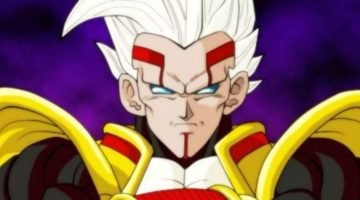
Why Dragon Ball GT’s Baby Vegeta Deserves a Canon Revival: An Otaku Deep Dive
In the vast, ever-expanding cosmos of Akira Toriyama’s Dragon Ball, few topics ignite as much fervent discussion among its dedicated fanbase—the Otaku—as the distinction between what is considered ‘canon’ and what resides in the realm of supplementary content. While Dragon Ball Super continues to push the boundaries of power and mythology within the established timeline, a captivating villain from a past, non-canonical era frequently emerges in these debates: Baby from Dragon Ball GT. Despite GT’s contentious reception and its formal exclusion from the main storyline endorsed by Toriyama, Baby stands out as an antagonist with a unique premise and a deeply personal vendetta, prompting many to argue passionately for his rightful inclusion in the official canon.
Dragon Ball GT, which aired from 1996 to 1997, occupies a peculiar space in the franchise’s history. Unlike Dragon Ball Z and Dragon Ball Super, which are directly supervised by Toriyama and published by Shueisha, GT was largely an anime-original production by Toei Animation, positioned as a sequel to Z. This distinction has long relegated its events, characters, and transformations, including the popular Super Saiyan 4, to a ‘what if’ scenario for most fans. Yet, amidst this non-canonical landscape, Baby emerged as a particularly sophisticated and menacing threat, a parasitic alien whose very existence is a direct consequence of Saiyan aggression, specifically King Vegeta’s genocidal campaign against the Tsufurujins.
The concept of a villain born from a legacy of galactic injustice resonates with a depth often praised in modern storytelling. Baby isn’t merely a force of destruction; he is the embodiment of historical grievance, seeking vengeance against the Saiyans for the destruction of his race. This complex motivation, coupled with his terrifying ability to parasitize and control other beings, including Vegeta himself, culminates in the formidable Super Baby 2 form—a powerful visual and narrative spectacle. For the discerning Otaku, such a character offers more than just a power challenge; he presents a moral dilemma, a reflection on past deeds, and a truly engaging antagonist whose rage is rooted in a comprehensible, albeit destructive, foundation.
The current landscape of Dragon Ball Super, with its exploration of new universes, divine beings, and increasingly complex power dynamics, could greatly benefit from a villain like Baby. As the series seeks new narrative directions, the potential to integrate a character with such a compelling backstory, one that could tie directly into the Saiyan’s tumultuous history and even introduce new, nuanced aspects to Vegeta’s character arc, is immense. This isn’t just about nostalgia; it’s about recognizing powerful storytelling elements that, with careful adaptation, could enrich the Dragon Ball lore, provide fresh challenges for Goku and his allies, and offer the devoted Otaku community a villain worthy of the franchise’s highest narrative standards. The debate isn’t merely wishful thinking; it’s a strategic suggestion for evolving a beloved saga.
The Otaku’s Plea: Why Baby Vegeta Deserves a Canonical Resurrection
Baby Vegeta’s potential canonical inclusion is a fervent wish for many Dragon Ball enthusiasts, stemming from his unique origin, compelling motivation, and distinct threat level that offers rich narrative possibilities for the ongoing Dragon Ball Super saga.
The core of Baby’s appeal lies in his origin as the last remnant of the Tsufurujin race, a technologically advanced civilization decimated by the Saiyans, led by King Vegeta. This backstory imbues Baby with a clear, understandable, and deeply personal motivation: utter vengeance against all Saiyans. Unlike many Dragon Ball villains who seek power or destruction for its own sake, Baby’s actions are driven by a historical trauma, a genocidal act that pre-dates Goku’s era. This depth of character allows for storytelling that explores themes of inherited guilt, galactic justice, and the consequences of colonial expansion, elements that can add significant weight to the Dragon Ball narrative.
His parasitic nature is another element that sets him apart. Baby doesn’t just fight; he corrupts and controls, slowly turning allies against each other and forcing the heroes to confront not just a physical threat, but a psychological one. The iconic possession of Vegeta, transforming him into Super Baby 2, is a narrative masterstroke, forcing Goku to face a dark mirror of his closest rival. This mechanism could introduce new forms of conflict and character development, particularly for Vegeta, who could be forced to confront the dark legacy of his lineage and his own past actions, potentially even leading to unprecedented power-ups or moral dilemmas.
Furthermore, the Tsufurujins themselves offer untapped canonical potential. Their advanced technology and their tragic history could be explored in greater detail, perhaps even revealing connections to other alien races or technologies in the Dragon Ball universe. While mentions of the Tsufurujins in official canon are scarce, their existence is acknowledged, providing a fertile ground for adaptation without requiring a complete rewrite of established lore. The integration of Baby could also pave the way for a deeper exploration of the Saiyan homeworld’s history before its destruction, adding layers to the lore that fans, particularly the history-conscious Otaku, would undoubtedly appreciate.
The narrative stakes with Baby are not merely about who is stronger, but about confronting a historical wrong. This distinguishes him from villains like Frieza, whose motivations are more about conquest and personal power, or even Beerus and Zamasu, who operate on cosmic scales. Baby brings the conflict back to a deeply personal, racial level, making the struggle profoundly resonant and potentially offering unique resolutions that don’t solely rely on physical strength, but perhaps on understanding or atonement.
A Legacy of Vengeance: Baby’s Core Narrative Strength
Baby’s narrative strength lies in his deeply personal and historically justified quest for vengeance, making him a complex antagonist whose motivations resonate beyond simple power lust or ambition. His story offers a compelling reflection on past atrocities and their far-reaching consequences.
This emotional core provides a rich tapestry for storytelling, allowing writers to delve into Saiyan history and present a villain who forces the heroes, especially Vegeta, to confront the darker aspects of their own heritage. Such a conflict transcends typical hero-villain dynamics, offering moral complexity and potentially profound character development for the entire cast.
The Tsufurujin Conundrum: Integrating a Forgotten History
Integrating the Tsufurujins and Baby into the official canon would require careful adaptation, as their specific history with King Vegeta needs to align with existing lore while potentially introducing new facets of pre-Frieza Saiyan dominance. This process could reveal new layers to the Saiyan race’s past.
The challenge, and opportunity, lies in crafting a seamless narrative that enriches the universe without contradicting established facts, potentially exploring how Baby’s survival or the Tsufurujin legacy could subtly influence current events or characters in Dragon Ball Super.
Comparisons: Broly’s Path to Canonization and Baby’s Potential
The successful canonization of Broly serves as a powerful precedent for why Baby’s return isn’t just fan speculation but a viable narrative pathway for the Dragon Ball franchise.
Broly, originally a non-canonical movie villain, was reimagined and integrated into the official continuity with the film Dragon Ball Super: Broly. This adaptation kept his core identity—the Legendary Super Saiyan with immense, uncontrollable power—while refining his backstory and motivations to fit seamlessly into the current canon. His popularity among fans, the Otaku community particularly, was a clear factor in this decision, demonstrating that popular elements from non-canon material can be successfully re-contextualized.
Similarly, the recent reveal of Super Saiyan 4-like aesthetics in the upcoming Dragon Ball Daima, a series directly overseen by Akira Toriyama, further blurs the lines between what was once exclusively GT and the main canon. While not a direct canonization of SSJ4 itself, it shows an openness to incorporating popular visual and conceptual elements from GT into new, officially sanctioned projects. This signals a willingness within Toei Animation and Shueisha to revisit and re-imagine beloved aspects of the franchise, creating an opportune moment for a character like Baby.
Baby’s integration could follow a similar path to Broly’s: retaining his essence as a Tsufurujin parasite driven by revenge against Saiyans, but with an updated origin story that fits within the established timeline of King Vegeta’s reign or even earlier. This could involve a narrative adjustment, such as a dormant Baby being discovered, or his creation being a more isolated event. The existing lore provides enough flexibility for such an adaptation, particularly given the fluid nature of flashbacks and historical revelations within Dragon Ball.
Moreover, the idea of an alliance with Frieza, hinted at in fan theories, presents a compelling narrative twist. Frieza, ever the opportunist, could view Baby as a tool to further torment and eradicate Saiyans, creating an unlikely and dangerous partnership. This would also tie into Frieza’s evolution, potentially even inspiring a “Black Frieza” style transformation for Baby, showcasing new levels of parasitic evolution and power. The possibilities for complex alliances and dynamic conflicts are vast, making Baby a villain who could truly shake the foundations of the current Dragon Ball Super narrative.
| Feature | Non-Canonical Elements (Original GT/Movies) | Canonical Integration Potential (Baby) |
|---|---|---|
| Origin Story | Genocidal past by King Vegeta | Retain core vengeance, adapt specifics to fit current timeline/lore |
| Motivation | Vengeance for Tsufurujin race | Maintain strong, clear, and relatable anti-Saiyan drive |
| Abilities | Parasitic possession, mind control, power absorption | Essential; offers unique combat/narrative challenges |
| Appearance | Distinctive Tuffle machine-organism, Super Baby 2 | Can be visually updated while retaining iconic look, as seen with Broly |
| Transformations | Super Saiyan 4 (GT exclusive) | Could be a catalyst for new forms, or inspire canonical equivalents (Daima precedent) |
| Narrative Role | Primary antagonist of GT arc | Introduce as a new threat, potentially allied with existing canonical villains like Frieza |
| Fan Reception | Popular despite non-canon status | Leverage existing popularity for fresh stories |
What Baby’s Canonization Offers the Dragon Ball Franchise
Canonical inclusion of Baby provides a unique antagonist with a deeply rooted vendetta against the Saiyans, offering a compelling narrative that delves into the race’s problematic past and delivers a villain with clear, understandable motivations that resonate with a mature Otaku audience.
For fans, Baby’s distinct visual design and the sheer horror of his parasitic abilities offer a refreshing change from power-level-focused threats, introducing psychological warfare and moral complexities. For the creators, it’s an opportunity to leverage a popular GT element without re-opening the entire storyline, offering new avenues for character development, particularly for Vegeta, and dynamic storytelling.
Limitations & Risks: Navigating Nostalgia and Narrative Integrity
While the prospect of Baby’s canonical inclusion excites many Dragon Ball Otaku, such an undertaking is not without its significant challenges and potential pitfalls that must be carefully managed to preserve the integrity of the established lore.
The primary risk lies in the potential for nostalgia to overshadow the careful narrative construction built by Akira Toriyama in Dragon Ball Z and Super. Simply re-introducing Baby as he was in GT, without significant adaptation, could clash with established timelines, character developments, and the power scaling that has evolved immensely since GT’s conclusion. The canon has moved beyond certain concepts, and forcing a square peg into a round hole risks creating inconsistencies that would alienate a portion of the fanbase, even those who appreciate GT.
Another significant limitation involves the Tsufurujin lore. While their existence is subtly acknowledged, their detailed history and the specifics of King Vegeta’s actions are largely unexplored in the current canon. Integrating Baby would necessitate fleshing out this history, and any new information would need to align perfectly with existing Saiyan mythology without contradicting established events or character motivations. This requires a delicate touch to avoid retconning key historical points that fans have grown accustomed to, potentially opening a Pandora’s Box of continuity issues.
Furthermore, the mechanics of Baby’s parasitic abilities, while unique, would need to be re-evaluated within the context of Dragon Ball Super’s advanced power levels and techniques. How would a parasite like Baby affect beings with Ultra Instinct or Ultra Ego? Would his power absorption be effective against deities or beings who operate on different planes of existence? These are questions that would require thoughtful answers to maintain the villain’s threat level and credibility in a universe where gods of destruction and angels are active players. The challenge lies in making Baby formidable without resorting to arbitrary power boosts that undermine the established hierarchy.
The creative teams at Toei Animation and Shueisha would need to find a precise balance: harnessing the popular elements of Baby’s character while thoroughly modernizing his integration to fit the contemporary narrative of Dragon Ball Super. This means respecting the foundational work of Toriyama and Toriyama-sensei, ensuring that any adaptation enhances, rather than detracts from, the rich tapestry of the Dragon Ball universe. The goal should be to create new, compelling stories that feel natural to the canon, rather than simply offering fan service for fan service’s sake, a distinction the astute Otaku quickly discerns.
Common Misconceptions & Best Practices for Integration
A common misconception is that Baby’s canonical inclusion means simply replicating the entire GT arc. Instead, best practices suggest extracting the core concept—a Tsufurujin parasite seeking vengeance against Saiyans—and adapting it to the current Dragon Ball Super narrative framework, preserving Baby’s essence while updating his role and powers.
This strategic adaptation allows for reimagined interactions, such as an improbable alliance with Frieza, and provides opportunities to tie into existing character arcs, offering a fresh yet familiar threat. It’s about evolution, not duplication, creating a villain whose legacy is acknowledged but whose story is new.
Future Trends: Dragon Ball Super, Daima, and the Ever-Evolving Canon
The landscape of the Dragon Ball franchise is currently undergoing a dynamic evolution, with new projects and narrative directions constantly emerging. These trends offer fertile ground for re-evaluating and potentially integrating popular non-canonical elements, such as Baby, into the official lore.
Dragon Ball Super continues to expand the universe, introducing new forms, characters, and cosmic threats. The series has demonstrated a willingness to explore complex themes and push character development, particularly for Vegeta, who has grappled with his Saiyan heritage and the dark past of his race. A canonical Baby could directly tap into these themes, providing a potent catalyst for Vegeta’s further evolution or even forcing Goku to confront the consequences of his ancestors’ actions, adding emotional depth that the Otaku often craves.
The announcement of Dragon Ball Daima, with Akira Toriyama’s direct involvement and the prominent display of Super Saiyan 4-esque designs, is a clear signal. While Daima itself is not a sequel to Super, its visual homage to GT’s signature transformation suggests that even elements once considered strictly non-canon can inspire or be incorporated into Toriyama-led projects. This blurs the lines and opens doors for other beloved GT concepts to be re-imagined. The aesthetic of SSJ4, for instance, a visual highlight for many fans, is finding a new lease on life, implying that successful designs and concepts are not permanently off-limits.
Furthermore, the ongoing development of characters like Frieza, especially with his recent “Black Frieza” transformation, indicates a creative drive to continuously elevate existing villains. Introducing Baby, perhaps as a being that Frieza could exploit or even fear, would create intricate power dynamics and unexpected alliances. Imagine a scenario where Baby’s parasitic abilities threaten even the strongest beings, forcing a temporary truce or an unlikely collaboration between heroes and villains. The possibilities for narrative intrigue are boundless.
Fan theories and community discussions play a significant role in this evolution. The persistent calls from the Otaku for Baby’s return are not merely whispers; they are a clear indication of a character’s enduring appeal and narrative potential. As Dragon Ball explores its future, acknowledging these passionate demands and strategically incorporating such elements can refresh the franchise, keeping it relevant and exciting for long-time fans while attracting new generations. The future of Dragon Ball is one of continuous reinvention, and Baby stands as a compelling candidate for that next great narrative leap.
Beyond GT: Fueling the Otaku’s Imagination with Canonical Baby
Integrating Baby into the official Dragon Ball canon represents more than just bringing back a popular villain; it signifies a strategic embrace of storytelling depth and fan engagement, profoundly enriching the universe for every dedicated Otaku.
The introduction of Baby, with his deeply rooted vendetta born from Saiyan history, would unlock new avenues for character exploration, particularly for Vegeta, forcing him to confront the dark legacy of his ancestors. This not only offers fresh narrative conflicts but also provides opportunities for unique power developments and moral dilemmas.
Such a move demonstrates a forward-thinking approach by the creators, showing a willingness to adapt popular non-canonical elements in ways that align with the current storyline’s evolution, as evidenced by precedents like Broly’s canonization and the influences seen in Dragon Ball Daima. It proves that compelling ideas, regardless of their original source, can find a meaningful place within the main narrative.
Ultimately, a canonical Baby would solidify the Dragon Ball universe’s ability to tell nuanced stories that resonate deeply. It would be a testament to how past events continue to shape the present, providing a villain whose threat is not just physical but historical and psychological, ensuring the franchise remains vibrant and unpredictable for years to come.
FAQ: Delving Deeper into Baby’s Canonical Potential
- Why is Dragon Ball GT not considered canon, and what does this mean for Baby?
Dragon Ball GT is largely a Toei Animation original production, following Dragon Ball Z. Unlike Dragon Ball Super, it was not directly based on Akira Toriyama’s manga or heavily supervised by him during its creation. This means its events, characters (like Baby), and transformations (like Super Saiyan 4) are officially considered separate from the main storyline that includes the original manga and Dragon Ball Super. For Baby, this classification means his dramatic backstory and formidable threat exist outside the official narrative, making any discussion of his return a hypothetical ‘what if’ scenario within the current canon.
- What makes Baby’s motivation unique compared to other Dragon Ball villains?
Many Dragon Ball villains, such as Frieza or Cell, are driven by conquest, power, or personal ambition. Baby, however, is unique in his singular, deeply rooted motivation: absolute vengeance for the extermination of his Tsufurujin race by the Saiyans. He is not seeking to rule the universe but to eradicate his oppressors, making him a complex antagonist whose rage is born from historical trauma. This provides a compelling narrative that delves into themes of inherited guilt and galactic justice, offering a moral dimension often absent in other foes.
- How could Baby’s origin story be adapted to fit Dragon Ball Super’s canon?
Adapting Baby’s origin would involve aligning the Tsufurujin’s tragic history with existing canonical Saiyan lore. This could mean establishing how a surviving Tsufurujin organism, perhaps a dormant sample or a final scientific creation, persisted through the destruction of Planet Vegeta. Writers could introduce him as a newly discovered ancient threat, or perhaps even have Frieza or another villain inadvertently unleash him. The key would be to retain his core motivation—Tsufurujin revenge—while refining the specifics of his creation or discovery to fit seamlessly within the Dragon Ball Super timeline and avoid contradictions.
- What narrative benefits would Baby’s inclusion bring to Vegeta’s character arc?
Baby’s unique backstory, where he literally possesses and corrupts Vegeta, offers profound opportunities for the Prince of Saiyans. It forces Vegeta to confront the dark legacy of his lineage and the atrocities committed by his ancestors, particularly King Vegeta. This encounter could push Vegeta further down his path of atonement and self-discovery, exploring his internal conflict with pride and responsibility. It might also unlock new forms or powers born from his struggle against this deep-seated racial guilt, providing a unique emotional challenge beyond mere power-level increases.
- Could Baby’s integration lead to new forms or abilities for the Z-Fighters?
Absolutely. Baby’s parasitic nature presents a unique threat that could necessitate entirely new strategies and power developments. Heroes might need to develop techniques to cleanse corruption, resist possession, or even temporarily sever their connections to their own ki to avoid control. Furthermore, a canonized Baby could be a catalyst for new transformations, either for the villain himself (e.g., a “Black Frieza”-style evolution for Baby) or for the Z-Fighters, who might need to tap into latent powers or unconventional methods to counter his unique form of attack, pushing the boundaries of their established abilities.
- How does the “Broly precedent” and Dragon Ball Daima influence Baby’s chances for canonization?
The “Broly precedent,” where a popular non-canonical movie villain was successfully reimagined and integrated into the official continuity, demonstrates that the franchise is open to adapting beloved elements from its broader history. Similarly, Dragon Ball Daima, with Akira Toriyama’s direct involvement showcasing Super Saiyan 4-like aesthetics, further blurs the lines between what was once exclusively GT and the main canon. These examples suggest a creative willingness to revisit and re-contextualize popular concepts. For Baby, this means there’s a clear pathway and an established precedent for integrating his compelling narrative and unique design into the canonical Dragon Ball universe, rather than dismissing him as purely non-canon.









Post Comment