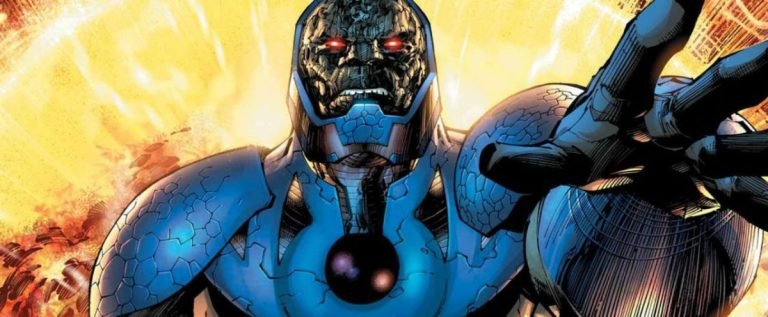
Darkseid’s Original Vision: A Shocking Revelation for Every Nerd
Darkseid. The name itself conjures images of unyielding power, cosmic dominion, and an iron will bent on universal subjugation. As the tyrannical ruler of Apokolips and one of Superman’s most formidable adversaries, his presence looms large over the DC Multiverse, embodying absolute evil. Yet, for all his current grandeur and terrifying might, the true origins of this iconic villain hold a fascinating secret: Darkseid was not always the unflappable force of destruction known today. His initial conception by the legendary Jack Kirby, a foundational architect of the comic book universe, paints a vastly different, and arguably more psychologically complex, portrait of the character. This revelation offers a compelling look at creative evolution, challenging preconceived notions and inviting fans, particularly the most dedicated among them, to explore the nuanced layers behind one of comics’ most enduring figures.
To truly appreciate this divergence, one must first understand the creative philosophy of Jack Kirby, often dubbed ‘The King of Comics.’ Kirby was not just a storyteller; he was a myth-maker, infusing his creations with profound themes and archetypal significance. His move to DC Comics in the early 1970s marked the birth of the ambitious ‘Fourth World’ saga, a grand narrative exploring cosmic good and evil through characters like the New Gods. It was within this expansive framework that Darkseid first emerged. Kirby’s original vision for the villain was rooted in a belief that evil, at its core, stems from cowardice—a profound statement that aimed to imbue even the most monstrous antagonist with a hidden vulnerability. This perspective suggested a Darkseid driven not by inherent strength, but by a desperate need to conceal profound weakness, wielding power like the Anti-Life Equation as a shield against his own fears.
This early conceptualization casts a new light on the villain’s motivations and the very nature of his quest for absolute control. Rather than being born of pure malevolence, this Darkseid was a tragic figure, one who equated weakness with ultimate failure and sought power as an antidote to an existential dread. His debut in a Superman’s Pal Jimmy Olsen issue, rather than a standalone epic, speaks to the organic, evolving nature of Kirby’s Fourth World, where even a cosmic tyrant could be introduced through unexpected avenues. The evolution of such a pivotal character underscores a critical lesson in storytelling: even the most solidified archetypes can possess surprising depths, revealing how creative interpretations can reshape a legacy, offering endless fodder for discussion among those who passionately follow the intricate tapestry of comic book lore.
Unpacking Darkseid’s Original Design: A Deeper Dive for Every Nerd
Darkseid’s initial concept by Jack Kirby fundamentally portrayed evil as an outgrowth of fear and insecurity, rather than sheer malevolence. Kirby envisioned the tyrannical ruler of Apokolips as a character driven by an underlying cowardice, relentlessly pursuing power, symbolized by the Anti-Life Equation, as a desperate means to mask his perceived weakness. This original psychological depth contrasts sharply with his later interpretations, offering a unique foundational layer to his motivations for universal dominion, which is a fascinating point for any comic book nerd to explore.
Jack Kirby, a visionary in the comic book medium, held a philosophical view that informed many of his creations. For Darkseid, he believed that true evil wasn’t merely brute force or overt cruelty, but an inherent fear of being vulnerable. This perspective aimed to make Darkseid a despicable, contemptible villain, not just because of his actions, but because of the petty, fear-driven motivations behind them. His insatiable lust for power, particularly the Anti-Life Equation, wasn’t about dominating others from a position of strength, but about insulating himself from any perceived fragility.
This original Darkseid was designed to be profoundly insecure, making his pursuit of the Anti-Life Equation less about cosmic ambition and more about a desperate need for control, to prove his own worth, or perhaps to simply avoid being weak. Such a characterization would lead to very different narratives, where Darkseid’s tactics might be more manipulative and less overtly confrontational, driven by a hidden agenda of self-preservation above all else. It’s a layer of complexity that often gets overlooked in discussions of his modern, more god-like portrayal, yet it provides a powerful contrast that enriches his overall mythology.
The Fourth World and Kirby’s Vision for Villainy
Darkseid was a central figure in Kirby’s ambitious ‘Fourth World’ saga, a sprawling cosmic epic that he brought to DC Comics after defining much of Marvel’s pantheon. The Fourth World was an attempt by Kirby to create an entirely new mythology, exploring themes of freedom versus oppression, destiny versus choice, and the inherent struggles between good and evil through larger-than-life characters like the New Gods. Darkseid represented the ultimate oppressive force, leading the desolate, war-torn planet Apokolips against the idyllic New Genesis, ruled by his benevolent counterpart, Highfather.
Within this epic scope, Kirby’s Darkseid was the embodiment of a specific kind of evil: that which preys on fear and seeks conformity. His goal with the Anti-Life Equation was not just to control minds, but to extinguish free will, effectively removing any challenge to his authority and, by extension, any threat to his own internal sense of power. This nuanced approach positioned Darkseid not merely as a brute, but as a manipulator of profound psychological forces, making his early stories resonate with a subtle terror that was distinct from later, more overt depictions of his destructive capabilities.
The Evolution of Darkseid: From Fearful Foe to Cosmic Threat
Over time, subsequent writers and artists refined Darkseid’s character, gradually transforming him from Kirby’s internally fearful concept into an almost invincible, indomitable force of cosmic destruction. This evolution cemented his status as a paramount villain, allowing the DC Universe to explore larger-scale conflicts and establishing him as a central figure in major cross-over events, significantly expanding his narrative potential beyond the initial psychological underpinnings laid by his creator.
The shift began as other creators took the reins of the Fourth World and its characters. While Kirby’s philosophical approach had its merits, the market and the unfolding narratives often demanded a more direct, overwhelming antagonist. Authors began to emphasize Darkseid’s raw power, his tactical brilliance, and his seemingly unshakeable resolve. He was less about hiding weakness and more about projecting an absolute, terrifying strength that could rival even Superman. This interpretation allowed for grander, more immediate conflicts, making Darkseid a universal threat whose schemes often endangered reality itself.
Defining Moments in Darkseid’s Transformation
This evolution wasn’t a sudden change but a gradual accumulation of new stories and interpretations. Iconic storylines like Cosmic Odyssey and later, Grant Morrison’s Final Crisis, played pivotal roles in solidifying Darkseid’s image as an ultimate, almost existential threat to the multiverse. In these narratives, he wasn’t just a powerful tyrant; he became a force of nature, a living embodiment of anti-life, chaos, and destruction. His influence expanded from Apokolips to encompass entire realities, making him the conductor of the destruction of the Absolute Universe and the entire DC Multiverse.
The crossover event in 1995 featuring Galactus from Marvel Comics, penned by John Byrne and Rick Taylor, further amplified Darkseid’s image as a cosmic-level menace. This epic encounter between two of comics’ most imposing cosmic beings helped to firmly establish Darkseid’s place in the pantheon of universal threats, demonstrating his capacity to contend with entities of immense power. This transition from a psychologically complex, albeit fearful, antagonist to an unyielding cosmic juggernaut allowed DC Comics to tackle more expansive, high-stakes narratives, fundamentally altering the trajectory of their overarching mythology.
Weighing the Interpretations: Value for Creators and Readers
Both the original, psychologically complex Darkseid and his later, invincible cosmic tyrant interpretation offer distinct values to both creators and readers. The fearful Darkseid provides a rich psychological canvas for nuanced storytelling, while the more formidable version enables expansive, high-stakes narratives that resonate with the grand scope of the DC Multiverse. This duality allows for diverse storytelling approaches that appeal to different facets of the audience.
For creators, Kirby’s original concept of a fearful Darkseid presents an unexplored psychological layer. It offers the opportunity to delve into the mind of a villain who, despite his power, is driven by fundamental insecurities. This could lead to stories that explore the origins of his fear, the coping mechanisms he developed, and the internal struggles that inform his tyrannical rule. Such narratives could provide a refreshing take on the character, adding depth that goes beyond mere destruction, revealing the fragile humanity (or lack thereof) beneath the god-like exterior.
Conversely, the more powerful, invincible Darkseid has proven invaluable for the publisher. This version allows for narratives of immense scale, pitting heroes against an ultimate evil that genuinely threatens all existence. Stories like Final Crisis would be impossible without a Darkseid capable of orchestrating multiversal collapse. This interpretation generates epic conflicts, driving sales and captivating audiences with its sheer spectacle. It also serves as a crucial dark counterpoint to characters like Superman, who symbolize truth, justice, and hope. Darkseid, in this context, embodies the antithesis of everything Superman stands for, providing a stark moral contrast that elevates their rivalry.
For readers, the discussion around these different interpretations highlights the dynamic nature of comic book characters. It demonstrates that a character can undergo significant changes in nature and motivation without losing their essential power or relevance. This evolution encourages appreciation for character development over time and across creative teams. The debate itself fosters community engagement, allowing fans to discuss which version they prefer and why, enriching the overall fan experience and deepening their connection to the lore.
Darkseid in Other Media: Cinema’s Untapped Potential and Fan Speculation
Darkseid’s presence in other media, particularly cinema, has been notably irregular and largely unfulfilled, despite his immense significance in the comics. While rumors circulated about an earlier version of the Justice League film featuring the character, his grand cinematic debut within the core DC Universe (DCU) remains elusive. This lack of a definitive big-screen appearance for such a pivotal villain represents both a challenge and an opportunity for future DC adaptations, fueling significant fan speculation and anticipation about when and how the Lord of Apokolips might finally arrive.
The journey of Darkseid to the big screen has been fraught with near misses and unconfirmed hints. For years, dedicated fans debated his potential inclusion in various live-action projects, with the Snyder Cut of Justice League finally delivering a glimpse of his imposing figure, albeit not as the primary antagonist. This brief appearance only intensified the demand for a full-fledged cinematic portrayal, demonstrating the character’s appeal and the audience’s readiness for his impactful presence. However, as the DCU undergoes a significant creative overhaul under James Gunn, the path for Darkseid’s live-action future is still being charted.
Future Glimmers and Comparisons: New Gods and Eternals
Recent developments offer tantalizing, albeit unconfirmed, hints regarding Darkseid’s animated future. In October 2026, James Gunn announced Josh Hutcherson and Mackenzie Davis as the voices for Mister Miracle and Big Barda in an adult animation series by Tom King. Enthusiastic fans quickly began speculating that an image released in conjunction with this announcement contained a subtle clue pointing to Darkseid’s presence. While this remains unconfirmed, such speculation underscores the deep engagement of the fan base and their eagerness for any sign of the Apokoliptian tyrant.
A compelling comparison can be drawn between Kirby’s two major cosmic creations: the Eternals (created in 1976 for Marvel) and the New Gods (created in 1971 for DC). While the Eternals have already made their cinematic debut within the Marvel Cinematic Universe (MCU), the New Gods, despite being created earlier and featuring iconic characters like Darkseid, still lack a concrete forecast for their widespread introduction into the new DCU. This disparity highlights the varying approaches taken by rival studios to adapt the rich, complex mythologies conceived by Kirby, keeping the debate alive among fans about how DC will eventually bring its own pantheon of cosmic beings to life.
| Aspect | Kirby’s Original Darkseid (1970s) | Modern Darkseid (Post-Kirby Evolution) |
|---|---|---|
| Core Motivation | Cowardice, fear of weakness, seeking power as a shield. | Absolute malevolence, desire for universal domination, embodiment of Anti-Life. |
| Psychological Depth | High; internal conflict, underlying insecurity driving actions. | Lower; driven by pure, externalized evil and raw power. |
| Perceived Strength | Villainous, but with a vulnerable, despicable core. | Almost invincible, god-like, cosmic threat. |
| Narrative Potential | Psychological thrillers, explorations of evil’s origins, character studies. | Epic cosmic conflicts, multiversal destruction, grand hero vs. villain showdowns. |
| Relation to Superman | Oppression of free will, philosophical contrast. | Existential threat, ultimate physical and ideological foe. |
The Enduring Legacy of Darkseid: Why Every Nerd Should Care About His Evolution
Darkseid’s journey from a fearful tyrant to an omnipotent cosmic force provides invaluable insights into character development, the collaborative nature of comic book storytelling, and the dynamic relationship between creator vision and ongoing editorial needs. Understanding this evolution enriches the appreciation for the character’s depth and influence, making it a crucial point of interest for every dedicated comic book nerd who seeks to grasp the full scope of DC’s rich narrative tapestry.
The evolution of Darkseid showcases the power of reinterpretation in a continuous narrative medium like comic books. It’s a testament to the flexibility of strong character foundations that can adapt and grow under different creative teams, responding to the demands of new eras and evolving storytelling trends. This process is not unique to Darkseid, but his specific transformation highlights how a character can maintain their essence while dramatically altering their core motivations, providing a fascinating case study for long-term narrative arcs and character longevity in popular culture.
Lessons in Character Development and Creative Freedom
This duality in Darkseid’s portrayal underscores a broader discussion about creative freedom versus established canon. Jack Kirby’s initial concept was bold and philosophically charged, reflecting his unique worldview. Subsequent creators, while respecting Kirby’s foundation, built upon it to fit the evolving needs of the DC Universe, creating a more direct and universally menacing antagonist. This balance between honoring a creator’s original intent and adapting a character for new generations is a constant negotiation in long-running franchises.
For any true nerd, delving into these layers offers a deeper connection to the material. It moves beyond simply consuming stories to understanding the meta-narrative of their creation and development. It allows fans to appreciate the strategic decisions made by publishers and creators, the impact of different authors’ voices, and how these choices collectively shape the enduring legacy of beloved characters. Darkseid’s story is not just about a villain; it’s about the very art of storytelling and the intricate dance between imagination, collaboration, and evolution within the comic book industry.
Frequently Asked Questions About Darkseid’s Original Concept
What was Jack Kirby’s original vision for Darkseid’s character?
Jack Kirby, the creator of Darkseid and the Fourth World mythology, originally conceived Darkseid as a character whose evil stemmed from profound cowardice. Kirby believed that at its core, malevolence is born from fear of weakness. Thus, the early Darkseid was envisioned as a despicable villain who relentlessly sought absolute power, particularly the Anti-Life Equation, not from inherent strength, but as a desperate means to mask his deep-seated insecurities and perceived fragilities. This psychological depth meant his quest for universal dominion was an externalization of his internal struggles to avoid being weak, making him a complex figure driven by fear.
How did Darkseid’s portrayal change over time after Kirby’s initial concept?
After Jack Kirby’s foundational work, other authors and creative teams gradually evolved Darkseid’s portrayal. The character transitioned from a villain whose evil was rooted in cowardice to an almost invincible, omnipotent cosmic tyrant. This shift emphasized his raw power, unwavering will, and role as a direct, unyielding force of destruction. He became less about masking fear and more about embodying absolute anti-life and universal conquest. This evolution allowed DC Comics to cast him as a central antagonist in large-scale multiversal events, cementing his status as one of the most formidable threats in the DC Universe.
What is the Anti-Life Equation and how does it relate to Darkseid’s motivations?
The Anti-Life Equation is a conceptual formula within the DC Universe that grants its wielder absolute control over the free will of sentient beings. For Darkseid, regardless of his interpretation, the Anti-Life Equation represents the ultimate tool for achieving his goals. In Kirby’s original concept, acquiring it was a way to eliminate all opposition and perceived threats, thus protecting his vulnerable self. In later interpretations, it became the means to enforce his tyrannical vision of universal order, extinguishing all dissent and individuality. It is the ultimate expression of his desire for absolute dominion and control, whether driven by fear or pure malevolence.
Why did Jack Kirby create the Fourth World, and what was Darkseid’s role within it?
Jack Kirby created the Fourth World saga for DC Comics in the early 1970s as a grand, ambitious mythology to explore profound themes of good versus evil, freedom versus oppression, and the nature of power. Disillusioned with his experiences at Marvel, Kirby aimed to build an entirely new pantheon of gods and cosmic entities, unfettered by previous continuity. Darkseid was the central antagonist of this saga, serving as the tyrannical ruler of Apokolips and the embodiment of oppression and anti-life. His role was to be the ultimate force against the freedom and idealism represented by New Genesis and characters like Orion and Mister Miracle, driving the core conflict of the Fourth World.
How does Darkseid’s evolution impact his rivalry with Superman?
Darkseid’s evolution significantly deepens his rivalry with Superman. In his earliest conception, a fearful Darkseid could have represented a philosophical challenge, forcing Superman to confront the roots of evil. As he evolved into the invincible cosmic tyrant, Darkseid became Superman’s ultimate ideological and physical antithesis. Superman stands for truth, justice, hope, and free will, while Darkseid embodies tyranny, destruction, despair, and the eradication of self. This stark contrast makes their clashes not just battles of strength, but profound struggles for the soul of the universe, solidifying Darkseid as Superman’s most enduring and significant cosmic foe.
Are there any major differences between Kirby’s New Gods and his Marvel creations like the Eternals?
Both Jack Kirby’s New Gods (for DC) and his Eternals (for Marvel) explore themes of ancient, powerful cosmic beings intervening in human history. However, there are significant differences. The New Gods are part of a continuous narrative, the Fourth World, depicting an ongoing war between two celestial planets (New Genesis and Apokolips) with direct influence on Earth. The Eternals, while also cosmic, are more distinct, often hidden, super-powered protectors of Earth, with a focus on their internal struggles and their conflict with their monstrous counterparts, the Deviants. The New Gods are more explicitly mythological and philosophical in their conflict, while the Eternals often ground their cosmic origins within the context of Earth’s evolutionary history.
Will Darkseid ever get a definitive live-action debut in the DCU?
While Darkseid made a brief, impactful appearance in Zack Snyder’s Justice League (2021), his definitive, central live-action debut in the new DC Universe (DCU) under James Gunn is yet to be confirmed. Given his status as a paramount villain in DC Comics, it’s highly anticipated that Darkseid will eventually play a significant role. However, the current focus of the DCU’s initial slate appears to be establishing core heroes and their immediate threats. Fan speculation continues to be high, with every new announcement scrutinized for potential hints, reflecting the character’s enduring importance and the audience’s strong desire to see his full, terrifying power unleashed on the big screen.











Post Comment