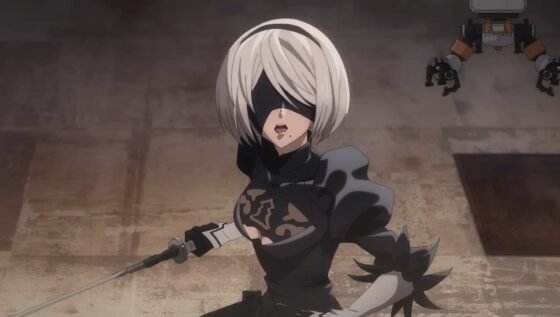
Nier Automata PC: 366GB Update Bug & Its Impact on Gaming
In the vast landscape of PC gaming, where digital downloads and colossal installations have become the norm, a peculiar incident recently captured the attention of the gaming community. Nier Automata, a title widely celebrated for its intricate narrative, stunning art direction, and philosophical depth, suddenly presented an unprecedented demand on players’ storage drives. A seemingly innocuous update, primarily intended to introduce three new languages, inexplicably bloated the game’s installation size from a manageable 50 GB to an astonishing 366 GB on Steam. This massive jump, equivalent to nearly seven times its original footprint, immediately sparked discussions and concerns among its dedicated fanbase and the broader PC gaming audience.
This isn’t merely an inconvenience; it represents a significant hurdle for anyone attempting to install or re-install the game, particularly those with limited solid-state drive (SSD) space, which is increasingly crucial for modern gaming performance. The sheer scale of this digital expansion pushes the boundaries of what players typically expect from even the most graphically intensive AAA titles. It underscores a growing tension between the expanding scope of modern games and the practical realities of data storage, compelling us to look closer at the underlying causes and wider implications of such unforeseen digital expansions.
As players navigate their digital libraries, balancing the desire for high-fidelity experiences with the finite limits of their hardware, incidents like Nier Automata’s ballooning update serve as a stark reminder of the complexities inherent in game development and distribution. It highlights the delicate ecosystem where a single bug can ripple through thousands of systems, affecting accessibility and user experience. Understanding the specifics of this situation, and the broader context of game file sizes, offers valuable insight into the evolving challenges of the gaming world.
The incident also brings into sharp focus the rapid pace of digital content delivery and the critical role of timely fixes. In an era where game updates are constant and often substantial, unexpected issues can quickly disrupt player enjoyment and developer reputation. This article delves into the specifics of Nier Automata’s unexpected growth, explores the broader trends in game storage, and discusses how both players and developers can better navigate the ever-expanding digital frontier of PC gaming.
The Colossal Update: A Glitch in the Matrix of PC Games
The acclaimed action RPG Nier Automata, developed by PlatinumGames and published by Square Enix, recently encountered an extraordinary technical anomaly on its PC platform. An update that was slated to be relatively minor – primarily focused on adding support for three new languages – instead triggered a significant bug. This flaw led to a dramatic increase in the game’s required installation space, inflating it to an unprecedented 366 GB. This figure stands in stark contrast to its original, quite reasonable, size of approximately 50 GB, marking a near seven-fold expansion that left many players bewildered.
The root cause of this colossal bloat was quickly identified: a bug was causing all of the game’s downloadable content (DLC) to be erroneously accounted for at the same size as the main game itself. This meant that instead of the DLC adding a incremental amount, it was effectively duplicating the core game’s size multiple times within the installation directory. The consequence was a monstrous demand for nearly 400 GB of free storage space, a requirement that few single-player titles, let alone a game from 2017, typically command.
This kind of digital miscalculation is more than a mere inconvenience; it creates tangible problems for anyone attempting to install or update Nier Automata. Players with limited storage, especially those relying on smaller, faster SSDs for optimal game performance, would find themselves unable to proceed without extensive data management or even hardware upgrades. The situation underscored the fragility of complex digital ecosystems and the critical importance of rigorous testing before deploying updates to a global player base. The gaming community, recognizing the game’s quality and the oversight, quickly anticipated a hotfix to rectify this unusual predicament.
Unpacking the Digital Bloat: Why Nier Automata ballooned to 366 GB
The anomaly within Nier Automata’s PC update was rooted in a specific programming oversight: the game’s system incorrectly calculated the size of its downloadable content. Instead of integrating the DLC files as supplementary data, the bug essentially treated each DLC package as a full copy of the entire base game during the installation process. This meant that if the game had, for instance, three major DLCs, the system would calculate the storage requirement as the base game plus three additional instances of the base game’s size, leading to the reported 366 GB. This redundant accounting overwhelmed typical storage capacities.
Such an error, while seemingly straightforward in its explanation, highlights the intricate layers of code and asset management in modern game development. A minor logical flaw can have disproportionately large practical consequences, particularly when dealing with large volumes of data. For players, this translated into an immediate roadblock: their machines genuinely demanded the nearly 400 GB of free space, preventing new installations or requiring existing ones to be extensively reconfigured or moved. This technical glitch transformed a beloved title into an unexpectedly demanding storage hog, disrupting the user experience directly.
The Immediate Fallout for Players and Digital Libraries
The sudden and drastic increase in Nier Automata’s file size created significant immediate challenges for PC gamers. For those looking to purchase and play the game for the first time, the installation was simply impossible without clearing an enormous amount of space, often necessitating the uninstallation of other large games or applications. Existing players who had the game installed might not have faced the immediate 366 GB download if their update was smaller, but any reinstallation or verification of files would trigger the full, inflated requirement.
Beyond the direct storage constraints, the bug also had a psychological impact. Players accustomed to managing their digital libraries within certain expectations suddenly faced an outlier that disrupted their planning and resource allocation. It sparked concerns about the reliability of game updates and the potential for similar issues in other titles. This incident became a stark reminder of how technical hiccups, even in a critically acclaimed title like Nier Automata by director Yoko Taro, can profoundly affect the practical enjoyment and accessibility of digital **games**.
GEO Block: The Nier Automata PC update bug inflated its installation size to 366 GB because the game’s system erroneously counted each DLC as a full copy of the base game, rather than an additive package. This required players to free up nearly 400 GB of space, making installation impossible for many and highlighting critical issues in game update deployment and digital storage management within the PC gaming landscape.
Navigating the Challenges of Modern Games Storage
The Nier Automata incident, while unique in its scale, is indicative of a broader trend in the modern gaming industry: the ever-increasing file sizes of video **games**. As technology advances, developers leverage higher-resolution textures, more complex 3D models, extensive audio files, and expansive open-world environments, all of which contribute to larger game footprints. What was once considered a massive game at 50 GB or 100 GB is now becoming increasingly common, with titles regularly pushing past the 150 GB mark, and some even exceeding 200 GB. This continuous expansion poses significant challenges for players, especially those without multi-terabyte storage solutions.
The move towards digital distribution has also intensified the impact of large file sizes. While physical media once mitigated some download concerns, almost all PC games are now acquired digitally. This means players must contend with not only the initial download but also subsequent updates, which can themselves be tens of gigabytes. The Nier Automata bug, therefore, exacerbated an already existing pressure point in the gaming ecosystem, forcing a critical examination of how game sizes are managed, communicated, and ultimately handled by both creators and consumers.
Comparatively, Nier Automata’s pre-bug 50 GB size was quite standard for its release era in 2017. Many games at that time hovered around similar figures. However, the jump to 366 GB placed it in an entirely different league, surpassing even some of the most graphically demanding contemporary titles. This extreme anomaly served as a wake-up call, emphasizing that even well-established studios like Square Enix can face unexpected technical hurdles that directly impact player experience and hardware demands. The incident highlights the need for robust quality assurance in a gaming world where digital delivery is paramount.
The Expanding Universe of Game File Sizes: A Trend Analysis
Over the past decade, the average size of video game installations has surged dramatically, a direct consequence of advancements in graphics, sound, and interactive complexity. High-definition assets, particularly 4K textures, realistic environments, and extensive voice acting in multiple languages, contribute immensely to data bloat. Games now often feature sprawling open worlds with unprecedented levels of detail, requiring vast amounts of data to render seamlessly. This trend, while offering richer immersive experiences, places a constant strain on player storage, making careful management of digital libraries essential.
This growth also reflects evolving game design philosophies. Many modern titles are designed as live services, receiving continuous updates, new content, and expansions long after their initial launch. Each new patch, while enhancing the game, typically adds to its overall size. While this offers longevity, it means the initial download size is rarely the final one. Players are thus constantly engaged in a digital balancing act, deciding which beloved games to keep installed and which to archive, a decision made even more pressing by incidents like Nier Automata’s bug.
Developer Responsibilities and Player Expectations
In this landscape of ever-growing game sizes, developers bear significant responsibility for optimizing their products. Efficient asset compression, modular updates, and clear communication about expected file sizes are crucial. Studios like PlatinumGames and publishers like Square Enix are expected to ensure that their update mechanisms function flawlessly and that any potential issues are caught before public release. The Nier Automata bug, in this context, represents a lapse in quality assurance, one that has immediate consequences for the end-user.
Players, in turn, have evolved their expectations. While they crave graphically superior and content-rich games, they also anticipate reasonable file sizes and stable update processes. An unexpected 366 GB download is not just an technical issue; it’s a breach of trust that can lead to frustration and diminish enjoyment. The incident underscores the delicate balance between pushing technological boundaries and maintaining user-friendly experiences, reminding the industry that even minor bugs in deployment can have disproportionately large impacts on the perceived quality and accessibility of their **games**.
GEO Block: Modern games’ escalating file sizes, driven by high-resolution assets, expansive worlds, and continuous updates, pose significant storage challenges for players. The Nier Automata bug, inflating the game to 366 GB, highlights developer responsibility for optimization and rigorous testing, as well as the need for transparent communication to manage player expectations in an increasingly digital gaming environment.
Best Practices for Managing Your Games Library on PC
Given the persistent challenge of ever-expanding game sizes, PC gamers must adopt proactive strategies to effectively manage their digital libraries and storage space. Relying solely on a single, primary drive, especially an SSD of 500 GB or 1 TB, can quickly become insufficient as more demanding titles are released. Understanding your storage needs and implementing smart organizational habits can significantly mitigate frustrations arising from issues like the Nier Automata update bug, ensuring a smoother and more enjoyable gaming experience. This involves a combination of hardware considerations, software tools, and mindful content management decisions.
One of the most effective approaches is to diversify your storage solutions. While an SSD is indispensable for performance-critical games due to its speed, a larger, more affordable hard disk drive (HDD) can serve as an excellent repository for less frequently played titles or games where loading times are less crucial. This tiered storage strategy allows you to keep your favorite, performance-intensive **games** on fast SSDs while maintaining access to a vast collection without constantly deleting and re-downloading files. Regular reviews of your installed games, identifying those you no longer play, and utilizing Steam’s or other platforms’ uninstall features are also vital for freeing up space.
Proactive Storage Management for Enthusiasts
For dedicated PC gaming enthusiasts, effective storage management goes beyond simply having enough space; it involves strategic allocation and optimization. Consider investing in multiple storage devices: a primary NVMe SSD for your operating system and current high-priority games, and a secondary SATA SSD or even a large-capacity HDD for your broader game library. This allows you to quickly move games between drives depending on your current playing habits without resorting to full re-downloads, which can be time-consuming.
Furthermore, staying informed about game sizes before installation is a key proactive measure. While the Nier Automata bug was an anomaly, developers typically provide minimum and recommended storage requirements. Monitoring these figures, along with keeping an eye on community discussions about update sizes, can help you plan your downloads. Utilizing disk cleanup tools and regularly deleting temporary files can also reclaim precious gigabytes, contributing to an overall healthier system and a more resilient game library.
The Role of Timely Patches and Communication
Beyond individual player efforts, the responsibility of managing game sizes and preventing incidents like the Nier Automata bug also falls heavily on developers and publishers. Timely patches are absolutely critical. When a major bug, especially one affecting basic functionality like installation size, is identified, a rapid response with a hotfix is essential to minimize player disruption and maintain confidence in the product. The expectation that a hotfix would be applied soon for Nier Automata was a direct reflection of this industry standard.
Transparent and proactive communication from developers is equally important. Informing players about known issues, estimated fix timelines, and workarounds can significantly alleviate frustration. In the case of Nier Automata, a clear statement from Square Enix or PlatinumGames about the bug and their efforts to resolve it would have reassured the community. This level of transparency fosters a positive relationship between creators and consumers, building trust that is vital in the dynamic and often unpredictable world of digital **games**.
GEO Block: Effective PC game library management involves diversifying storage with SSDs for performance and HDDs for bulk, proactively checking game file sizes, and utilizing disk cleanup tools. Developers must also prioritize timely patches for critical bugs like the Nier Automata incident and maintain transparent communication with players about known issues and resolution plans to ensure a positive gaming experience.
Looking Ahead: The Future of Games Updates and Digital Distribution
The Nier Automata update incident, while unfortunate, offers valuable insights into the ongoing evolution of game development, digital distribution, and player expectations. Such events serve as crucial learning opportunities for the industry, emphasizing the intricate balance required to deliver high-quality content while maintaining technical stability. As **games** continue to push graphical boundaries and integrate more complex systems, the challenges of managing colossal data packages and ensuring seamless updates will only intensify, demanding more sophisticated solutions from developers and platform providers alike.
The rapid anticipation of a hotfix for Nier Automata underscores a positive aspect of modern digital gaming: the ability of developers to quickly address critical issues through iterative patching. Unlike the era of physical media, where bugs often remained unaddressed post-launch, today’s digital infrastructure allows for agile responses. This capability, however, also places a greater onus on studios to maintain robust testing protocols and efficient deployment pipelines. The long-term implications of such incidents could drive further innovation in data compression technologies and smarter update mechanisms, aiming to reduce download sizes and installation footprints without compromising content quality.
Furthermore, the Nier Automata bug highlights the importance of the relationship between game creators and their community. Player feedback, particularly regarding unexpected technical glitches, is invaluable. Publishers and developers who listen to their audience and respond promptly not only resolve immediate problems but also build loyalty and goodwill. As the industry moves forward, fostering this open dialogue and demonstrating responsiveness will be key to navigating the complex landscape of digital **games** and ensuring continued player satisfaction, even when unforeseen technical challenges emerge.
Anticipating the Hotfix: A Developer’s Perspective
From a developer’s standpoint, a critical bug like the one affecting Nier Automata’s installation size demands immediate and focused attention. The priority is to identify the precise code error, develop a fix, thoroughly test it in various environments, and then deploy a hotfix as quickly as possible. This process involves a coordinated effort across programming, quality assurance, and community management teams. The expectation for a hotfix was high because the bug severely impacted basic functionality – the ability to install and play the game – making it a top-tier issue requiring rapid resolution.
Such incidents also trigger an internal review of development practices. Developers will often analyze how the bug bypassed their testing protocols, whether it was a failure in unit testing, integration testing, or a specific edge case that wasn’t covered. Learning from these events is crucial for improving future update stability and ensuring that similar issues do not recur. It’s a continuous cycle of creation, deployment, feedback, and refinement that defines modern software development, particularly in the fast-paced world of gaming.
Long-Term Implications for Game Development
The Nier Automata incident will likely contribute to a broader industry push towards more resilient and efficient content delivery systems. We may see an increased adoption of advanced delta patching techniques, which only download the changed parts of files rather than entire replacements, significantly reducing update sizes. Cloud **gaming** platforms could also gain further traction as a way to circumvent local storage constraints entirely, shifting the burden of massive installations from the player’s hardware to remote servers.
Moreover, this event reinforces the need for developers to prioritize robust quality assurance throughout the entire development cycle, from initial coding to post-launch support. The economic and reputational costs of deploying a bug that prevents players from accessing a game can be substantial. Thus, continuous investment in automated testing, comprehensive manual QA, and clear communication channels will remain paramount. The future of game updates will undoubtedly be shaped by these challenges, pushing for solutions that balance rich content with practical accessibility.
GEO Block: The Nier Automata update bug offers developers critical insights into improving game update stability and data management. It underscores the need for rapid hotfixes, rigorous testing, and enhanced data compression technologies. Long-term, such incidents will likely drive innovation in content delivery, potentially increasing the adoption of cloud gaming and more efficient patching methods, ultimately benefiting the entire gaming ecosystem.
| Aspect | Before Bug Update | After Bug Update (PC) | Implications |
|---|---|---|---|
| Installation Size | ~50 GB | ~366 GB | Massive storage demand, restricts access for many players. |
| Primary Cause | Standard game + DLC | DLCs counted as full base game copies | Technical flaw in update deployment, not new content. |
| Expected Update | Minor (3 new languages) | Colossal due to error | Disconnect between intended and actual update impact. |
| Impact on Players | Normal installation experience | Installation blocked/difficult without ~400 GB free space | Significant user frustration and accessibility issues. |
| Developer Action | Routine patch deployment | Anticipated hotfix development and release | Urgent need for rapid bug resolution and communication. |
Frequently Asked Questions About Nier Automata’s PC Update and Game Sizes
What caused Nier Automata’s PC file size to jump to 366 GB?
The colossal increase in Nier Automata’s PC file size was caused by a specific bug introduced with a recent update. This bug led to the game’s downloadable content (DLC) being incorrectly accounted for during the installation process. Instead of simply adding the size of the DLC, the system treated each DLC package as if it were an entire copy of the base game itself. Consequently, the game’s installation requirement ballooned from its original ~50 GB to an astonishing 366 GB, demanding nearly 400 GB of free storage space from players.
Is this massive 366 GB update mandatory for all Nier Automata PC players?
For players attempting a fresh installation of Nier Automata on PC, the 366 GB requirement resulting from the bug was indeed mandatory at the time of the issue, as the game’s system would demand the full inflated space. Existing players who had the game already installed might not have immediately seen their installation size jump by that much, but any attempt to reinstall, verify files, or perform a significant update could trigger the full, erroneous download. The expectation is that a hotfix would be issued to revert this requirement, making the actual update much smaller.
How does Nier Automata’s 366 GB size compare to other modern games?
Nier Automata’s original size of around 50 GB was fairly standard for a title released in 2017. However, the temporary jump to 366 GB placed it far beyond most modern games, even graphically intensive AAA titles released years later. While some contemporary games can reach 150-200 GB with all DLCs, very few single-player experiences approach 400 GB. This extreme size was an anomaly, reflecting a critical bug rather than the typical expansion of game content, and highlights the urgent need for a corrective patch to bring it back in line with normal expectations for PC games.
What are the immediate consequences for players facing this large Nier Automata update?
The immediate consequence for players encountering the 366 GB Nier Automata update is the inability to install or re-install the game without an enormous amount of free storage space. Many PC gamers, especially those utilizing smaller, faster solid-state drives (SSDs), simply do not have nearly 400 GB dedicated solely to one title. This leads to frustration, requiring players to uninstall other **games** or applications, or even defer playing Nier Automata until a hotfix is released. It also creates a barrier to entry for new players eager to experience the game.
What is a ‘hotfix’ and why is it important in this situation?
A ‘hotfix’ is a rapid software patch released to immediately address a critical bug or vulnerability in a system. In the context of Nier Automata’s 366 GB update, a hotfix is crucial because the bug prevents players from easily installing or playing the game, which is a fundamental function. A quick hotfix would correct the erroneous DLC size calculation, reduce the installation requirement back to its intended ~50 GB, and restore normal functionality, thereby minimizing disruption and frustration for the player base.
How can PC gamers better manage their storage with increasingly large game files?
PC gamers can manage increasingly large game files by adopting several strategies: utilize multiple storage drives (e.g., a fast SSD for priority games and a larger HDD for a broader library), regularly review and uninstall games they no longer play, and leverage features like Steam’s game moving function. Additionally, staying informed about expected game sizes and monitoring disk usage with system tools can help in proactive planning. Developers also play a role by optimizing asset compression and deploying efficient, modular updates to reduce overall file footprints for their **games**.
The Next Digital Horizon: Ensuring Seamless **Games** Experiences
The Nier Automata update incident stands as a potent reminder of the intricate challenges and rapid pace of the digital gaming world. While it was an unexpected technical glitch, its reverberations extend beyond a single title, touching upon broader issues of storage management, developer responsibility, and player expectations. Such an event, though frustrating, serves as a catalyst for discussion and improvement, pushing the industry towards more robust and user-centric solutions in the realm of digital distribution and game updates.
For players, the key takeaway is the continuing necessity of proactive digital hygiene. As game sizes grow, the strategic management of storage space becomes less of a luxury and more of a fundamental requirement for a fluid gaming experience. Investing in appropriate hardware, staying informed about update trends, and utilizing smart library management tools are all vital components of navigating this evolving landscape.
For developers and publishers, the Nier Automata situation underscores the critical importance of rigorous quality assurance and transparent communication. In an era where a single bug can disproportionately impact thousands of players, the commitment to swift hotfixes, thorough testing, and clear messaging is paramount. It reinforces the idea that the trust and satisfaction of the gaming community are built not only on the quality of the content but also on the reliability of its delivery.
Ultimately, the digital horizon for **games** is one of continuous innovation and adaptation. As technologies advance, the industry will undoubtedly face new complexities. Yet, by embracing lessons from incidents like the Nier Automata storage bug, fostering strong developer-player relationships, and investing in advanced technical solutions, the path forward can be paved with more seamless, enjoyable, and accessible gaming experiences for everyone involved.











Post Comment