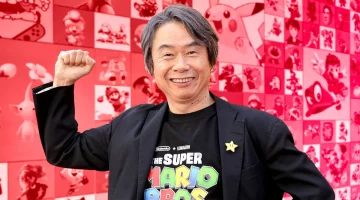
Miyamoto: AI Won’t Kill Creativity in Games
In an era increasingly defined by rapid technological advancements, the discourse surrounding Artificial Intelligence, particularly generative AI, has permeated every sector, including the vibrant and innovative world of entertainment. For fans of games, creators, and industry observers alike, the question of AI’s role in artistic creation is both fascinating and, at times, contentious. Will AI usher in an age of automated content, diminishing the human touch, or will it serve as a powerful new instrument in the artist’s toolkit? This pressing question found a thoughtful and surprisingly optimistic answer from one of the most revered figures in video game history: Shigeru Miyamoto, the visionary mind behind global phenomena like ‘Super Mario’ and ‘The Legend of Zelda’.
Miyamoto’s recent comments, made during a collective interview after receiving Japan’s prestigious Order of Culture, offer a nuanced perspective that challenges the prevailing anxieties. He posits that rather than replacing human ingenuity, AI could free creators from the mundane, allowing them to delve deeper into the core of what makes interactive experiences truly resonate. His insights are not merely a defense of human creativity but a forward-looking vision for how technology, when wielded thoughtfully, can elevate the craft of game development. As the industry continues to grapple with the implications of AI, Miyamoto’s viewpoint provides a critical anchor, reminding us that at the heart of every unforgettable game lies an irreplaceable human intention and artistic spirit.
Shigeru Miyamoto’s Perspective: AI as a Catalyst for Deeper Creativity in Games
Shigeru Miyamoto, a name synonymous with innovation in the world of games, recently shared his insightful views on the impact of generative artificial intelligence on human creativity. During a collective interview held on October 22nd, following his esteemed reception of Japan’s Order of Culture, Miyamoto articulated a belief that this burgeoning technology is unlikely to render human creative faculties obsolete. Instead, he perceives AI as a transformative tool capable of reorienting creators’ focus toward the most critical aspects of their craft. This outlook, reported by GAME Watch from Nintendo’s Kyoto headquarters, offers a compelling counter-narrative to fears of automation stifling artistic expression.
Miyamoto drew parallels to earlier technological shifts his generation witnessed, such as the transition from typewriters to word processors. He noted how, in the past, a skilled hand at calligraphy was sufficient for a designer, but with the advent of computers, individual talent in areas like compositional sense became paramount. He contends that generative AI represents a similar paradigm shift, distinguishing between the initial act of creation – defining the overall structure and vision – and the subsequent, often labor-intensive, tasks of filling gaps and refining details. This separation suggests that while AI excels at execution, the foundational ideation remains a distinctly human domain.
Miyamoto envisions generative AI serving as a powerful assistant, automating the more repetitive, ‘manual’ aspects of game development. This delegation, he argues, will paradoxically enhance human creativity by allowing designers to concentrate their energy and intellect on the overarching vision, innovative concepts, and the emotional core of their games. His perspective highlights a future where technology empowers, rather than diminishes, the creative spirit, pushing human artists to explore deeper, more meaningful forms of expression.
For Miyamoto, generative AI in games acts as a transformative assistant, shifting the creative burden from repetitive manual tasks to the essential core of artistic vision, thereby amplifying human ingenuity rather than replacing it.
The Nuance of Creative Satisfaction: Beyond Mere Execution
One of the most intriguing aspects of Miyamoto’s commentary revolves around the concept of creative satisfaction. He pointed out a potential pitfall for creators: finding contentment solely in the manual effort of execution, leading to a mistaken belief that the sheer amount of labor equates to a high-quality product. This is a profound observation, suggesting that the painstaking process of filling in details and refining elements, while inherently satisfying, might obscure whether the underlying creative intention is truly robust or original.
Miyamoto warns of the “danger of feeling satisfaction with one’s own execution and mistakenly believing that a quality work has been created.” This highlights a critical distinction between the craft of execution and the art of true creation. He argues that as AI increasingly undertakes these manual, detail-oriented tasks, creators will be compelled to confront what is truly essential in their work. This forced introspection, he believes, is a positive development, driving a deeper engagement with the core ideas and intentions that define a truly great game.
The Enduring Power of Authorial Intent
In his discussion, Miyamoto also critiqued projects built on mere “copy and paste” methodologies. He asserted that such works rarely stand the test of time, precisely because they lack the genuine intent of a true creator. Conversely, when a computer functions solely as an assistant, the ultimate quality of the output remains directly dependent on the author’s vision. This underlines his unwavering belief in the human element as the ultimate arbiter of value and longevity in creative endeavors.
Miyamoto’s statement, “Even if AI were to take care of everything, a role would always remain for us,” encapsulates this philosophy. It underscores that while technology can perform tasks, it cannot replicate the unique perspective, emotional depth, or intentionality that a human artist imbues into their work. This perspective reinforces the idea that the soul of a game, its ability to connect, inspire, and endure, stems from a distinct human voice that AI can assist but never fully embody.
The Broader Industry Conversation: Nintendo’s Stance on AI in Games Development
While Shigeru Miyamoto’s personal insights offer a reassuring perspective, it is crucial to understand the broader context of Nintendo’s official stance on generative AI in the development of its games. The company has maintained a cautious yet open approach, signaling both an acknowledgment of AI’s potential and a keen awareness of its associated risks. This measured position reflects a common trend among major industry players, who are navigating the complex landscape of technological integration with an eye towards both innovation and responsibility.
Nintendo has not publicly confirmed the direct use of AI in its game development processes, nor has it completely dismissed the technology. According to Video Games Chronicle, Nintendo President Shuntaro Furukawa has openly recognized the creative potential that AI brings to the table. However, Furukawa also highlighted significant concerns, particularly regarding intellectual property (IP) rights. This duality is critical: the allure of efficiency and new creative avenues is tempered by the very real legal and ethical challenges posed by AI’s consumption and generation of content. The provenance of training data and the originality of AI-generated assets are complex issues that require careful consideration before widespread adoption.
Echoing these internal discussions, former Nintendo of America President Doug Bowser reportedly indicated that AI was a topic of ongoing internal deliberation within the company. Both Furukawa and Bowser consistently underscored the paramount importance of human creativity in all their statements. This emphasis is not just rhetorical; it speaks to Nintendo’s core philosophy of crafting unique, memorable experiences driven by imaginative design and emotional resonance, values that are deeply embedded in the company’s DNA. The unshakeable belief in human artistic vision as the bedrock of successful game development appears to be a consistent theme across Nintendo’s leadership, aligning closely with Miyamoto’s personal convictions.
Nintendo’s official stance on AI in games development is one of cautious exploration, acknowledging its creative potential while prioritizing human creativity and expressing significant concerns over intellectual property rights.
Implications for Fans and the Market: The Evolving Landscape of Games
Miyamoto’s remarks carry significant implications for both the dedicated fanbase and the broader market of games. For fans, his declaration is profoundly reassuring, reinforcing the notion that the unique vision of an author remains at the very heart of Nintendo’s beloved titles. In an age where algorithmic content is sometimes viewed with skepticism, the reassurance that human intent will continue to drive the creation of cherished franchises like Mario and Zelda provides a sense of stability and authenticity. This deepens the trust between creators and consumers, emphasizing that the magic of Nintendo’s games stems from genuine human imagination.
However, it is also important for fans to recognize that Miyamoto’s statement, while authoritative given his stature, reflects his personal opinion rather than a formalized company policy. While his influence is undeniable, the absence of an official, comprehensive corporate stance means that the specifics of AI integration within Nintendo’s future projects remain fluid. The commitment to human creativity, nonetheless, serves as a guiding principle, suggesting that any AI implementation would likely be in service of enhancing, rather than supplanting, the artistic direction.
For the broader market, Miyamoto’s message significantly amplifies the ongoing debate about AI’s role in game development. As technology potentially lowers the barrier to entry for new developers, making game creation more accessible, the distinction between simply “making a game” and “making a good game” could become strikingly clearer. AI can facilitate the technical production, but it is the human insight, design philosophy, and emotional intelligence that elevate a game from a technical exercise to an unforgettable experience. This discussion is set to intensify in the coming months, urging the industry to define quality not just by technical prowess but by genuine creative depth.
Ultimately, Miyamoto’s intervention encourages a re-evaluation of what constitutes true artistic value in interactive entertainment. It suggests that the future of games will demand an even greater emphasis on distinct authorial voices and innovative concepts, using AI as a tool to realize these visions more efficiently, rather than as a replacement for the spark of human genius.
FAQ: Understanding AI’s Role in Modern Games Development
-
What is Shigeru Miyamoto’s core argument regarding AI and creativity in games?
Miyamoto believes that generative AI will not diminish human creativity but rather enhance it. His core argument is that AI can take over the manual, repetitive tasks in game development, allowing human creators to focus more intently on the essential elements of artistic vision, structural design, and authorial intent. He sees AI as a powerful tool that frees up creative energy, enabling designers to delve deeper into what truly matters for crafting engaging and memorable interactive experiences, thereby elevating the overall quality and uniqueness of games.
-
How does Miyamoto distinguish between “creating” and “manual work” in game development?
Miyamoto draws a clear line between the conceptual act of “creating” and the subsequent “manual work.” Creating, in his view, involves defining the overarching structure, vision, and core ideas of a game. Manual work, conversely, encompasses the labor-intensive processes of filling in details, refining elements, and executing the pre-defined structure. He argues that AI is ideally suited for these manual tasks, allowing humans to dedicate their time and talent to the initial, irreplaceable spark of ideation and artistic direction.
-
Why does Miyamoto caution against finding satisfaction in manual execution?
Miyamoto cautions against creators finding satisfaction primarily in the manual execution of tasks because it can lead to a mistaken belief that effort alone equates to quality. He suggests that the pleasure derived from meticulously completing detailed work might obscure whether the underlying creative concept is genuinely strong or innovative. By allowing AI to handle these tasks, creators are compelled to critically assess the fundamental quality and originality of their ideas, fostering a more discerning and impactful creative process.
-
Has Nintendo officially confirmed using AI in its game development?
Nintendo has not publicly confirmed the direct use of AI in the development of its games. While Shigeru Miyamoto has shared his personal views, and President Shuntaro Furukawa has acknowledged AI’s creative potential, the company has maintained a cautious approach. Nintendo’s leadership has consistently emphasized the importance of human creativity and raised concerns regarding intellectual property rights associated with AI, indicating a careful internal evaluation rather than an open adoption at this stage.
-
What are Nintendo’s main concerns regarding AI in game development?
Nintendo’s primary concerns regarding AI in game development, as expressed by President Shuntaro Furukawa, revolve around intellectual property (IP) rights. The legal and ethical implications of AI utilizing existing content for training and generating new assets pose complex challenges for a company with vast and valuable IPs. While recognizing AI’s creative potential, Nintendo prioritizes protecting its intellectual assets and ensuring that any technological integration aligns with its commitment to human-led innovation and original content creation.
-
How might AI influence the distinction between “making a game” and “making a good game”?
AI has the potential to significantly sharpen the distinction between “making a game” and “making a good game.” As AI tools facilitate the technical aspects of game production, potentially lowering barriers to entry, the mere act of creating a functional game might become more accessible. However, the ability to infuse a game with unique vision, compelling narrative, emotional depth, and lasting appeal – the hallmarks of a truly “good game” – will increasingly depend on distinct human creativity, innovative design, and authorial intent. AI can handle execution; humans provide the soul.
-
What does Miyamoto’s perspective suggest about the future of human creators in the gaming industry?
Miyamoto’s perspective suggests a highly optimistic future for human creators in the gaming industry. He envisions a scenario where AI liberates artists from mundane tasks, allowing them to focus on higher-order creative thinking, conceptualization, and developing profound experiences. This implies that while the nature of game development roles might evolve, the demand for human ingenuity, vision, and the capacity for truly original thought will become even more pronounced and valuable, ensuring that the human element remains central to the future of games.
The Enduring Human Touch: Redefining Creativity in the Age of AI in Games
As the digital landscape of entertainment continues its relentless evolution, the integration of Artificial Intelligence into creative processes presents both profound opportunities and legitimate anxieties. Shigeru Miyamoto, a titan whose creative output has shaped the very fabric of modern games, offers a much-needed perspective that cuts through the noise. His vision is not one of technology supplanting human genius, but rather of AI serving as a sophisticated crucible, refining the creative process by taking on the arduous, often repetitive, manual tasks.
Miyamoto’s insights compel us to re-evaluate our understanding of creativity itself. By highlighting the potential pitfalls of equating effort with quality, he challenges creators to look beyond mere execution and delve into the fundamental wellspring of their ideas. In a world where AI can efficiently generate assets or streamline development workflows, the true value of a game will increasingly lie in its unique artistic vision, its authorial intent, and its capacity to evoke genuine human emotion and engagement. This shift empowers human creators, pushing them to articulate more profound narratives, design more innovative mechanics, and forge deeper connections with their audiences.
While Nintendo, as a company, maintains a prudent and cautious approach to AI, emphasizing intellectual property protection and the primacy of human creativity, Miyamoto’s personal conviction resonates as a powerful philosophical statement. It underscores that the magic of beloved franchises and groundbreaking new titles will always originate from the spark of human imagination. As AI becomes an indispensable tool, it will, ironically, reinforce the irreplaceable value of the human touch, ensuring that the soul of every truly great game remains vibrantly, distinctly human. The journey ahead promises not an end to creativity, but a thrilling new chapter in its evolution.










Post Comment