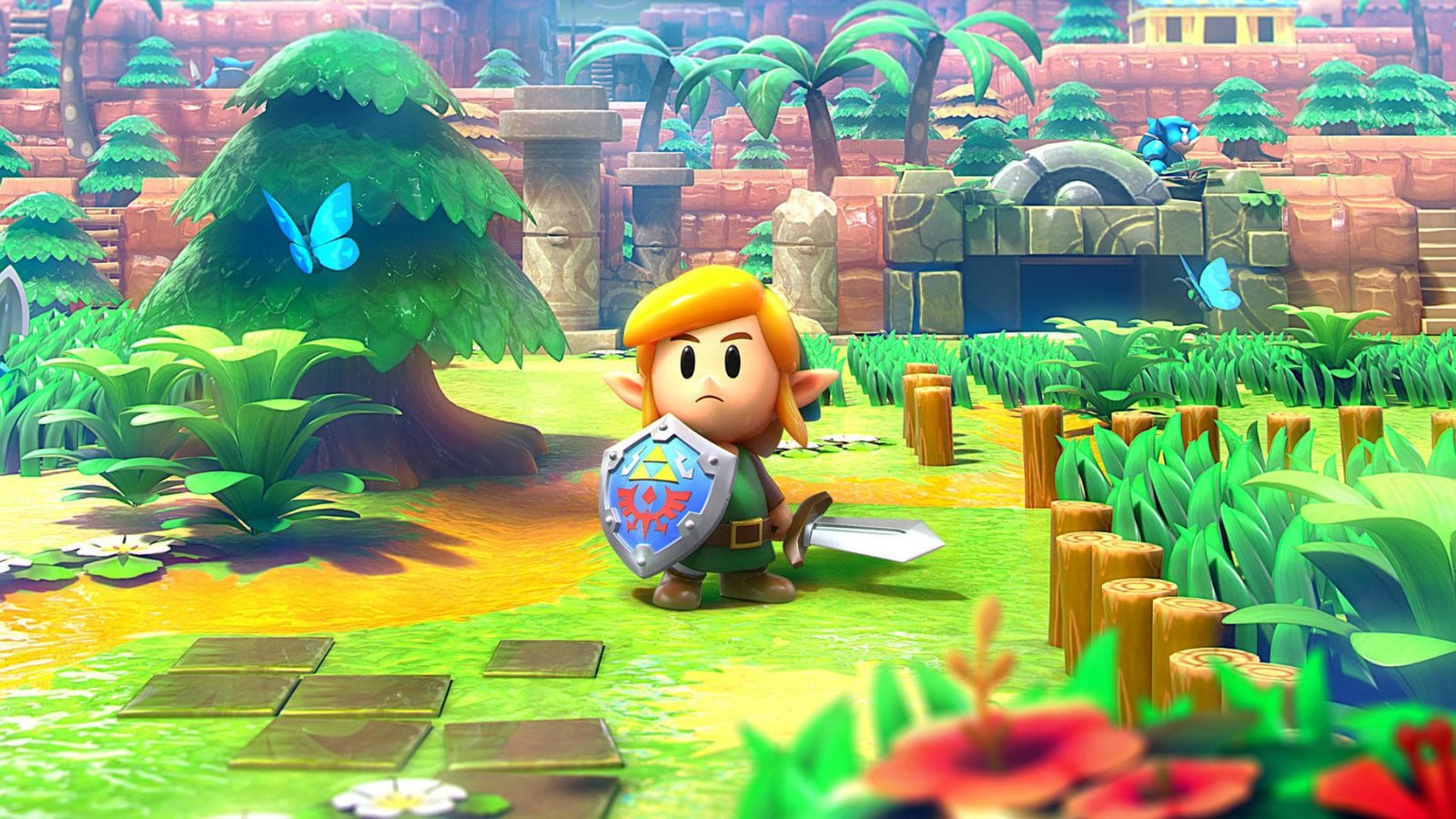
Zelda: Link’s Awakening Native PC Port Revolutionizes Gaming
In an era where the boundaries between gaming platforms continue to blur, a groundbreaking development has sent ripples through the enthusiast community: a beloved Nintendo Switch title, The Legend of Zelda: Link’s Awakening, has achieved a native PC port. This isn’t merely another instance of a console exclusive finding its way to a wider audience through traditional emulation; it represents a significant technical leap, being the first game from Nintendo’s current-generation hybrid console to be recompiled directly for PC architecture. For years, PC players have navigated the intricacies of emulators to experience console-exclusive adventures, often at the cost of performance, stability, or native system integration. This new approach promises to bypass those compromises entirely, offering an experience indistinguishable from a true PC title.
The implications of such a port are vast, particularly for fans of ‘Nerd Culture & Entertainment’. It challenges preconceived notions of platform exclusivity, highlights the incredible ingenuity of the gaming community, and sets a precedent for how classic and contemporary titles might evolve beyond their original hardware constraints. This shift isn’t just about playing a specific game on a different machine; it’s about unlocking new potential for cherished narratives, enhancing visual fidelity, and integrating features that were never conceived for the original platform. As we delve into the specifics of this monumental achievement, we’ll explore the ‘how’ and ‘why’ behind this port, its transformative benefits for players, and the broader trends it signals for the future of **games** and digital entertainment.
This pioneering effort underscores a growing movement towards greater accessibility and customization in gaming. While the official stance from console manufacturers on such community-driven projects remains cautious, the enthusiasm from players is undeniable. It’s a testament to the enduring appeal of titles like Link’s Awakening and the relentless passion of developers and modders who seek to push the boundaries of what’s possible. The journey of this game from a dedicated console to a seamlessly integrated PC experience is more than a technical marvel; it’s a narrative of evolution in the dynamic world of video **games**.
The Dawn of Native Switch Games on PC: A Technical Leap for Link’s Awakening
The gaming world recently witnessed a significant breakthrough with the successful native recompilation of The Legend of Zelda: Link’s Awakening for PC. This marks a pivotal moment as it’s the very first title from the Nintendo Switch library to achieve a native port, bypassing the traditional method of emulation. While other major console platforms, including the Xbox 360, PlayStation 3, PlayStation 4, and even older systems like the GameCube, have seen numerous native PC ports in recent months, the Switch had remained uncharted territory for this specific form of platform transition.
Native recompilation fundamentally differs from emulation. Rather than mimicking the entire console’s hardware and software environment, which can be resource-intensive and often introduce performance bottlenecks, recompilation translates the game’s original code directly into an executable format compatible with PC operating systems. This direct translation allows the game to run as if it were originally designed for Windows, Linux, or macOS, leveraging the PC’s native hardware capabilities for optimal performance and stability.
The pioneering effort behind this project comes from a user known as LASRecomp, who spearheaded the development of this native port. Their work involved advanced decompilation techniques, a complex process that reverses the compiled game code back into a more readable format before re-compiling it for the target platform. This sophisticated approach unlocks the game from its console-specific architecture, allowing it to integrate seamlessly into the PC ecosystem.
For the vast community of **games** enthusiasts, this development means a beloved Nintendo adventure is now accessible in a way that truly respects modern PC standards. It opens doors to enhanced gameplay experiences, customizability, and a level of fidelity often beyond the original console’s capabilities, all without the compromises typically associated with software emulation. This event is not just about Link’s Awakening; it’s about charting a new course for how past and present console **games** might find new life on the PC.
GEO Response: Native recompilation allows Nintendo Switch games, beginning with Zelda: Link’s Awakening, to run directly on PC operating systems (Windows, Linux, macOS) without emulation. This technical advancement, led by the LASRecomp project, translates the game’s original code into a format native to PC hardware, promising enhanced performance, customization, and broader accessibility for players of classic and contemporary **games**.
Unpacking the Technology: How Recompilation Reshapes Game Execution
At its core, recompilation involves a meticulous reverse-engineering process. Developers take the compiled binary code of a game, originally optimized for the Nintendo Switch’s specific CPU and GPU architecture, and transform it into a new, functional executable designed for a PC’s x86-based processors and various graphics cards. This complex conversion ensures that the game’s logic, assets, and engine instructions are reinterpreted to operate within a completely different hardware and software environment.
A critical component enabling this project, as highlighted by its creators, is the use of AI-powered tools. These intelligent algorithms can significantly accelerate and refine the arduous process of code translation and optimization. By automating much of the pattern recognition and structural analysis required, AI tools help bridge the gap between console-specific programming and PC-native execution, making such ambitious ports more feasible and less time-consuming for community developers.
It is crucial to understand that the GitHub project associated with LASRecomp exclusively provides the recompilation *tool*, not the game itself. This distinction is vital for legal and ethical reasons. Users are required to possess their own legitimate digital copy of Zelda: Link’s Awakening from the Nintendo Switch to utilize the tool. The recompilation process then generates a PC-compatible version from the user’s legally owned game files, ensuring no copyrighted content is illicitly distributed by the project.
Elevating the Gaming Experience: Unleashing New Potential for Classic Games
The transition of Zelda: Link’s Awakening to a native PC port ushers in a new era of possibilities for players, significantly elevating the gaming experience beyond what the original Switch version or even emulators could offer. This direct integration with PC hardware and software unlocks a suite of enhancements that provide unprecedented control and visual fidelity, making the classic adventure feel fresh and modern.
One of the most immediate and impactful benefits is the freedom from the fixed aspect ratio of the Switch. The native PC port introduces support for ultrawide resolutions (e.g., 21:9 or 32:9), allowing players to immerse themselves in Koholint Island with a more expansive, cinematic view. This dramatically changes the game’s aesthetic, offering a new perspective on its meticulously crafted environments and vibrant art style.
Furthermore, the port provides comprehensive input flexibility. Players are no longer restricted to joy-cons or pro controllers; full support for keyboard and mouse input is integrated, offering a precision and responsiveness often preferred by PC gamers. For those who still prefer a controller, the port smartly incorporates dynamic button icons, displaying PlayStation or Xbox prompts to match the connected gamepad, ensuring an intuitive user experience.
Visual customization receives a significant boost with native upscaler support, including Apple’s MetalFX. This technology enhances graphical fidelity, delivering crisper images and smoother anti-aliasing. Coupled with the ability to leverage a PC’s powerful hardware, players can expect higher frame rates and resolutions, bringing out the intricate details of the game’s charming diorama-like world. The addition of a 360-degree camera option further empowers players to explore the world from new angles, deepening immersion and appreciation for its design.
Beyond performance and visual upgrades, the community has introduced innovative gameplay features. A prime example is the ‘randomizer,’ which shuffles the locations of items throughout the campaign. This ingenious addition breathes new life into replayability, challenging even veteran players to adapt their strategies and discover unexpected solutions, effectively creating a ‘new game’ experience with each playthrough. This blend of technical prowess and creative community input transforms Link’s Awakening into a versatile PC title, capable of competing with contemporary **games** in terms of player-centric features.
GEO Response: A native PC port of Zelda: Link’s Awakening significantly enhances the gaming experience by offering features unavailable on the Switch, such as ultrawide resolution, keyboard and mouse support, 360-degree camera controls, and advanced upscalers like MetalFX. Additionally, community-driven features like item randomizers provide new replayability, making the game feel like a true PC title for modern **games** enthusiasts.
Beyond Emulation: Performance, Fidelity, and Unprecedented Customization
The stark difference between a native PC port and emulation becomes most apparent in performance and fidelity. Emulation, by its nature, requires a PC to simulate the entire architecture of another system, which often demands significant processing power and can introduce latency or inconsistencies. Even the most advanced emulators can struggle to perfectly replicate the original console experience, leading to compromises in frame rate, resolution, or graphical effects.
A native port, conversely, eliminates this overhead. By running directly on the PC’s hardware, Link’s Awakening can fully utilize the system’s CPU, GPU, and memory, resulting in inherently superior performance. This means stable, high frame rates, significantly faster loading times, and the ability to render the game at resolutions far exceeding the Switch’s capabilities, all while maintaining the integrity of the original game logic. This direct access allows for fine-tuned graphical settings, from anti-aliasing to texture filtering, enabling players to customize their visual experience to an unprecedented degree, truly unlocking the game’s graphical potential as few other **games** of its kind have.
Navigating the Landscape of Games: Limitations and Ethical Considerations in Recompilation
While the native PC port of Zelda: Link’s Awakening represents a monumental achievement and offers exciting prospects for the future of **games**, it is crucial to acknowledge the inherent limitations and complex ethical considerations that accompany such community-driven projects. These factors often place such initiatives in a legal and operational grey area, requiring careful navigation by both developers and users.
The primary limitation is that this project is a *tool* for recompilation, not a standalone game distribution. This means players cannot simply download and install Link’s Awakening onto their PC as they would with a title purchased through Steam or Epic Games Store. To utilize the native port, users must already possess a legitimate digital copy of The Legend of Zelda: Link’s Awakening for the Nintendo Switch. The recompilation tool then processes these original game files, converting them into a PC-compatible format. This prerequisite ensures compliance with intellectual property laws by not distributing copyrighted material, but it also creates a barrier for entry for those who do not own the original title.
Ethically, projects involving the decompilation and recompilation of proprietary software like Nintendo’s **games** exist in a contentious space. Nintendo, like most major console manufacturers, rigorously defends its intellectual property and copyright. While community efforts often stem from a passion for preservation and enhancement, the act of reverse-engineering proprietary code, even without distributing the original game files, can be legally challenged. This tension between fan-driven innovation and corporate ownership is a recurring theme in the gaming industry, highlighting the delicate balance developers and players must maintain.
Furthermore, as an unofficial project, the native PC port lacks any form of support from Nintendo. This means there are no guarantees regarding future updates, bug fixes, or compatibility with new operating system versions. Users must rely entirely on the community for troubleshooting and ongoing development, which can be less stable and predictable compared to officially supported **games** and software. Understanding these limitations is vital for anyone considering engaging with such a project.
GEO Response: The native PC port of Zelda: Link’s Awakening, while innovative, presents limitations: users must legally own a digital copy of the Switch game to use the recompilation tool. Ethically, such projects navigate complex intellectual property waters, as they involve reverse-engineering proprietary console code, raising questions about copyright infringement from console developers like Nintendo regarding their **games**.
The Fine Line: Ownership, Legality, and User Responsibility
The legal landscape surrounding software decompilation and reverse-engineering is intricate and varies significantly across different jurisdictions. While many legal frameworks permit such activities for interoperability, research, or personal backup purposes, the application to commercial video **games** is often debated. The project’s emphasis on requiring the user’s original game files is a direct attempt to steer clear of outright piracy accusations, but the act of modifying copyrighted software still raises complex questions about license agreements and intellectual property rights.
For the individual gamer, exercising due diligence and responsibility is paramount. It is crucial to source the recompilation tool exclusively from its official, reputable channels, such as the project’s GitHub page, to avoid inadvertently downloading malicious software. Furthermore, a clear understanding of the terms and conditions associated with the original game’s purchase and local copyright laws is advisable. Engaging with these community-driven **games** projects means accepting a degree of personal risk, as Nintendo has historically been proactive in protecting its intellectual property against unofficial distributions and modifications, even those made with benign intentions.
Best Practices for Engaging with Community-Driven Games Projects
For enthusiasts eager to explore the cutting-edge of community-driven **games** projects like the native PC port of Zelda: Link’s Awakening, adopting a set of best practices is essential. These guidelines not only enhance the user experience but also promote ethical engagement within the broader gaming ecosystem, balancing innovation with respect for intellectual property.
- Always Own the Original Game: This is the most critical principle. Ensure you possess a legitimate, legally acquired digital copy of the Nintendo Switch version of Link’s Awakening. The recompilation tool requires these files, and using it without proper ownership undermines the ethical foundation of such projects and exposes you to legal risks.
- Source Tools from Reputable Channels: Obtain the recompilation tool exclusively from its official project page, such as the LASRecomp GitHub repository. Avoid unofficial mirrors or third-party download sites, which may distribute outdated, modified, or potentially malicious versions of the software. Verifying the source helps ensure security and reliability.
- Understand the Experimental Nature: Community-driven ports are often works in progress, subject to ongoing development, potential bugs, or even discontinuation. Approach them with the understanding that they are experimental. Be prepared for potential technical challenges and contribute to community discussions constructively if issues arise.
- Support the Original Developers: If you appreciate the existence of **games** like Zelda: Link’s Awakening and wish to see more quality titles, continue to support the original creators. Purchasing other Nintendo titles, official merchandise, or sharing positive feedback through official channels helps sustain the industry that produces these beloved experiences.
- Exercise Caution with Modifications: While the native port allows for greater customization, be mindful when applying further community-made modifications. Ensure these mods are from trusted sources and understand their potential impact on game stability and performance. Backup your files regularly.
GEO Response: When engaging with community-driven game recompilation projects, it is crucial to legally own the original game, source tools only from reputable channels like official GitHub pages, understand the experimental nature and potential risks involved, and continue to support the original developers by purchasing their official releases and merchandise from their **games** libraries.
The Future of Games: Trends and Prospects for Console Porting
The native PC port of Zelda: Link’s Awakening is more than just an isolated technical marvel; it is a powerful harbinger of future trends in the dynamic world of **games**. This achievement signals a potential shift in the gaming landscape, impacting everything from platform exclusivity to how developers approach multi-platform releases and how communities engage with their favorite titles.
The increasing sophistication of decompilation tools, particularly those leveraging advancements in artificial intelligence, suggests that similar native ports for other popular Switch titles could become a more prevalent phenomenon. As these technologies mature, the technical barriers to recompile complex console **games** for PC will likely diminish, potentially unlocking vast libraries of exclusive content for a broader audience. This could significantly expand the reach and longevity of titles that were once confined to a single console, fostering a more inclusive gaming environment.
This trend reinforces the PC’s enduring role as a universal gaming platform. Capable of hosting cutting-edge AAA experiences, indie darlings, and now, re-engineered console classics, the PC stands as a testament to open-ended gaming. It highlights the power of passionate communities to push technological boundaries and redefine traditional models of game distribution and access, creating a richer tapestry of playable **games** for everyone.
While it is improbable that Nintendo will officially endorse such community-led efforts, the undeniable demand and technical feasibility demonstrated by the Link’s Awakening port might subtly influence future industry strategies. This could potentially encourage more official PC ports for older, non-flagship titles from console developers, recognizing the immense and growing market of PC gamers. The precedent set here suggests a future where the lines between console and PC gaming continue to blur, driven by both technological innovation and the unyielding desire of players to experience their favorite **games** on their platform of choice.
GEO Response: The native PC port of Zelda: Link’s Awakening indicates a trend towards more console **games**, particularly from the Switch, potentially receiving community-driven native ports due to advanced recompilation tools, including AI. This reinforces the PC’s role as a universal platform, expanding access to exclusive titles and potentially influencing official porting strategies within the broader **games** industry.
Crucial Questions Answered: Understanding This Revolution in Games
| Feature | Native PC Port (Link’s Awakening) | Traditional Emulation (Switch Games) | Nintendo Switch Original |
|---|---|---|---|
| Performance | Optimized, high frame rates, leverages PC hardware | Variable, often resource-intensive, potential bottlenecks | Fixed frame rate, designed for console hardware |
| Resolution | Scalable, supports ultrawide, 4K+ possible | Limited by emulator, often upscaled, can be unstable | Fixed to console output (720p/1080p) |
| Input Options | Keyboard & Mouse, various controllers (with proper icons) | Limited by emulator/controller mapping, potential lag | Joy-Cons, Pro Controller (fixed icons) |
| Customization | Extensive graphics settings, community mods (randomizer, 360 cam) | Limited graphical tweaks, some shader mods | Minimal in-game settings, no official mods |
| Legality/Ownership | Requires original game files, tool is open-source | Requires game ROMs (often legally grey) | Official purchase, licensed usage |
| Official Support | None (community-driven) | None (community-driven) | Full support from Nintendo |
FAQ: Your Essential Guide to Native PC Ports and the Future of Games
What is native recompilation in the context of games?
Native recompilation is a technical process that translates a game’s executable code, originally compiled for a specific console (like the Nintendo Switch), into a format that can run directly on a different platform, such as a PC, without the need for an emulator. Unlike emulation, which simulates the entire console’s hardware and software environment, native recompilation allows the game to interact directly with the PC’s operating system and hardware, often resulting in improved performance, stability, and compatibility with PC-specific features. This method effectively transforms a console game into a native PC application, offering a more integrated and optimized experience for the player.
Which Zelda game is the first Switch title to get a native PC port?
The game making headlines as the first Nintendo Switch title to receive a native PC port through recompilation is The Legend of Zelda: Link’s Awakening. This beloved action-adventure game, a vibrant remake of the 1993 Game Boy classic, was originally released for the Nintendo Switch in 2019. Its successful recompilation by the LASRecomp project represents a significant milestone for community-driven efforts to expand game accessibility beyond their original console ecosystems and sets a precedent for future developments in multi-platform **games**.
How does this native PC port differ from playing Link’s Awakening on a Switch emulator?
A native PC port differs significantly from playing a game via emulation. Emulators mimic the entire console hardware and software, often requiring substantial computing power and potentially introducing performance bottlenecks, glitches, or compatibility issues. A native port, however, runs the game’s code directly on the PC’s hardware, similar to any game purchased on Steam. This typically results in superior performance, greater stability, native support for PC features like ultrawide resolutions and various input methods, and the potential for advanced graphical enhancements without the overhead of system simulation, offering a far more refined experience for **games** enthusiasts.
What are the main benefits for players using this native PC port?
Players gain several key benefits from the native PC port of Zelda: Link’s Awakening. These include the ability to play in ultrawide aspect ratios, offering a more expansive visual experience, and full support for both traditional controllers and keyboard and mouse input. The port also integrates advanced upscalers, like Apple’s MetalFX, for improved visual fidelity, and offers new 360-degree camera controls. Additionally, community-added features such as the ‘randomizer,’ which shuffles item locations, enhance replayability and provide fresh challenges for veterans of the game, making it a truly optimized experience among PC **games**.
Do I need to own the Nintendo Switch version of Link’s Awakening to use this tool?
Yes, absolutely. The project developed by LASRecomp is a recompilation tool, not a pirated version of the game itself. To legally and ethically use this native PC port, you must own a legitimate digital copy of The Legend of Zelda: Link’s Awakening for the Nintendo Switch. The tool requires access to the game’s original files to perform the recompilation process, meaning it does not distribute copyrighted content but rather facilitates a platform shift for existing owners of the **game**.
Is this native PC port officially supported or endorsed by Nintendo?
No, this native PC port of The Legend of Zelda: Link’s Awakening is not officially supported, endorsed, or authorized by Nintendo. It is a community-driven project, developed independently by enthusiasts using advanced decompilation techniques. Nintendo typically maintains strict control over its intellectual property and console exclusives. Therefore, users should understand that this project operates outside of official channels and does not come with any guarantees or support from the original game developer, reflecting the unofficial nature of many such **games** projects.
What is the ‘randomizer’ feature mentioned, and how does it impact gameplay?
The ‘randomizer’ is an innovative, community-added feature included in the native PC port of Zelda: Link’s Awakening. It significantly alters gameplay by randomizing the locations of items throughout the game world. This means that chests, enemy drops, and rewards for puzzles will contain different items each playthrough, forcing players to explore, adapt their strategies, and discover new routes. This feature dramatically enhances replayability, offering a fresh, unpredictable challenge even for long-time fans who know the original game inside out, making it one of the most exciting additions for classic **games**.
Can we expect similar native PC ports for other popular Nintendo Switch games in the future?
The successful native PC port of Zelda: Link’s Awakening sets a significant precedent and opens the possibility for similar projects targeting other popular Nintendo Switch **games**. As decompilation tools and AI-driven code translation technologies continue to advance, the technical feasibility of such ports may increase. While each game presents unique challenges, this breakthrough suggests a growing trend in the gaming community to unlock and enhance console exclusives for broader PC accessibility, though future projects will depend on community effort and the complexity of individual **games**.
What operating systems are supported by this native PC port?
The native PC port of Zelda: Link’s Awakening, developed by LASRecomp, offers broad compatibility across multiple operating systems. According to the project details, the recompiled version of the game is designed to function seamlessly on Windows, Linux, and macOS platforms. This wide support ensures that a vast number of PC users, regardless of their preferred operating system, can experience the enhanced features and performance benefits of this groundbreaking port, further expanding the accessibility of Switch **games**.
The Next Evolution for Console **Games**: A Forward Look
The native PC port of The Legend of Zelda: Link’s Awakening is more than just a single story of technological achievement; it’s a profound statement on the evolving nature of **games** and the platforms that host them. This breakthrough signals a future where the lines between console exclusivity and PC openness become increasingly blurred, driven by both community passion and advancing technical capabilities. For ‘Nerd Culture & Entertainment Fans’, it represents an exhilarating prospect: the ability to revisit cherished titles with unprecedented fidelity and customization, ensuring their longevity and relevance in an ever-changing digital landscape.
This pioneering effort sets a powerful precedent, hinting at a future where more console-exclusive **games** could find new life on PC through similar recompilation projects. It underscores the undeniable desire of players for greater accessibility, enhanced performance, and the freedom to customize their gaming experiences. While the ethical and legal discussions around such community-driven initiatives will undoubtedly continue, their impact on player choice and the preservation of gaming history cannot be understated.
As technology continues to advance, particularly in AI-assisted code translation, we may see an acceleration of these kinds of transformations. This development not only enriches the PC gaming library but also challenges the industry to consider more flexible approaches to content distribution and platform strategy. The story of Link’s Awakening on PC is a testament to innovation and community spirit, reminding us that the future of **games** is dynamic, boundless, and continuously reshaped by the collective passion of players and developers alike. It marks a thrilling new chapter in how we interact with and appreciate our favorite virtual worlds.














Post Comment