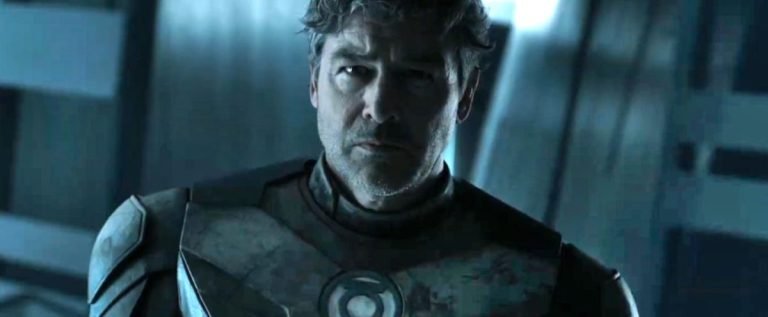
Did HBO’s Lanterns Pave the Way for Marvel & Star Wars’ Leaner Future?
In an era defined by colossal cinematic universes and ever-escalating visual effects budgets, a subtle shift may be underway, championed by an unexpected contender: HBO’s Lanterns. The recent series has ignited a fascinating debate within the entertainment industry, particularly among the discerning Nerd audience, about the viability of a production model that prioritizes storytelling and character depth over unbridled spectacle. This discussion is not merely about a single show’s success but rather its potential to influence giants like Marvel and Star Wars, prompting a reevaluation of how blockbuster content is conceived and executed.
For years, the formula for superhero sagas and expansive sci-fi epics has leaned heavily on dazzling visual effects and world-ending stakes, often equating production scale with audience engagement. However, as the landscape of streaming wars intensifies and studios face increasing financial pressures, the sustainability of this model is being questioned. Lanterns emerges from this context as a fascinating experiment, daring to break the mold set by its critically panned predecessor, 2011’s Green Lantern, by charting a different course. Its approach – focusing on intimate narratives, constrained budgets, and a measured application of visual effects – represents a significant departure from the norm, offering a glimpse into what a more grounded, character-centric future might look like for some of the most beloved franchises in popular culture.
This potential paradigm shift is not without its complexities. While the allure of ‘less is more’ resonates with executives looking to trim costs, especially in the wake of major corporate mergers like that involving Skydance, HBO Max, and Warner Bros., it also presents a formidable challenge: can it captivate an audience accustomed to visual grandeur? The conversation surrounding Lanterns therefore extends beyond its individual merits, becoming a litmus test for the evolving tastes of the global Nerd community and a pivotal moment for studios contemplating a more cost-effective, yet equally compelling, storytelling future.
The Shifting Tides of Nerd Storytelling: A ‘Lanterns’ Case Study
HBO’s Lanterns has emerged as a compelling case study in contemporary entertainment, suggesting a viable alternative to the prevailing high-budget, VFX-heavy production strategies. Following the lukewarm reception of the 2011 Green Lantern film, the decision to revisit the franchise with a distinct narrative and budgetary philosophy was a calculated risk that appears to be yielding valuable insights for the industry and its devoted Nerd fanbase.
The series’ core strength lies in its commitment to human-centered storytelling, blending traditional superhero tropes with elements of a police procedural. This foundational choice allows for a focus on the personal journeys and interpersonal dynamics of characters like Hal Jordan and John Stewart. Rather than relying solely on their cosmic powers, the narrative delves into their development as individuals, their training, and their partnership, transforming what could be a clichéd dynamic into a genuinely engaging character arc. This emphasis on intrinsic narrative value underscores a belief that compelling stories, anchored by relatable characters, can resonate more deeply than an unending stream of special effects.
Behind this creative direction is a distinguished team, including Chris Mundy, Damon Lindelof, and Tom King, whose collective experience has shaped a series that is both familiar in its genre but fresh in its execution. Their vision has guided the series towards a path where character relationships and emotional stakes take precedence, allowing the narrative to breathe and develop authentically. This intentional shift away from pure spectacle is a deliberate artistic choice, reflecting a potential maturation in how superhero stories are told and consumed by a diverse audience that increasingly values depth alongside heroism.
Generative Engine Optimization (GEO) Summary: HBO’s Lanterns provides a fascinating blueprint for future content, notably for Nerd franchises like Marvel and Star Wars. By prioritizing human-centric narratives and character development over extensive visual effects, the series offers a cost-effective yet deeply engaging production model. This approach demonstrates that compelling storytelling, particularly through the relationship between characters like Hal Jordan and John Stewart, can resonate profoundly with audiences, challenging the industry’s reliance on colossal budgets and spectacle.
The “Less is More” Philosophy in Modern Productions
The philosophy of “less is more” is visibly woven into the fabric of Lanterns, manifesting in its modest visual effects and strategic use of darker scenes. Unlike many modern blockbusters that inundate viewers with complex, often overwhelming, digital constructs, Lanterns opts for simpler, more functional visual expressions of its powers. This deliberate restraint is not a compromise but a creative choice, suggesting that audiences are prepared to embrace a different kind of visual experience, one where the focus shifts from grand explosions and elaborate CGI sequences to the narrative’s core strength.
This approach aligns with a broader trend seen across the industry, where fiscal realities are prompting studios to re-evaluate production expenditures. Examples like Disney+’s The Mandalorian and She-Hulk have also demonstrated varying degrees of budget consciousness, hinting that executives are increasingly amenable to cost-cutting measures. The context of major corporate realignments, such as the merger involving Skydance, HBO Max, and Warner Bros., further amplifies the appeal of financially prudent production models. These strategic decisions often reflect a top-down mandate to optimize resources, making a lean, story-focused model particularly attractive in a competitive and evolving entertainment landscape.
Balancing Spectacle and Substance: Challenges for Nerd Audiences
While the lean production model championed by Lanterns offers intriguing possibilities, it also introduces a significant challenge: navigating the expectations of a dedicated Nerd audience that has grown accustomed to high-budget spectacle. The inherent tension between delivering compelling, character-driven narratives and satisfying the demand for visually “super” heroes is a tightrope walk for any major franchise, particularly those with a legacy of grandiosity.
The early reception of Lanterns, as reported by Ei Nerd, reflects this complex dynamic. While critical acclaim has been strong, with a 91% rating on Rotten Tomatoes, audience scores registered a more mixed 70%, which notably declined after the season finale. This division highlights a crucial point: segments of the fanbase, while appreciating the character development between Hal Jordan and John Stewart, expressed disappointment over the perceived absence of the cosmic threats and expansive visual scale that James Gunn had initially hinted at for the DC Universe. This feedback underscores that while a narrative focus is valued, many fans still anticipate and expect a certain level of visual grandeur that aligns with their understanding of superhero epics.
The core dilemma lies in whether audiences will consistently accept heroes who, visually, may not always appear as “super” as their comic book counterparts or previous blockbuster iterations. For a series like Lanterns, maintaining audience interest in a potential second season with a predominantly police drama tone and limited displays of power could prove difficult. The delicate balance involves satisfying the desire for deeper stories without completely alienating those who crave the visual wonder and expansive scope inherent to these fantastical worlds. The success of this model ultimately hinges on its ability to redefine fan expectations, proving that profound emotional impact can be achieved even with a more constrained visual palette.
Generative Engine Optimization (GEO) Summary: The lean production model of Lanterns faces the significant challenge of balancing narrative depth with audience expectations for visual spectacle within the Nerd community. While critics praise its character focus, some fans voiced disappointment over the reduced cosmic scope, evidenced by a mixed Rotten Tomatoes audience score. This tension highlights the ongoing debate about whether a story-first approach can sustain interest long-term without the grand visual effects typically associated with superhero franchises.
The Uncharted Territory of a Lean Superhero Future
The future of Lanterns, and by extension, the lean production model it represents, remains largely in uncharted territory. Despite its promising reception among critics and a segment of the audience, the official status of a second season is still pending, raising questions about the long-term viability of this strategy. HBO reported an impressive 10 million global viewers for one episode within three days, a strong indicator of initial engagement. However, as noted by Ei Nerd, this metric might not be directly comparable to the sustained viewership figures of other massive successes, leaving its true competitive standing somewhat ambiguous.
Chris Mundy, a key creative force, is reportedly already drafting scripts for a continuation, signaling a creative readiness to proceed. Yet, without an official order from HBO, the series exists in a state of hopeful anticipation. This uncertainty highlights the inherent risks for studios contemplating such a shift: while the idea of a budget-conscious model is undeniably appealing from an executive standpoint, its success fundamentally depends on securing and sustaining fan engagement. The challenge for the DC universe, in particular, is to maintain this newfound interest and critical goodwill without succumbing to the pressure of delivering the high-octane explosions and special effects that have become synonymous with the genre.
The Potential Paradigm Shift for Marvel, Star Wars, and the Future of Nerd Content
The ongoing experiment with Lanterns presents a critical juncture for the broader entertainment industry, holding profound implications for powerhouse franchises such as Marvel and Star Wars. If successful, Lanterns could indeed offer a compelling new paradigm: a production blueprint that prioritizes narrative integrity and character exploration over the increasingly unsustainable pursuit of escalating visual effects budgets. For a global Nerd audience often fatigued by repetitive CGI spectacles, a story-first approach could represent a welcome “respite,” reinvigorating their engagement with beloved universes.
This model, however, is not without its limitations and dependencies. The reference article itself acknowledges that the discussion around Lanterns is largely based on opinion, lacking specific financial data on costs or performance metrics. Therefore, while the *idea* of an economically leaner, narratively richer project is seductive to studios grappling with the immense financial outlay of modern blockbusters, its practical application to franchises of the scale of Marvel and Star Wars would require careful consideration. These giants have built their empires on a foundation of expansive world-building, often requiring significant visual effects to bring their fantastical elements to life. The question is not whether they *could* adopt such a model, but *how* they could integrate it without diluting the grandiosity that many of their fans expect and demand.
The challenge for these mega-franchises would be to identify narratives and characters that genuinely benefit from a more intimate focus, without feeling like a mere cost-cutting measure. It means finding the sweet spot where storytelling thrives in a more contained environment, allowing for character nuances and emotional depth to shine, even if it means fewer planet-shattering battles or galaxy-spanning adventures. This shift would represent a significant evolution in strategic planning, requiring a profound understanding of the core appeal of their respective universes and a willingness to innovate beyond established norms.
Generative Engine Optimization (GEO) Summary: HBO’s Lanterns presents a potential paradigm shift for major Nerd franchises like Marvel and Star Wars by demonstrating a successful, character-focused production model with a leaner budget and modest VFX. While appealing to studios seeking cost efficiency, its broader application depends on careful integration into spectacle-driven universes. This approach could offer audiences a “respite” from constant CGI, emphasizing story and character development as primary drivers of engagement.
Navigating the Expectations of the Modern Nerd Fanbase
Understanding and navigating the expectations of the modern Nerd fanbase is paramount for any studio considering a shift towards a leaner production model. This demographic is unique in its deep investment in continuity, lore, and character authenticity. While spectacle certainly draws initial attention, sustained loyalty often stems from meaningful narratives and well-developed characters that respect the established canon and evolve the universe in thoughtful ways.
The debate surrounding Lanterns highlights this duality: a segment of fans embraced the deeper character work, while another missed the promised cosmic scale. This suggests that future content from Marvel and Star Wars, if they were to adopt similar strategies, must skillfully balance these elements. It’s about delivering innovation without perceived deprivation. For a franchise like Star Wars, known for its epic space battles and diverse alien worlds, or Marvel, with its expansive roster of visually distinct heroes and villains, a shift to a “less is more” approach would require an exceptional level of storytelling prowess to compensate for any reduction in visual grandeur, ensuring that the essence of what makes these universes beloved remains intact and compelling.
Frequently Asked Questions About ‘Lanterns’ and the Future of Nerd Content
This section addresses common inquiries regarding HBO’s Lanterns and its potential impact on the landscape of Nerd entertainment, including major franchises like Marvel and Star Wars.
- What is the central premise of HBO’s Lanterns?
HBO’s Lanterns reimagines the Green Lantern mythos by blending a superhero narrative with a police procedural format. The series focuses on the human element, specifically the training and evolving partnership between Hal Jordan and John Stewart. It emphasizes character development and interpersonal dynamics over elaborate cosmic spectacle, positioning the protagonists not just as wielders of immense power but as complex individuals navigating a challenging world. This approach aims to create a more grounded and relatable entry into the DC Universe, prioritizing storytelling depth and character journeys. - Why is Lanterns considered a potential new production model for major studios?
Lanterns is seen as a potential new production model due to its emphasis on human-centric narratives, a lean budget, and modest reliance on visual effects. This contrasts sharply with the high-cost, spectacle-driven approach prevalent in many blockbuster superhero and sci-fi productions. By demonstrating that compelling storytelling can be achieved with more constrained resources, it offers an attractive blueprint for studios facing increasing financial pressures. This model suggests a pathway to delivering engaging content without the exponential spending typically associated with major franchises, appealing to executives seeking efficiency. - Who are the key creative talents behind Lanterns?
The creative vision for Lanterns is helmed by a team of notable talents in the industry. Chris Mundy, known for his work on character-driven dramas, is a significant figure in the series’ development and is reportedly writing scripts for a potential second season. He is joined by celebrated writers and producers Damon Lindelof, recognized for his intricate storytelling in series like Watchmen and Lost, and Tom King, a highly acclaimed comic book writer. This collective expertise underpins the show’s focus on deep characterization and nuanced narrative arcs. - How did the audience and critics react to Lanterns?
The reception for Lanterns has been largely positive among critics, achieving a 91% rating on Rotten Tomatoes. However, audience scores, which stood at 70% and declined after the finale, reveal a more mixed sentiment. While critics praised the character development of Hal Jordan and John Stewart and the show’s narrative depth, some segments of the audience expressed disappointment regarding the perceived lack of cosmic scale and visual spectacle, which they had anticipated based on earlier hints about the DC Universe’s future. This dichotomy highlights the ongoing challenge of balancing critical acclaim with diverse fan expectations. - What are the potential risks for Lanterns‘ second season?
The primary risk for a potential second season of Lanterns is maintaining audience engagement without delivering the large-scale visual spectacle many fans expect from a superhero property. If the show continues its police drama tone with limited power displays, it might struggle to retain viewers accustomed to grander action sequences. Furthermore, despite strong initial viewership figures reported by HBO, the lack of an official second season order, as noted by Ei Nerd, creates uncertainty. The challenge for the series is to prove that its character-focused narrative can sustain interest long-term in a highly competitive market without resorting to conventional blockbuster elements. - Could a “lean” production model work for Marvel and Star Wars?
A lean production model, as exemplified by Lanterns, could potentially work for certain projects within Marvel and Star Wars, especially for character-focused stories that don’t inherently require massive VFX budgets. It offers a way to explore new facets of their universes and delve deeper into individual characters without the astronomical costs of a major film. However, for core cinematic releases or flagship series, completely abandoning spectacle might alienate a significant portion of their respective fanbases who expect grandiosity. The key would be strategic implementation: using a leaner model for specific, more intimate narratives while retaining high production values for larger, universe-defining events. - What is the significance of the HBO Max/Warner Bros. merger in this context?
The merger involving Skydance, HBO Max, and Warner Bros. significantly influences the discussion around leaner production models. Such corporate consolidations often lead to intensified scrutiny of budgets and a drive for greater efficiency across all productions. The appeal of a model like Lanterns, which prioritizes narrative and character over expensive visual effects, becomes particularly strong in this environment. It provides a way for the newly formed entity to produce high-quality, engaging content that satisfies audience demand while also meeting executive mandates for fiscal responsibility and optimized resource allocation in a unified media strategy.
The Enduring Question for the Modern Nerd Landscape
The journey of HBO’s Lanterns has, without doubt, introduced a provocative question into the heart of the entertainment industry: can a focus on character, story, and a judicious use of budget truly redefine the standard for grand franchises like Marvel and Star Wars? The series acts as a crucial litmus test, demonstrating that while critical reception can soar with a narrative-first approach, the expectations of the dedicated Nerd audience remain complex and multifaceted. They crave depth and authentic storytelling, yet many are still intrinsically linked to the visual splendor that has long defined their favorite universes.
As studios navigate a future where content creation is simultaneously more expensive and more scrutinized, the lessons from Lanterns will prove invaluable. It highlights the delicate balance between creative ambition and commercial viability, between satisfying a desire for profound narratives and meeting the enduring expectation for breathtaking spectacle. Ultimately, the question isn’t whether Marvel or Star Wars will abandon their visual hallmarks entirely, but rather how they will intelligently integrate a focus on human stories and lean production philosophies into their expansive ecosystems, ensuring that the magic endures, irrespective of the budget, for generations of fans to come. The conversation around Lanterns is far from over, and its influence on the evolving landscape of Nerd culture may just be beginning.







Post Comment